
Trees on Baton Rouge properties often struggle less with rainfall than with the soil holding them, since developed lots tend to have compacted, disturbed ground that limits what roots can reach. Tree fertilization works best when it follows an assessment of the site rather than a bag off a shelf. Thin canopy, pale color, and slow growth are the usual signals. Sitting farther inland than New Orleans, the area also tends to see drier stretches in late summer.
At TurnKey Tree Cutting, we see the same pattern on Baton Rouge properties again and again: a tree that gets plenty of water and still looks tired. The problem is almost never rainfall in this part of Louisiana.
It is usually what is happening below grade. Construction, turf competition, and years of foot and vehicle traffic leave soil that roots cannot work with, and no amount of watering fixes that.
This covers what soil care actually involves on a developed lot, the signals worth watching, and how tree fertilization decisions get made. Contact us today to have the soil and trees on your property assessed before anything is applied.
What Soil Care Means on a Developed Baton Rouge Lot
Soil care is the part of tree health that nobody sees and most people skip. On a lot that was graded, built on, and landscaped, the ground around a tree bears little resemblance to what that species evolved in.
Native forest soil is loose, layered, and covered in decomposing organic matter that feeds the system continuously. A residential lot is typically compacted subsoil with turf on top and the leaf litter raked away every fall.
That difference is the whole argument for soil care. You are replacing an input the site used to supply on its own, and doing it based on what the ground is actually short of rather than a general assumption.
Common Reasons Baton Rouge Trees Run Short on Nutrients
Nutrient shortfalls on developed property usually trace back to a handful of causes. Most of them are about the site rather than the tree.
Compaction From Construction and Traffic
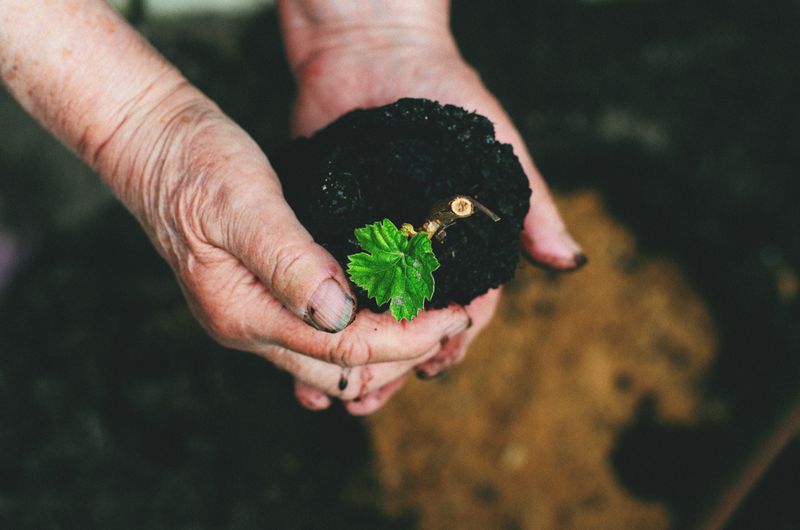
Soil compacted during construction stays compacted for decades. Tight ground restricts root growth and limits how water and air move through the profile, so a tree can sit in wet soil and still be under stress.
Driveways, parking pads, and regular foot traffic keep the pressure on long after the builders leave. This is the single most common underlying issue we find on established lots.
Compaction is usually worst where people walk and park, and ground that has had its structure pressed out of it recovers very slowly on its own.
Turf Competing for the Same Ground
Lawn grass is an aggressive competitor in the top layer of soil, which is exactly where fine tree roots do most of their work. A thick, well-fed lawn running right up to a trunk is taking resources the tree needs.
The competition is invisible because both look healthy for a while. Over time the tree usually gives ground, since grass recovers from shortage faster than a mature canopy does.
Widening a mulched bed outward from the trunk eases that pressure, since every foot of turf replaced gives fine roots ground they no longer have to share.
Organic Matter Removed Every Season
In a natural setting, leaves fall and break down where they land, returning nutrients to the root zone. On a maintained property that material is bagged and hauled away.
Doing that for 20 years removes a substantial amount of what the soil would otherwise recycle. The nutrients do not replace themselves.
Mulch spread over the root zone returns part of what the raking takes away, though it breaks down more slowly than a natural leaf layer. It is a partial substitute rather than a full one.
Inland Position and Late-Summer Dry Spells
Sitting farther from the coast than New Orleans, Baton Rouge tends to get less rain through the back half of summer. Trees under nutrient stress handle that stretch far worse than well-fed ones.
Drought stress and nutrient shortage compound each other. A tree that would ride out August comfortably can decline noticeably when both hit at once.
A tree with a restricted root zone also has less soil to draw on once the ground dries. The same dry stretch hits it harder than it hits a tree with room to spread.
Warning Signs a Tree Needs Soil Attention
Trees signal nutrient problems long before anything dramatic happens. These are the ones worth watching for.
Thinning Canopy From the Top Down
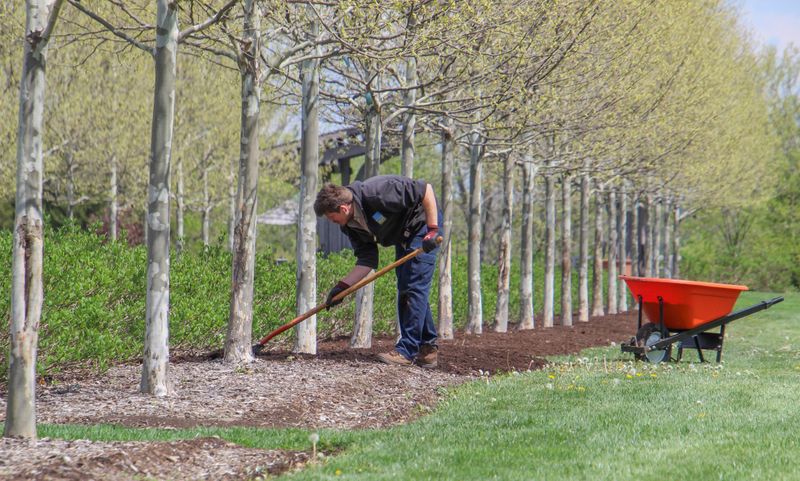
A canopy that has grown noticeably sparse, particularly in the upper crown, is a common early signal. You can often see more sky through the tree than you could a few seasons back.
Compare against the same tree in older photos rather than against neighboring trees. Thinning happens gradually enough that memory is unreliable.
The upper crown tends to show it first, since it sits at the end of the longest transport path. Steady thinning over several seasons is worth an assessment even while the tree still leafs out.
Pale, Small, or Off-Color Leaves
Leaves that come in smaller than usual or hold a washed-out yellow-green often point to a nutrient issue rather than a water one. Where the discoloration starts matters. Fading that begins in the older, lower foliage points toward nitrogen and other nutrients a tree can move internally, while yellowing that appears first in the newest leaves at the branch tips points toward iron or manganese instead.
Pattern matters more than the color itself. Uniform paleness across the whole canopy suggests something different from patchy discoloration on a few limbs.
Growth That Has Slowed or Stopped
Very short new growth at the branch tips, year over year, indicates a tree running on limited resources. Measuring the current season’s extension against last year’s gives you a rough read.
A mature tree naturally slows down, so context matters. A sharp change over two or three seasons is more meaningful than slow growth on an old specimen.
Extension growth is a relatively honest indicator because it reflects what the tree could afford to build that season. Read it across several branches rather than one, since any single limb can be shaded or damaged.
How Tree Fertilization and Soil Needs Are Assessed
Feeding decisions should follow an assessment rather than lead it. The table below shows what gets looked at and why it changes the plan.
| What Gets Assessed | Why It Matters | What It Changes |
|---|---|---|
| Soil condition and compaction | Tight ground limits what roots can reach | Whether feeding alone will accomplish anything |
| Canopy density and leaf color | Shows how the tree is currently coping | Urgency and how much correction is needed |
| Root zone extent and what covers it | Turf, paving, and traffic all restrict uptake | Where treatment is placed and how far out |
| Species and its site suitability | Requirements differ widely between species | What the tree is actually short of |
Applying a general-purpose product without that picture is guesswork, and overfeeding carries its own problems. Our tree fertilization work starts from what the site shows rather than a fixed formula.
Trees on properties across the wider region get the same approach. Our Baton Rouge tree services cover the assessment along with the treatment, so the plan matches the ground it is going into.
What This Means for Your Baton Rouge Property
A mature tree that is quietly underfed will keep looking acceptable for years and then decline faster than the owner expects. Catching it while the signals are still subtle is far cheaper than responding after the canopy thins.
At TurnKey Tree Cutting, we assess the soil and the tree together and recommend feeding only where it will actually change something. Call us today to have the trees on your property looked at properly.