Commercial Tree Care and Trimming for New Orleans Area Businesses
Commercial tree care in the New Orleans area works best as a scheduled program rather than a reaction to problems. A commercial program starts with an inventory of every tree on the property, flags the ones creating risk over parking, walkways, and entrances, and sets a trimming rhythm that fits around business hours. Storm-season preparation and written records finish the cycle, giving the property manager a documented maintenance history and limiting disruption to the site.
At TurnKey Tree Cutting, we handle commercial properties across the New Orleans area where a fallen limb is not just a yard problem: it is a closed entrance, a blocked parking row, and a phone call to somebody’s insurer. Commercial sites carry a different set of stakes than the houses around them.
If you manage a retail center, an office building, a restaurant lot, or an apartment property in the New Orleans area, the trees on that site are part of your operations. They shade your parking, they frame your signage, and on the wrong night they close your driveway.
The businesses that stay ahead of this treat tree care as a recurring line item, not an emergency call. Contact us today to have us walk your property and build a schedule around how your site actually operates.
How Commercial Tree Care in New Orleans Differs From Residential Work
The trees may be the same species, but almost everything around them changes. On a commercial site you are managing public access, vehicle traffic, and a business that cannot simply close for the afternoon.
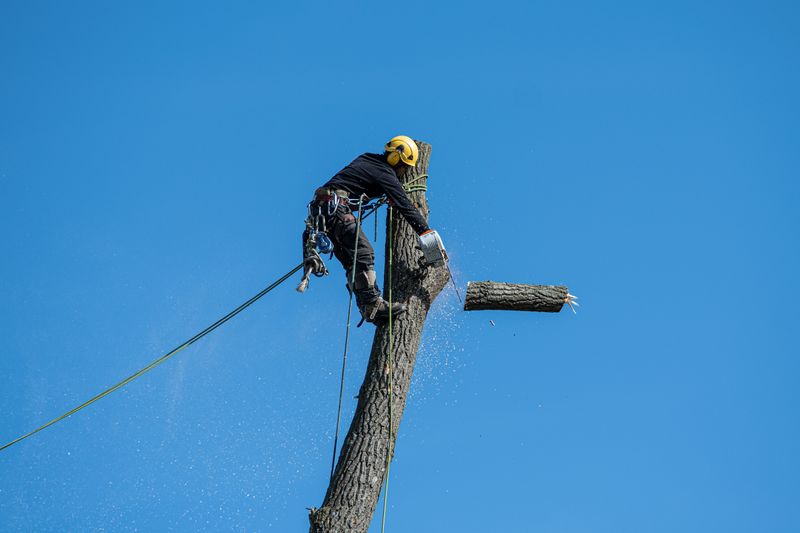
Scale is the first difference. A single property can carry dozens of trees across parking islands, buffer strips, and frontage, each with a different exposure and a different priority.
Timing is the second. Residential work happens whenever the homeowner is free, while commercial work has to fit around opening hours, delivery windows, and peak traffic, which means the schedule is planned rather than improvised.
Step 1: Inventory Every Tree on the Property
You cannot manage trees that nobody has counted. The first visit should produce a written record of what is actually growing on the site.
A useful inventory captures the following for each tree:
- Location: which parking island, buffer strip, or frontage section it sits in
- Species and approximate size: what it is and how large it has grown
- Condition: healthy, stressed, declining, or already failing
- Proximity to assets: distance to the building, signage, lighting, or power lines
- Access notes: whether equipment can reach it without closing a drive aisle
That record becomes the baseline for everything else. It also gives you something to hand an insurer or a new property manager instead of a verbal history.
Step 2: Identify the Trees That Create Liability
Not every tree carries the same exposure. On a commercial site, the ones sitting over places people walk, park, and gather are the ones that matter most.
Prioritize any tree with these characteristics:
- Deadwood over a walkway or parking space: a common and largely preventable source of damage
- A visible lean toward the building or a drive aisle: worth a closer look even if it has stood for years
- Limbs contacting the roofline or light poles: contact points create damage over time
- Cracks, cavities, or fungal growth at the base: structural signals that deserve assessment
- Roots lifting sidewalks or curbing: a trip hazard as much as a tree issue
Working down that list first puts your budget where the exposure actually is, and everything else can move to a routine cycle. Old stumps left in a parking island or walkway belong on the same list, which is where our stump grinding work fits into a commercial program.
Step 3: Set a Trimming Schedule Around Your Business Hours
The best commercial schedule is the one your customers never notice. That usually means working early, working on your slowest day, or working in phases that keep most of the lot open.
Build the schedule around 3 questions:
- When is the site quietest? Early mornings and slow weekdays cause the least disruption
- Which areas can close at once? Phasing keeps the whole lot from going offline
- What needs notice? Tenants and delivery drivers should know before equipment arrives
Our tree trimming work on commercial sites is scoped around those same questions. A trim that closes your busiest entrance at lunch has solved one problem and created another.
Step 4: Clear Sightlines to Your Signage and Entrances
Overgrowth costs businesses visibility long before it costs them anything structural. A sign that has been swallowed by a canopy stops working, and most owners do not notice it happening.
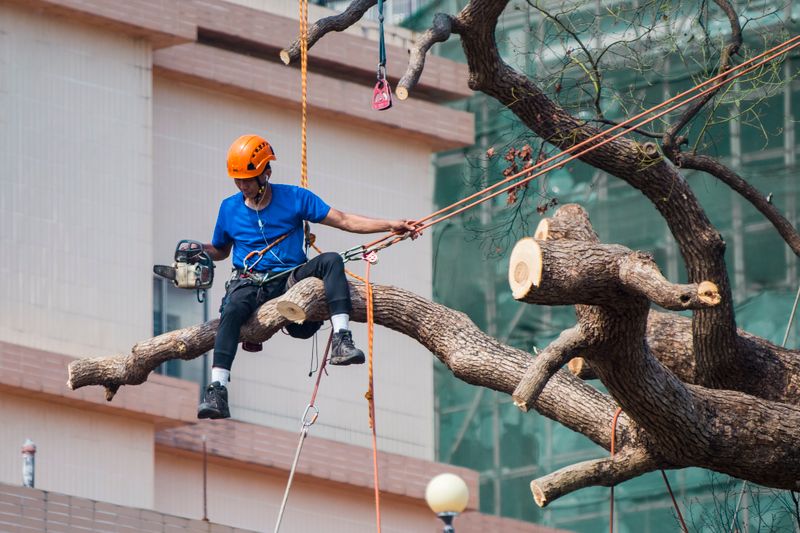
Focus the clearing work on these sightlines:
- Monument and pylon signage: the view from both approach directions on the road
- Building entrances: clear approach so customers can see the door from the lot
- Traffic sightlines: corners and driveways where a driver needs an unobstructed view
- Security lighting and cameras: canopy growth that shades a fixture defeats it
Sightline clearing is one of the few maintenance items with a visible return. Restoring a sightline to a road-facing sign changes how many people find the entrance.
Step 5: Plan for Storm Season Before It Starts
On the Gulf Coast, storm preparation is not optional maintenance: it is the core of the program. The work that protects a property happens in the calm months, not the week a system forms.
Ahead of the season, focus on this short list:
- Remove failing trees on your own schedule: a declining tree taken down early usually costs far less than one that comes down on its own in a storm
- Clear deadwood over high-traffic areas: the material most likely to come down first
- Reduce contact with the roofline and power drops: limbs that already touch will move in wind
- Confirm access routes for equipment: know now where a crew can stage if the site is damaged
Trees that need to come out entirely are better handled in advance. Our tree removal work on commercial sites can be phased to keep as much of the property open as the site allows.
Step 6: Keep Records of Every Visit
Documentation is the step that gets skipped most often, and the one that pays off when something goes wrong. A written trail helps show the site was maintained rather than ignored.
Keep a simple record of the following after each visit:
- Date and scope: what was inspected and what was cut
- Conditions noted: any tree flagged as declining or a concern
- Recommendations made: what was proposed and whether it was approved
- Photos: before and after on anything significant
Property managers change and memories fade, but the file stays. It also makes budgeting the next cycle a matter of reading rather than guessing.
Work With a Tree Crew That Understands Commercial Property
A commercial site is a business first and a landscape second, and the tree work should respect that order. The right program keeps your lot open, your signage visible, and your exposure manageable without anyone noticing the crew was there.
At TurnKey Tree Cutting, we build schedules around how your property runs, phase the work where the site allows, and document what we find. Call us today to schedule a walkthrough of your site.
Frequently Asked Questions
How often should commercial properties have trees trimmed?
Most commercial sites in the New Orleans area do well on an annual cycle, with a second look before storm season for trees over parking and walkways. Properties with heavy canopy or older trees sometimes need more frequent attention. The inventory and condition of the trees should set the interval rather than a fixed rule.
Who is responsible for tree maintenance on a leased commercial property?
Responsibility for tree maintenance depends entirely on how the commercial lease is written, and it varies widely between landlord and tenant. Many commercial leases assign grounds maintenance to one party explicitly, while others leave it ambiguous. Confirming the responsibility in writing before an incident occurs is far easier than sorting it out afterward.
Can commercial tree work be done without closing the parking lot?
Usually yes, because the work can be phased so only one section of the lot closes at a time. Crews commonly start early or work on the slowest business day to minimize disruption. Sites with tight access sometimes require a short closure of a single drive aisle, which is planned and communicated in advance.
What tree problems create the most risk for a business?
Deadwood over walkways and parking spaces is a common and largely preventable source of damage, along with limbs contacting the roofline or light poles. Roots lifting sidewalks create trip hazards that have nothing to do with the canopy. Trees leaning toward a building or drive aisle deserve assessment even if they have stood for years.
Should a business remove trees before hurricane season?
Trees that are already failing are better removed on your own schedule than during a storm, when access is limited and costs rise sharply. Healthy trees generally do not need removal, and a well-maintained canopy handles wind better than a stripped one. An assessment ahead of the season identifies which is which.
Does commercial tree care include stump removal?
Stump work is typically quoted separately from the removal itself, since it requires different equipment and a different site setup. On commercial properties it often matters more than on residential ones, because a stump left in a parking island or walkway is a hazard. It is worth including in the same scope.
How do overgrown trees affect a business’s visibility?
Canopy growth in front of monument or pylon signage reduces how many drivers see the site from the road, and the change happens gradually enough that owners rarely notice. Overgrowth can also shade security lighting and cameras. Restoring those sightlines is one of the more visible returns in a maintenance program.
What records should a property manager keep about tree maintenance?
Keep the date and scope of each visit, any trees flagged as declining, the recommendations made, whether they were approved, and photos of significant work. That file helps demonstrate the site was maintained rather than neglected. It also makes budgeting the next cycle straightforward when staff or ownership changes.
Palm Tree Trimming and Care in New Orleans
Palm tree trimming in New Orleans should remove far less than most homeowners assume. The safe rule is to cut only fully brown, dead fronds and leave anything still holding green, because those fronds are still feeding the tree. Stripping a palm to a narrow tuft, often called a hurricane cut, exposes the growing bud and can leave it more vulnerable to storm damage, not less. For the palm, no season is better than another for routine work.
At TurnKey Tree Cutting, we get called out to palms more often for over-trimming than for neglect. The tall palms scattered across the city are part of what makes New Orleans look like New Orleans, and they are also the tree homeowners misunderstand most.
Here’s the thing: a palm is not built like an oak. It does not put on new rings, it does not seal over cuts the way a hardwood does, and every green frond it carries is still doing a job.
That difference changes almost everything about how a palm should be maintained. Contact us today to have us look at your palms and tell you honestly whether they need anything cut at all.
What Makes Palms Different From Every Other Tree in Your Yard
Palms behave less like the hardwoods around them and more like very tall grass. Once you understand that, the care rules stop feeling arbitrary.
There’s Only One Growing Point

A palm grows from a single bud at the top of each trunk, and that bud is the whole tree. An oak can lose a limb and push new growth somewhere else, but a palm has no backup.
Damage that bud and the palm does not recover. That is why anything done near the crown carries more consequence than the same cut would on a hardwood.
It Can’t Seal a Wound the Way a Hardwood Does
Hardwoods compartmentalize damage, walling off an injury so the tree can keep growing around it. Palms do not have that machinery.
A cut into the trunk stays there for the life of the tree. It is a permanent scar and a permanent entry point, which is a solid reason to keep tools away from the trunk itself.
The same logic rules out climbing spikes on a palm you intend to keep. Every spike leaves a puncture the trunk can never close over, so crews working a healthy palm should reach the crown with a ladder or a lift instead.
Green Fronds Are Still Feeding It
Every frond holding green is producing energy the palm needs to push new growth and get through stress. Removing them takes food off the table.
That includes fronds that look tired or partly discolored (the ones homeowners most want gone). If there is green in it, the palm is still using it.
The Trunk You See Is Already Final
A palm trunk does not thicken over the years the way a hardwood trunk does. What you see is essentially what you get.
That matters when the palm is stressed young, because a thin section of trunk from a rough year stays thin permanently. Consistent care early shows up in the tree decades later.
Okay, So What Should Actually Get Cut?
Real talk: on a healthy palm, the honest answer is usually “not much.” Here is what earns a cut and what does not.
Fully Brown, Dead Fronds
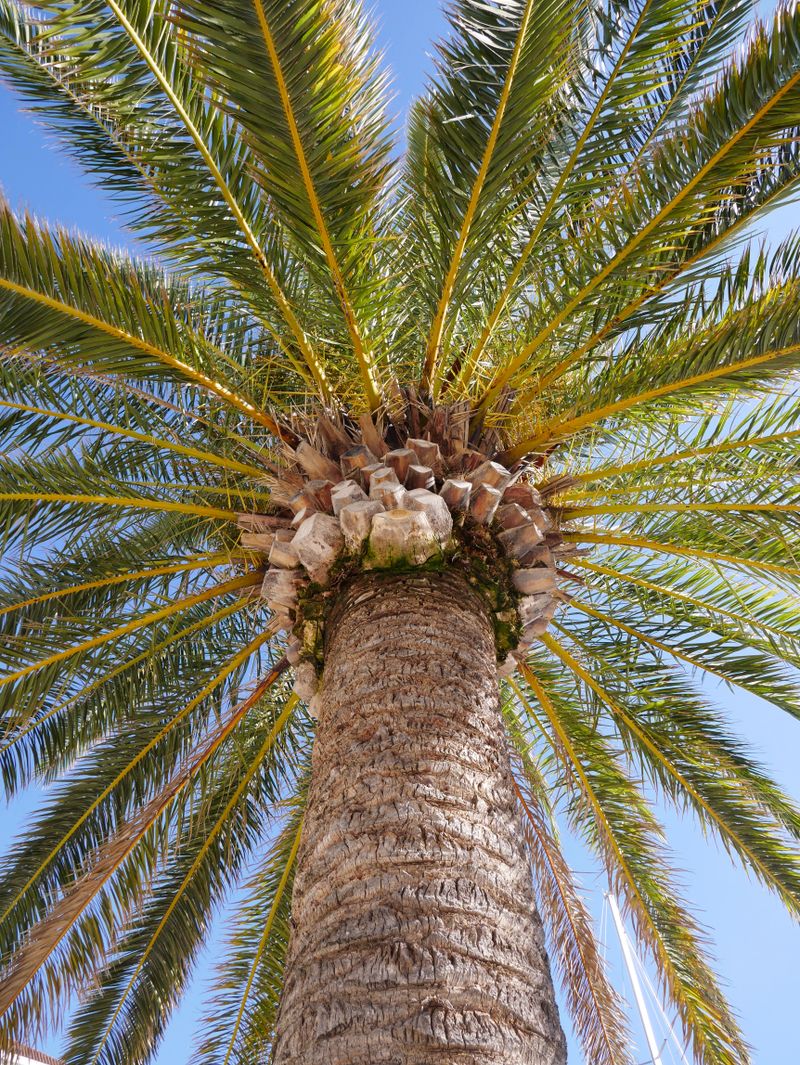
This is the safe category. Guidance from the University of Florida’s Institute of Food and Agricultural Sciences (UF/IFAS) is to remove only fully brown fronds, since dead ones do not damage the palm or threaten its health.
Lower fronds dying off while new ones push from the top is just how a palm works. Clearing the fully dead ones is tidy and harmless. The practical version of the rule is to take only the completely brown fronds that already hang below horizontal.
Loose or Hanging Fronds After a Storm
Broken and hanging fronds are worth taking down promptly, mostly because of what is underneath them. A frond dangling over a driveway or walkway is a safety issue before it is an appearance issue.
Bent or bruised fronds are a different story. If they still hold green, leaving them until they turn fully brown helps the palm rebuild its energy reserves after the storm. The one exception is a broken frond draped across the top of the palm, which should come off because it can block the new fronds trying to emerge.
Fruit Stalks and Seed Pods
Flower and fruit stalks are fair to remove, and doing it keeps seedlings and dropped fruit out of your yard and gutters. It also spares the palm some of the energy it would spend on seed production.
This is one of the few cuts where the timing is flexible. Taking stalks off as they appear is easier than dealing with the mess later.
The Hurricane Cut Thing (It Really Does Hurt Them)
You have seen it around town: a palm stripped back until only a few fronds point straight up, sometimes called a hurricane cut. The reasoning sounds logical, which is exactly why it spread.
The evidence points the other way. UF/IFAS reports that some arborists found palms with many lower fronds removed were damaged in the hurricane more than palms that were not pruned at all, because removing too many fronds exposes the delicate bud to more wind.
So the cut that was supposed to storm-proof the palm can do the opposite. On the Gulf Coast, where the wind actually shows up, that is a costly thing to get backward.
When Palm Tree Trimming in New Orleans Makes Sense (Season Is Not the Deciding Factor)
There is no single best season for routine palm work. UF/IFAS guidance is that no time of year is better than another from the palm’s perspective, so the work can be done whenever it is convenient as long as the rules about what to cut are followed.
That makes restraint the real variable, not the calendar. A palm trimmed lightly in any month is in better shape than one stripped hard in a supposedly ideal one.
Storm damage is the exception, and it does not wait for a season. Anything hanging or broken after a blow should come down when it is safe to do so, while everything still green stays put. Our tree trimming crews work to that standard year-round.
Bottom Line
Most palms in New Orleans would be healthier with less cutting, not more. Take the dead fronds, leave the green ones, and keep tools off the trunk and away from the bud.
At TurnKey Tree Cutting, we will tell you when your palm needs work and when it honestly does not, and we handle tree fertilization when a palm needs feeding rather than cutting. Call us today to have your palms looked at before anyone touches them.
Frequently Asked Questions
How often should palm trees be trimmed in New Orleans?
Most healthy palms need attention roughly once a year, and some need less. The trigger is fully brown fronds accumulating or storm damage leaving something hanging, not a fixed calendar date. A palm with no dead fronds and no broken material does not need to be cut just because time has passed.
Should you cut green fronds off a palm tree?
No, fronds holding green are still producing energy the palm needs for new growth and stress recovery, so removing them takes resources away from the tree. The standard guidance is to remove only fully brown fronds. If you are unsure whether a frond qualifies, leaving it is the safer error.
What is a hurricane cut and is it bad for palm trees?
A hurricane cut strips a palm back until only a few upright fronds remain, on the theory that less canopy means less wind resistance. UF/IFAS points the other way, reporting that some arborists found heavily pruned palms were damaged more than unpruned ones because removing too many fronds leaves the growing bud more exposed to wind.
When is the best time of year to trim palm trees?
There is no single best season. UF/IFAS guidance is that no time of year is better than another from the palm’s perspective, so routine work can be done whenever it is convenient as long as only fully brown fronds come off. Storm damage is the exception and should be handled whenever it is safe.
Why are my palm tree fronds turning brown?
Browning from the bottom up is normal aging, as older fronds die off while new ones emerge from the crown. Browning that starts higher in the canopy or spreads quickly can point to a nutrient shortage, root problems, or disease. A pattern that looks unusual is worth having someone inspect.
Do palm trees need fertilizer in Louisiana?
Palms often benefit from feeding, particularly in sandy or heavily leached soils where nutrients wash away. Deficiencies commonly appear first as discoloration in the older, lower fronds. A soil-informed feeding program is usually more effective than guessing, so an assessment before treatment is worthwhile.
Can you kill a palm tree by over-trimming it?
Yes, over-trimming can kill a palm, though the decline is often gradual rather than immediate. Repeatedly stripping green fronds starves the tree, and damage to the single growing bud at the crown is not recoverable. Palms that look thin and slow-growing after aggressive trimming are frequently showing that damage.
Should palm fronds be cut close to the trunk?
Cuts should stay clear of the trunk itself. Palms cannot seal wounds the way hardwoods do, so any nick into the trunk remains permanently and stays open as an entry point. Removing the frond without cutting into the trunk is the standard approach.
How Often Should Trees Be Trimmed?
Quick Answer: In Louisiana, most mature shade trees benefit from trimming every three to five years, while young trees often need shaping every one to two years. Fast-growing species and fruit trees may require yearly attention, and storm-prone New Orleans yards sometimes call for more frequent checks. The right schedule depends on species, age, health, and how close branches sit to your home or power lines.
At TurnKey Tree Cutting, we field this question from New Orleans homeowners almost every week. There is no single number that fits every tree, because frequency depends on the species, its age, and the conditions in your yard.
Louisiana’s long growing season, heavy summer storms, and humid climate push trees to grow faster than they would in cooler regions. That means a schedule that works in a dry northern state may leave your canopy overgrown and vulnerable here.
This guide walks through how often different trees should be trimmed, what changes the timing, and how to read the signs your tree is due. Contact us today to schedule a free on-site assessment if you would rather have a certified arborist look at your specific trees.
Why Trimming Frequency Matters in Louisiana
Regular trimming keeps a tree structurally sound, improves airflow through the canopy, and removes weak or dead wood before it becomes a hazard. In our climate, that last point carries real weight during hurricane season, when overgrown limbs can turn into projectiles.
Trimming on a sensible cycle also supports long-term tree health. Removing crossing branches and thinning dense growth lets light reach interior foliage and reduces the moisture buildup that invites fungal disease in humid conditions.
Skipping trimming for too long usually costs more in the end. A neglected tree often needs heavier cuts to correct, and heavy cutting stresses the tree and raises the risk of decay at large wound sites.
There is also a curb-appeal and safety angle that matters to local homeowners. A well-maintained canopy keeps sightlines clear, protects your roofline and fences, and reduces the chance of a limb dropping onto something you care about. Getting on a regular schedule turns tree care into routine maintenance rather than a series of emergencies.
General Trimming Frequency by Tree Type
The table below gives typical ranges we use as starting points across the Greater New Orleans area. Treat these as guidelines rather than fixed rules, since a tree’s health and location can move it up or down the schedule.
| Tree Category |
Typical Trimming Interval |
Notes |
| Young trees (first few years) |
Every 1 to 2 years |
Structural training shapes a strong frame early. |
| Mature shade trees (oak, maple) |
Every 3 to 5 years |
Slower growth means longer gaps between cuts. |
| Fast-growing species |
Every 1 to 2 years |
Rapid growth crowds the canopy quickly. |
| Fruit trees |
Yearly |
Annual pruning supports fruit quality and yield. |
| Flowering ornamentals (crape myrtle) |
Yearly to every 2 years |
Light, correct cuts protect bloom and form. |
For a fuller breakdown of technique and timing across species, our tree trimming and pruning guide covers the fundamentals in one place.
How Tree Age Changes the Schedule
A tree’s age is one of the biggest factors in how often it needs attention. The needs of a sapling are very different from those of a decades-old oak.
Young Trees
Young trees benefit from frequent, light trimming during their first several years. Early structural cuts guide the tree toward a strong central leader and well-spaced branches, which prevents costly problems later. Our overview of training young trees with early pruning explains how these formative cuts set the shape for decades.
Established Trees
Once a tree is established and well-formed, it usually needs less frequent work. A mature shade tree in good health often does fine on a three to five year cycle, focused on removing deadwood and maintaining clearance.
Aging or Declining Trees
Older trees sometimes need closer monitoring rather than heavier cutting. As a tree ages, deadwood and weak unions become more common, so periodic inspection helps us catch hazards early without stressing the tree with large cuts.
How Species and Growth Rate Affect Timing
Growth rate varies widely between species, and that directly shapes how often each tree should be trimmed. A slow, dense hardwood holds its form far longer than a fast-growing softwood.
Fast growers put on length quickly and can crowd their own canopy within a single season, so they tend to need trimming every year or two. Slower species hold structure longer and can go several years between meaningful cuts.
Some species also have specific timing preferences that matter as much as frequency. If you are unsure when to schedule work, our post on the best time of year for tree pruning walks through the seasonal windows that suit our region.
Growth rate is not the only species factor, either. How a tree is pruned matters as much as how often, and using the right approach protects both the tree and its future shape. Our breakdown of common tree pruning techniques explains methods like thinning, raising, and reduction, so you can understand what each cut is meant to accomplish.
Signs Your Tree Needs Trimming Now
Frequency guidelines are a starting point, but your tree will often tell you when it is ready. Watching for a few clear signals helps you act before a small issue becomes a large one.
– Dead or hanging branches that could fall onto a roof, car, or walkway.
– Limbs touching or nearing power lines, which is a safety issue best handled by professionals.
– Branches rubbing the house or blocking gutters, windows, or driveways.
– A dense, tangled canopy that blocks airflow and light to the interior.
– Storm damage such as cracked limbs or split unions after high winds.
If you notice several of these signs, waiting for the next scheduled cycle may not be the safest choice. A prompt inspection lets us prioritize the branches that pose the most risk.
Trimming After Storms and Hurricane Season
New Orleans yards face a unique pressure that dry climates do not: an active hurricane season that can damage even healthy trees. Storm winds expose weak limbs and can crack unions that looked sound the day before.
Because of this, many local homeowners add a post-storm check to their normal routine. A quick inspection after a major weather event catches hanging or split branches before they fail and cause further damage.
Preventive trimming before storm season also helps. Thinning a dense canopy reduces wind resistance, which lowers the chance of whole limbs tearing away during a strong blow. Our tree trimming service can handle both routine cycles and storm-season preparation.
When Trimming Is Not the Right Answer
Not every problem tree needs trimming, and recognizing the difference protects both your property and your budget. Sometimes the healthier or safer choice is removal, and sometimes less cutting is better than more.
A tree that is structurally failing, badly diseased, or dangerously close to your home may be a candidate for removal rather than repeated trimming. Our guide on tree removal versus trimming helps you weigh the two options.
It is also possible to overdo it. Cutting too much at once, or trimming too often, can stress a tree and open large wounds, so a measured schedule almost always beats aggressive cutting.
A common example is topping, where large upper limbs are cut back severely to reduce height. This practice often does more harm than good, triggering weak regrowth and long-term decline rather than a healthier tree. When you are weighing how aggressive a job should be, our guide on whether over-trimming can hurt a tree is worth a read before you commit.
Do You Need a Permit to Trim a Tree?
Permit rules vary by location and by the type of tree involved, so it is worth checking before major work. In many areas, significant work on large, heritage, or protected trees may require approval, while routine trimming of a small private tree often does not.
Because local ordinances differ and change over time, we recommend confirming the current requirements for your address rather than assuming. When a project touches a protected species or public right-of-way, permitting can become part of the job.
As part of our service, we help clients navigate construction and tree-work permitting where it applies. That way you avoid surprises and stay on the right side of local rules before any cutting begins.
The Bottom Line: Build a Schedule and Stick to It
There is no universal answer to how often trees should be trimmed, because species, age, health, and location all move the number. The best approach is a sensible cycle paired with attention to the warning signs your tree gives you and a professional eye when you are unsure.
At TurnKey Tree Cutting, our certified arborists are licensed and insured, and we offer free estimates so you can plan the work with a clear picture of what your trees need. Call us today to schedule an on-site assessment and get a trimming plan built for your yard.
Frequently Asked Questions
How often should mature oak trees be trimmed in Louisiana?
Most healthy mature oaks do well on a three to five year trimming cycle. Oaks grow slowly and hold their structure for years, so they rarely need annual cuts. The main goals are removing deadwood, maintaining clearance from structures, and improving airflow, all of which support long-term health.
Is it bad to trim trees too often?
Yes, over-trimming can harm a tree. Cutting too much foliage or trimming on too tight a schedule stresses the tree, reduces its ability to make energy, and creates large wounds that can invite decay. A measured cycle matched to the species is far healthier than frequent heavy cutting.
What time of year is best for tree trimming in New Orleans?
Timing depends on the species, but many trees respond best to trimming during their dormant period in late fall or winter. Some flowering and fruit trees have their own preferred windows tied to bloom and harvest. A certified arborist can confirm the ideal season for your specific trees.
How do I know if my tree needs trimming right now?
Look for dead or hanging branches, limbs touching your home or power lines, a dense tangled canopy, or damage after a storm. Any of these signs means the tree may need attention before its next scheduled cycle. When several appear together, a prompt professional inspection is the safest move.
How often should young trees be pruned?
Young trees benefit from light trimming every one to two years during their first several years. These early structural cuts guide the tree toward a strong central trunk and well-spaced branches. Getting the framework right early prevents weak unions and expensive corrective work as the tree matures.
Does trimming help protect trees during hurricane season?
Preventive trimming can reduce storm risk. Thinning a dense canopy lowers wind resistance, which makes it less likely that large limbs tear away during high winds. Removing dead and weak branches before a storm also reduces the debris that can damage roofs, vehicles, and neighboring property.
Do I need a permit to trim a tree in New Orleans?
It depends on the tree and the scope of work. Significant work on large, heritage, or protected trees may require approval in many areas, while routine trimming of a small private tree often does not. Rules vary and change, so confirm the current requirements for your address before major cutting.
Can I trim my trees myself or should I hire a professional?
Light trimming of small, low branches is often manageable for a homeowner. Larger limbs, work near power lines, and any climbing carry real safety risks and are best left to trained crews. Professionals also make proper cuts that heal well, protecting the tree’s long-term health and structure.
Training Young Trees: Early Pruning
Quick Answer: Training young trees through early pruning means shaping their structure in the first years so they grow strong, balanced, and storm-resistant. In New Orleans, formative pruning removes competing leaders, corrects weak branch angles, and builds a sturdy framework while the tree is small. Starting early reduces the need for large cuts later and helps young trees thrive through Gulf Coast wind and heat.
At TurnKey Tree Cutting, we see the difference early pruning makes long before a young tree ever faces its first storm. The cuts you make in the first few years quietly decide how strong, balanced, and safe a tree will be for decades.
Formative pruning is one of the most overlooked practices in local yards, yet it costs almost nothing when done right. A few well-placed cuts on a small tree can prevent the split trunks and crossing limbs that lead to expensive removals later.
This guide walks you through the why and how of training young trees in our Gulf Coast climate. Contact us today to have our certified arborists assess your young trees and map out a pruning plan built for New Orleans conditions.
Why Early Pruning Matters for Young Trees
Young trees are shaped most easily in their first several years, while limbs are small and wounds close quickly. Corrective cuts made early stay small, so the tree seals them fast and stores its energy in healthy growth instead of covering large scars.
Waiting too long forces bigger, riskier cuts on mature wood. In our humid climate, large wounds invite decay and pests, and a poorly structured tree becomes a hazard when hurricane-season winds arrive.
Early training also builds the branch spacing and trunk strength a tree needs to hold up under Gulf Coast storms. A little attention now saves years of correction and lowers the odds of costly damage down the road.
Understanding a Young Tree’s Structure
Before you make a single cut, it helps to read how a young tree is built. Knowing its parts lets you prune with a plan rather than trimming randomly.
The Central Leader
The central leader is the main upright stem that gives a tree its dominant, single trunk. Most shade and street trees are strongest with one clear leader, so early pruning aims to keep one and discourage rivals. A tree with a single, well-defined leader resists splitting far better in high wind.
Scaffold Branches
Scaffold branches are the permanent main limbs that grow off the trunk and form the tree’s framework. You want these well-spaced up and around the trunk, not clustered at one point. Good scaffold spacing distributes weight evenly and keeps the canopy balanced.
Temporary Branches
Small lower branches are often temporary, helping feed the young trunk and protect its bark from sun. They can stay for a season or two, then get removed gradually as the tree grows taller. Removing them slowly avoids shocking the tree or stripping too much foliage at once.
When to Start Training Young Trees
Formative pruning usually begins after a tree has had a year or so to establish its roots in its new spot. Rushing heavy cuts right after planting can stress a tree that is still settling in. The first light structural pruning often starts once new growth shows the tree is healthy and rooted.
From there, young trees benefit from a check every one to two years through their early life. Small, regular touch-ups beat one heavy pruning session, since frequent light cuts keep the structure on track without removing too much at once.
Timing within the year matters too. Many trees respond best to structural pruning during dormancy, though damaged or hazardous limbs can be removed any time. Our arborists can confirm the right window for the specific species in your yard.
Core Early Pruning Techniques
A handful of proven techniques cover most young-tree training. Used together, they build a strong framework without over-thinning.
Establishing a Single Leader
If a young tree has two stems competing to be the top, choose the strongest, most upright one and shorten or remove the rival. Twin leaders often form a weak, V-shaped union that splits in storms. Correcting this early is one of the highest-value cuts you can make.
Removing Crossing and Rubbing Branches
Branches that cross or rub against each other create wounds and invite decay where the bark wears away. Remove the weaker of any rubbing pair so the remaining limbs have room to grow cleanly. This keeps the interior of the canopy open and healthy.
Correcting Weak Branch Angles
Branches that join the trunk at a narrow, upright angle tend to trap bark and form weak attachments. Favor limbs with wider, stronger angles and remove those that crowd the trunk too tightly. Strong branch angles are a major factor in wind resistance.
Spacing the Scaffold Branches
Aim for main branches spaced evenly around and up the trunk rather than stacked close together. Even spacing spreads the canopy’s weight and prevents any one section from becoming overloaded. This balance pays off most when strong winds test the tree.
Common Mistakes to Avoid
Training a young tree is as much about restraint as action. A few common errors do more harm than the neglect they were meant to fix.
The biggest mistake is removing too much foliage at once. Young trees need their leaves to produce energy, so cutting more than a modest share in a single session slows growth and stresses the tree.
Over-pruning can set a young tree back for seasons. For a deeper look at this risk, see our guide on whether over-trimming can hurt a tree.
Topping is another damaging habit, where the top of a tree is cut back to stubs. It triggers weak, crowded regrowth and permanently harms structure, so skip the shears near the top and shape with proper thinning cuts instead.
Leaving stubs or tearing bark on cuts also invites decay. Clean cuts just outside the branch collar matter every time.
How Early Pruning Compares to Later Correction
The value of formative pruning is clearest when you compare it to fixing structure on a mature tree. The table below shows how the same issues play out at different ages.
| Factor |
Early Pruning (Young Tree) |
Later Correction (Mature Tree) |
| Cut size |
Small, closes quickly |
Large, slow to seal |
| Decay risk |
Low |
Higher in humid climate |
| Structure outcome |
Strong framework built in |
Limited by existing form |
| Storm resistance |
Higher |
Depends on early care |
| Relative effort |
Light, routine |
Heavier, sometimes removal |
The pattern is consistent across species and yards. Investing a little in a young tree almost always beats paying to correct a mature one, and sometimes it prevents a removal entirely.
Special Considerations for New Orleans and Louisiana
Our Gulf Coast setting shapes how young trees should be trained. Hurricane-season winds reward trees with a single strong leader and well-spaced scaffold branches, so wind resistance should guide many early cuts. Building that structure while a tree is small is the best storm defense you can give it.
Local heat and humidity also mean pruning wounds should stay small and clean to limit decay and pest entry. This is one more reason early, minor cuts beat delayed heavy pruning in our region. Species common here, from live oaks to crape myrtles, each have their own habits worth respecting.
Permits are another local factor to keep in mind. Work on larger or protected trees often requires permits in New Orleans, and rules vary by property and tree type, so it is worth checking before major work. Our team handles construction permitting and can advise when a young tree grows into that category.
Working With Certified Arborists
There is real value in having trained eyes on a young tree, especially for the structural decisions that lock in for decades. A little professional guidance early keeps your training on track and your tree safe.
What an Arborist Assessment Covers
Our certified arborists evaluate a young tree’s leader, branch angles, spacing, and overall health, then recommend a pruning plan matched to the species and site. We look for the small issues that are easy to fix now and expensive to fix later. You get a clear plan rather than guesswork.
When to Call in Help
Call a professional when a young tree has multiple competing leaders, storm damage, or growth near structures and power lines. These situations carry safety and structural stakes that reward expert handling. For an overview of how trimming fits the bigger picture, visit our tree trimming and pruning guide.
Our Approach to Young Trees
We favor light, well-timed cuts that respect a young tree’s energy and long-term shape. Our goal is a strong framework, not a heavily thinned canopy, and we explain each cut so you understand the plan. You can learn more on our tree trimming service page.
Building Strong Trees That Last
Training a young tree is a small, steady investment that pays off in strength, safety, and decades of healthy growth across our Gulf Coast yards. A handful of thoughtful cuts in the early years builds the framework that carries a tree through storm after storm, and at TurnKey Tree Cutting, our certified arborists treat that early work with the same care as any major job.
Free estimates make it easy to get expert eyes on your trees before small issues become big ones. Call us today to schedule a young-tree pruning assessment and give your growing trees the structure they need to thrive.
Frequently Asked Questions
When should you start pruning a young tree?
Formative pruning usually begins after a young tree has had about a year to establish its roots in its new location. Rushing heavy cuts right after planting can stress a settling tree. Once healthy new growth appears, light structural pruning can start, then continue every one to two years.
How much of a young tree can you safely prune at once?
You should remove only a modest share of a young tree’s foliage in any single session, since leaves produce the energy the tree needs to grow. Cutting too much at once slows growth and stresses the tree. Frequent light pruning is far safer than one heavy removal that strips the canopy.
What is a central leader and why does it matter?
A central leader is the single dominant upright stem that forms a tree’s main trunk. Most shade and street trees are strongest with one clear leader, because a single trunk resists splitting in high wind far better than competing stems. Early pruning aims to keep one leader and remove rivals.
Should I remove the lower branches on a young tree?
Lower branches are often temporary, helping feed the young trunk and shield its bark from sun early on. Rather than removing them all at once, take them off gradually over a season or two as the tree grows taller. Slow removal avoids shocking the tree or stripping too much foliage.
What is topping and why should it be avoided?
Topping is cutting the top of a tree back to stubs, and it seriously harms a tree’s structure and health. It triggers weak, crowded regrowth and leaves large wounds prone to decay. Instead of topping, shape a young tree with proper thinning cuts that respect its natural form.
Can early pruning help a tree survive hurricanes?
Yes, early pruning builds the structure that helps trees stand up to storms. A single strong leader, wide branch angles, and well-spaced scaffold limbs distribute wind load and resist splitting. Building that framework while a tree is young is one of the best storm defenses you can provide in our region.
Do I need a permit to prune a tree in New Orleans?
Permits are often required for work on larger or protected trees in New Orleans, though rules vary by property and tree type. Routine light pruning of a small young tree in your yard typically does not, but it is worth checking before major work. Our team can advise and handle construction permitting when needed.
Should I hire an arborist for a young tree, or do it myself?
Light touch-ups on a small, healthy young tree are often manageable, but structural decisions that lock in for decades benefit from expert eyes. Call a certified arborist when a tree has competing leaders, storm damage, or growth near structures and power lines. A short assessment can prevent costly problems later.
Can Over Trimming Hurt a Tree?
Quick Answer: Yes, over-trimming can seriously hurt or even kill a tree. Removing too much of the canopy at once starves the tree of the leaves it needs to make food, exposes bark to sun and pests, and triggers weak regrowth. In New Orleans, where heat and storms already stress trees, a common guideline is to remove no more than about 25 percent of living growth in a single season.
At TurnKey Tree Cutting, we see the damage from over-pruning more often than most homeowners expect. A tree that looked healthy in spring can decline within a year or two after an aggressive cut.
Over-trimming is one of the most misunderstood risks in tree care, and it is easy to cross the line without realizing it. Cutting more is not the same as cutting better, and a heavy hand can leave a tree weaker than before you started.
This guide explains how over-trimming harms trees, what tree topping actually does, and how the general 25 percent rule helps you prune safely. Contact us today to schedule a free on-site estimate if a tree on your New Orleans property needs a professional eye.
What Over-Trimming Actually Does to a Tree
Over-trimming means removing too much living wood, leaves, or branches in a single pruning session. Leaves are how a tree makes its food, so stripping away too many at once cuts off its energy supply right when it needs it most.
When that happens, the tree pulls from stored reserves to survive, and those reserves are limited. A tree forced to rebuild its canopy has less energy left to fight pests, seal wounds, and grow roots.
The result is often visible within a season or two. You may see stunted growth, dead branch tips, sunburned bark, or a sudden flush of weak, whippy shoots that were never meant to be there. For a broader look at how healthy pruning fits into overall care, our tree trimming and pruning guide covers the fundamentals.
Warning Signs of an Over-Pruned Tree
Recognizing stress early gives a tree a far better chance of recovery. These are the signs we look for when we assess a tree that may have been cut too hard.
Excessive Water Sprouts and Suckers
After heavy pruning, many trees push out fast, upright shoots called water sprouts along branches and suckers from the base. These are a distress response, not healthy growth. They are weakly attached, grow densely, and rarely form the strong structure a tree needs.
Sunburned or Cracked Bark
Bark that was shaded for years can burn once the canopy is thinned too far. In the strong Louisiana sun, exposed bark may crack, peel, or discolor. This damage opens the door to decay and boring insects that target stressed trees.
Dieback and Sparse Regrowth
When a tree cannot support its remaining branches, the tips die back and leaves come in thin. A canopy that looks patchy or produces smaller leaves than usual is often signaling that the last pruning went too far.
Slow Wound Closure
Healthy trees seal pruning cuts over time by growing woundwood around the edges. An over-stressed tree closes wounds slowly or not at all, leaving open pathways for fungus and rot to move into the trunk.
Why Tree Topping Is So Damaging
Tree topping is the practice of cutting large branches or the main stem back to stubs, removing much of the crown at once. It is sometimes sold as a way to reduce height or storm risk, but it does the opposite over time.
Topping removes so much foliage that the tree is thrown into survival mode. It responds with a rush of weak shoots that are poorly attached and prone to breaking, which actually raises the long-term hazard rather than lowering it.
The large stub wounds left by topping rarely seal properly, inviting decay into the heart of the tree. A topped tree is often more expensive to maintain, shorter-lived, and more likely to fail in a storm than one pruned correctly from the start.
The 25 Percent Rule as General Guidance
A widely referenced guideline in arboriculture is to avoid removing more than about a quarter of a tree’s living canopy in a single growing season. This is a starting point rather than a hard limit, and the right amount depends on the species, age, and health of the tree.
Why the Limit Exists
Leaving most of the canopy intact keeps the tree’s food factory running while it heals. Staying under roughly 25 percent lets the tree absorb the pruning without draining the reserves it needs to defend itself and grow.
Mature Trees Need Even Less
Older, established trees have less capacity to recover, so many arborists remove far less than a quarter from them. A mature live oak may only need light, targeted cuts to stay safe and healthy for decades.
When Removal Beats Repeated Cutting
Sometimes a tree is so structurally compromised that repeated heavy pruning is not the answer. In those cases, weighing tree removal versus trimming against ongoing risk is the honest call, and our team can help you compare the options.
Over-Trimming vs. Proper Pruning at a Glance
The difference between healthy pruning and harmful over-trimming comes down to how much you remove, where you cut, and how the tree responds. The table below sums up the contrast.
| Factor |
Proper Pruning |
Over-Trimming |
| Amount removed |
Roughly 25 percent or less per season |
Large portions of the canopy at once |
| Cut placement |
At branch collars, selective |
Random stubs, topping cuts |
| Regrowth |
Strong, well-attached branches |
Weak water sprouts and suckers |
| Long-term health |
Stronger structure, longer life |
Decay, dieback, shorter lifespan |
Trees at Higher Risk in New Orleans
Local conditions shape how much stress a tree can absorb. The Gulf Coast climate and our storm exposure make over-trimming especially risky in this region.
Heat and humidity speed up decay once a wound is open, so over-pruned trees here decline faster than they might in a milder climate. Our frequent storms also test the weak, poorly attached regrowth that heavy cutting produces, and that new growth is exactly what tends to fail.
Mature shade trees such as live oaks deserve extra caution, since they are slow to recover and often protected by local rules. Our certified arborists factor all of this in when we plan a pruning approach for your specific tree and setting.
How to Avoid Over-Trimming Your Trees
Preventing over-pruning is far easier than fixing it after the fact. A few habits keep your trees on the safe side of the line.
Start with a clear goal for each cut, whether that is clearing a structure, removing deadwood, or improving structure, rather than simply reducing size. Pruning at the best time of year for tree pruning for the species matters, and so does resisting the urge to remove healthy limbs just because the tree looks large.
When a job involves big limbs, height, or a tree near your home, bringing in a professional protects both the tree and your property. Our tree trimming service covers selective, structure-first cuts, and we also handle removal, stump grinding, and fertilization so we can recommend the least invasive option that meets your goal.
Do You Need a Permit to Trim in New Orleans?
Permitting is a common question and the answer depends on the tree. Rules vary by location and by the type or size of tree involved.
In many areas, permits are often required for work on significant or protected trees, especially larger specimens on or near public space. Because the specifics change and enforcement varies, it is smart to confirm before major work rather than assume. We can help with construction permitting and point you toward what your particular project may require.
Recovering a Tree That Was Over-Pruned
A tree that has been cut too hard is not always beyond help. Recovery depends on the species, the severity of the cutting, and how the tree is cared for afterward.
The first rule is to stop pruning and let the tree rebuild its canopy, even if the new water sprouts look messy. Consistent watering during dry spells, proper mulching, and, where appropriate, fertilization give the tree the support it needs to stabilize. Over the following seasons, selective corrective pruning can slowly guide that regrowth back toward a sound structure.
Protect Your Trees With the Right Cut
Over-trimming is one of the few tree problems that is entirely preventable, and the fix almost always starts with restraint. Knowing when to stop cutting, following the general 25 percent guideline, and avoiding topping will keep your trees stronger and safer for years, which is exactly the approach we bring at TurnKey Tree Cutting with certified arborists and full licensing and insurance on every job across New Orleans and the Greater New Orleans area.
If a tree on your property has been cut too hard, or you want to prune the right way before problems start, a professional assessment is the smartest next step. Call us today to schedule a free on-site estimate and let our team protect the trees that shade your home.
Frequently Asked Questions
Can over-trimming actually kill a tree?
Yes, severe over-trimming can kill a tree. Removing too much canopy at once starves the tree of the energy its leaves produce, and it may exhaust its reserves trying to recover. Weakened trees also become far more vulnerable to pests, disease, and decay that can finish the job over time.
How much of a tree is safe to trim at once?
A common arboriculture guideline is to remove no more than about 25 percent of a tree’s living canopy in a single growing season. Mature and stressed trees usually need even less. The safe amount always depends on the species, age, and overall health, which is why a professional assessment helps.
Is tree topping bad for trees?
Yes, topping is widely considered a harmful practice. Cutting branches back to stubs removes most of the canopy, forces weak and poorly attached regrowth, and leaves large wounds that rarely seal. Over time a topped tree is more hazardous, more costly to maintain, and shorter-lived than one pruned properly.
What are the signs of an over-pruned tree?
Watch for a burst of fast, upright water sprouts and suckers, sunburned or cracking bark, dieback at the branch tips, and thin or patchy new leaves. Slow-closing wounds are another warning sign. These symptoms usually appear within a season or two of a cut that went too far.
Will an over-trimmed tree grow back?
Often, but not always. Recovery depends on the species, how much was removed, and the care the tree receives afterward. Stopping further pruning, watering during dry spells, mulching, and selective corrective cuts over several seasons give an over-pruned tree its best chance to rebuild a healthy canopy.
What is the best time of year to prune trees?
For many trees, late dormant season before spring growth is a good window, though the ideal timing varies by species. Flowering and fruiting trees often have their own schedules tied to bloom cycles. Because timing affects how well a tree heals, matching the cut to the species matters more than any single date.
Do I need a permit to trim a tree in New Orleans?
Permits are often required for work on significant or protected trees, particularly larger specimens or those on or near public property. Rules vary by location and change over time, so it is best to confirm before major work rather than assume. We can help you sort out what your specific project may require.
Should I trim my own tree or hire a professional?
Small, low deadwood is manageable for many homeowners, but larger limbs, height, and trees near structures call for a professional. An expert protects the tree from over-trimming and protects you from injury. Certified arborists also know how much to remove and where to cut for lasting tree health.
Pruning Fruit Trees Gulf Coast
Quick Answer: Pruning fruit trees in the Gulf Coast climate around New Orleans works best in late winter, roughly January through February, while trees are dormant and disease pressure is low. Focus on removing dead, crossing, and inward-growing branches to open the canopy for airflow, which matters in humid Louisiana. Light shaping cuts can follow harvest, but heavy pruning during the wet, warm growing season invites fungal problems.
At TurnKey Tree Cutting, we work with citrus and fruit trees across New Orleans and the Greater New Orleans area, where the humid climate changes how and when pruning should happen. Fruit trees here face pressures that trees in drier regions never deal with, and timing your cuts wrong can set a tree back a full season.
Louisiana homeowners often ask us why their satsuma or Meyer lemon looks tired, tangled, or slow to fruit. The answer usually comes back to pruning approach and the calendar, both of which shift in a subtropical, high-moisture setting.
This guide walks through the how, the when, and the why of pruning Gulf Coast fruit trees, from citrus to figs. Contact us today to schedule a free on-site estimate if you would rather have a certified arborist handle the work for you.
Why the Gulf Coast Climate Changes Fruit Tree Pruning
The Gulf Coast sits in a warm, humid zone where moisture lingers on leaves and branches far longer than in cooler regions. That moisture is the single biggest reason pruning strategy shifts here, because standing humidity feeds fungal and bacterial disease.
Open, airy canopies dry faster after rain and morning dew, which lowers the risk of citrus scab, sooty mold, and similar problems. When we prune fruit trees in New Orleans, airflow is often the primary goal rather than simply controlling size.
The long growing season also means trees push new growth for much of the year. That extended vigor is a benefit, but it means poorly timed cuts can trigger tender flushes right when heat and humidity peak.
Best Time to Prune Fruit Trees in New Orleans
Timing separates a healthy pruning job from one that stresses the tree. For most Gulf Coast fruit trees, the dormant window in late winter is the safest and most productive time to make structural cuts.
Late Winter for Structural Cuts
Late winter, roughly January into February, is the main pruning window for citrus, figs, and stone fruit in our area. Trees are least active then, so cuts heal cleanly and the tree redirects energy into spring growth. This is also when the canopy is easiest to read without heavy foliage in the way.
After Harvest for Light Shaping
Once fruit is picked, a light round of shaping helps tidy the tree without triggering aggressive regrowth. We keep these cuts minimal, focusing on wayward or rubbing branches rather than major limbs. Heavy post-harvest cutting can push soft new growth that struggles in heat.
Avoiding the Wet, Humid Peak
We generally avoid significant pruning during the hot, wet stretch from late spring through summer. Fresh wounds during this period are more exposed to fungal and bacterial infection. If storm damage forces a cut in this window, we treat it as a repair, not routine shaping.
Reading Your Specific Tree
Calendar guidance is a starting point, not a rigid rule, since each tree responds to its own vigor and condition. A young, fast-growing citrus may need different timing than a mature, established fig. When timing is unclear, our certified arborists assess the individual tree before making cuts.
How to Prune Citrus Trees in the Gulf Coast
Citrus is the signature Gulf Coast fruit tree, and it rewards a light, thoughtful hand more than heavy cutting. The goal is a healthy framework with good light penetration, not a tightly manicured shape.
Start With the Three D’s
Before any shaping, we remove the dead, damaged, and diseased wood, often called the three D’s. Clearing this material first improves tree health and lets you see the true structure underneath. It also removes the tissue most likely to harbor pests or infection.
Open the Canopy for Airflow
Next, we thin crossing and inward-growing branches to open the center of the tree. Better airflow through the canopy is one of the strongest defenses against the fungal issues our humidity encourages. Even a modest thinning can make a noticeable difference by the next wet season.
Remove Suckers and Water Sprouts
Citrus commonly sends up suckers from below the graft and vertical water sprouts along limbs. We remove these because they drain energy and rarely produce quality fruit. Pulling suckers while young is easier than cutting thick, established shoots later.
Pruning Other Gulf Coast Fruit Trees
Citrus gets the spotlight, but figs, persimmons, and stone fruit also grow well in southern Louisiana and each has its own rhythm. Matching your approach to the species keeps trees productive and structurally sound.
| Fruit Tree |
Main Pruning Window |
Primary Goal |
| Citrus (satsuma, lemon) |
Late winter |
Airflow and light penetration |
| Fig |
Late winter, while dormant |
Size control and renewal |
| Persimmon |
Dormant season |
Structure and branch strength |
| Stone fruit (peach, plum) |
Late winter |
Open center for sun and airflow |
Figs respond well to dormant pruning that controls their spread and encourages fresh fruiting wood. Stone fruit like peaches benefit from an open-center shape that lets sunlight and air reach the fruit, which is especially valuable in our humid conditions.
Tools, Cuts, and Disease Prevention
Clean tools and correct cuts matter more in a humid climate because open wounds are entry points for infection. A careful process protects the tree well beyond the day of the work.
Sanitize Between Trees
We clean and disinfect pruning tools between trees, and sometimes between cuts on a diseased limb. This simple step limits the spread of pathogens that thrive in Gulf Coast moisture. Dirty blades can carry problems from one tree straight into a healthy one.
Make Clean, Proper Cuts
Cuts should be made just outside the branch collar, the slightly swollen area where a limb meets the trunk. This preserves the tree’s natural ability to seal the wound. Ragged or flush cuts heal slowly and stay vulnerable longer.
Do Not Over-Prune
Removing too much at once stresses a tree and can trigger a flush of weak growth. As a general habit, we avoid taking off large portions of the canopy in a single session. Moderate, well-placed cuts protect the tree’s energy reserves.
When to Call a Professional
Some fruit tree pruning is well within reach for a hands-on homeowner, especially light shaping on smaller trees. Larger, older, or storm-damaged trees are a different matter and often call for professional help.
Height, heavy limbs, and work near structures or power lines all raise the risk of injury and property damage. Our team is licensed and insured, and our certified arborists handle these situations with the right equipment and technique. We also help when a tree is declining and you are not sure whether pruning, fertilization, or removal is the right call.
If a tree is protected or unusually large, permits are sometimes required before major work, and the rules vary by property and situation. We can walk you through what applies to your tree and, when needed, assist with construction permitting as part of the project.
Keeping Your Fruit Trees Productive Year After Year
Healthy Gulf Coast fruit trees come down to steady, well-timed care rather than one dramatic cutback. Pruning in the right season, opening the canopy for airflow, and keeping tools clean protect your trees through every humid Louisiana summer and keep citrus and other fruit trees productive for years.
At TurnKey Tree Cutting, we bring certified arborists and the right equipment to every fruit tree job across New Orleans and the Greater New Orleans area. Call us today to schedule a free on-site estimate and let our team help your trees thrive.
Frequently Asked Questions
When is the best time to prune fruit trees in New Orleans?
Late winter, roughly January through February, is the best time to prune most fruit trees in the New Orleans area. Trees are dormant then, so cuts heal cleanly and disease pressure is low. Light shaping can follow harvest, but heavy summer pruning invites fungal problems in our humid climate.
How do you prune citrus trees in Louisiana?
Start by removing dead, damaged, and diseased wood, then thin crossing and inward-growing branches to open the canopy for airflow. Remove suckers below the graft and vertical water sprouts along the limbs. Citrus prefers light, thoughtful pruning over heavy cutting, since the goal is a healthy framework and good light penetration.
Why does the humid Gulf Coast climate affect fruit tree pruning?
Humidity keeps moisture on leaves and branches longer, which feeds fungal and bacterial disease. An open, airy canopy dries faster after rain and dew, lowering that risk. Because of this, airflow is often the main reason to prune Gulf Coast fruit trees, not just size control or appearance.
Can I prune fruit trees in summer?
Heavy summer pruning is best avoided along the Gulf Coast because warm, wet conditions expose fresh cuts to infection. Fresh wounds during the humid peak are more vulnerable to fungal and bacterial problems. Light touch-ups or storm-damage repairs are acceptable, but save major structural cuts for the dormant late-winter window.
How much should I prune off a fruit tree at once?
Avoid removing large portions of the canopy in a single session, since heavy cutting stresses the tree and can trigger weak, tender growth. Moderate, well-placed cuts that target dead wood and crowded branches are safer. Spreading larger jobs across seasons protects the tree’s energy reserves and long-term health.
Do I need a permit to prune or remove a tree in New Orleans?
Permits are sometimes required, especially for significant work on large or protected trees, and the rules vary by property and situation. Routine light pruning on your own smaller trees usually does not require one. For major work or removal, we can walk you through what applies and help with permitting when needed.
How much does fruit tree pruning cost?
Cost depends on the tree’s size, height, condition, and how much work is involved, so there is no flat figure. Larger or hard-to-reach trees take more time and equipment than small ornamentals. We provide free on-site estimates so you get an accurate price based on your specific trees before any work begins.
Should I hire a professional to prune my fruit trees?
Light shaping on small trees is manageable for many homeowners, but larger, older, or storm-damaged trees often call for a professional. Height, heavy limbs, and proximity to structures or power lines raise the risk of injury and property damage. Our licensed, insured team and certified arborists handle those situations safely.
How to Prune Crape Myrtles
Quick Answer: Pruning crape myrtles the right way in New Orleans means light, selective cuts in late winter while the tree is dormant, removing crossing branches, suckers, and spent seed heads rather than topping the trunks. Avoid “crape murder,” the harsh stubbing that ruins the natural shape. Proper cuts made just above a bud or branch collar protect the tree, encourage strong growth, and keep summer blooms healthy across the Gulf Coast climate.
At TurnKey Tree Cutting, we see more crape myrtles harmed by bad pruning than by any pest or disease in the Greater New Orleans area. These trees are everywhere across Louisiana, and most of them are cut in ways that weaken their structure and spoil their shape.
The good news is that pruning a crape myrtle correctly is simple once you understand a few basic rules. It takes fewer cuts than most homeowners think, and the results are healthier trees with fuller summer blooms.
This guide walks through the right timing, the right cuts, and the common mistakes to avoid so your trees thrive in our climate. Contact us today to schedule a free on-site estimate if you would rather leave the ladder work to our certified arborists.
Why Crape Myrtle Pruning Goes Wrong
Crape myrtles are one of the most popular flowering trees in the South, and that popularity is exactly why they are so often mispruned. Many people copy what they see neighbors doing without knowing the reasoning behind a cut.
The most common error is topping, where the main trunks are cut back to thick stubs every winter. This practice is so widespread that arborists have nicknamed it “crape murder.”
Topping does not produce more flowers over time. It creates weak, knuckled regrowth, spindly branches that flop under the weight of blooms, and open wounds that invite decay into the trunk.
Part of the problem is habit, since these trees get pruned on autopilot every winter whether they need it or not. A crape myrtle often looks its best when left mostly alone, with only a few corrective cuts each year.
When to Prune Crape Myrtles
Timing matters more than most homeowners realize, and pruning at the wrong moment can cost you a full season of blooms. In our Gulf Coast climate, the dormant window is the safest time to work.
Late winter, roughly late January through February, is ideal because the tree is dormant and its structure is easy to read without leaves. Cuts made then heal quickly as spring growth begins.
Avoid heavy pruning in fall, which can push tender new growth right before a cold snap. Light touch-ups to remove spent blooms are fine in summer, but save the real shaping for the dormant season.
Because our winters here stay mild, the dormant window is short and easy to miss. Watching for leaf drop is the simplest cue that the tree is ready for its yearly cuts.
The Right Way to Make a Cut
Good pruning is about where and how you cut, not how much you remove. A few clean, well-placed cuts do more for the tree than dozens of random ones.
Cut Just Above a Bud or Branch Collar
Always cut back to a healthy bud, a side branch, or the branch collar, the slightly swollen ring where a branch meets a larger limb. Cutting here lets the tree seal the wound naturally and directs new growth in the direction you want.
Use Sharp, Clean Tools
Dull or dirty tools crush stems and spread disease between plants. Sharp bypass pruners, loppers, and a pruning saw make clean cuts that close faster and lower the risk of infection.
Remove Whole Branches, Not Stubs
Rather than shortening branches to random lengths, remove unwanted branches entirely at their point of origin. This keeps the tree’s natural vase shape and avoids the ugly knuckles that topping creates.
Step Back and Check Your Work
Pruning is easy to overdo once you get going. Pause often, walk around the tree, and confirm the shape is balanced before making the next cut.
What to Prune and What to Leave
Knowing which parts to remove keeps you from over-cutting. On a mature crape myrtle, the goal is to open up the canopy while preserving the graceful branching that gives the tree its character.
Remove These
– Suckers sprouting from the base and along the lower trunk
– Crossing or rubbing branches that damage each other over time
– Dead, diseased, or broken wood anywhere in the canopy
– Inward-growing branches that crowd the center of the tree
Leave These
– The main trunks, usually three to five, that form the tree’s frame
– Healthy outward-facing branches that carry the natural shape
– Spent seed heads if you prefer a lower-maintenance approach, since removing them is optional
Crape Murder vs. Proper Pruning
The difference between harmful topping and healthy pruning comes down to a few key choices. The table below shows how the two approaches compare on the points that matter most.
| Factor |
Crape Murder (Topping) |
Proper Pruning |
| Where you cut |
Thick trunks cut to stubs |
Just above a bud or branch collar |
| Regrowth |
Weak, knuckled, floppy |
Strong, well-attached branches |
| Tree shape |
Stubby, unnatural |
Graceful vase form preserved |
| Wound healing |
Large wounds invite decay |
Small cuts seal quickly |
| Long-term health |
Declines year over year |
Stays strong and full |
Shaping a Young Crape Myrtle
Early structure sets a crape myrtle up for a healthy life, so young trees deserve special attention. The goal in the first few years is to build a clean, open framework you can maintain with light cuts later.
Select three to five strong, well-spaced trunks and remove the rest at ground level. This gives the tree its classic multi-trunk look while keeping the center open to light and air.
As the tree grows, gradually remove low branches to lift the canopy and expose the attractive peeling bark. Careful early training reduces the amount of pruning the tree will need for years to come, a principle we cover more in our guide to training young trees.
Tools and Safety Around Larger Trees
Small crape myrtles are easy to prune from the ground, but taller specimens change the equation. Working overhead with saws and loppers carries real risk, especially near homes and power lines.
For a compact tree, hand pruners and loppers usually handle the job safely from where you stand. Keep your footing solid and never overreach from a ladder.
Once a crape myrtle grows large or sits close to structures, the work is better left to professionals with the right equipment. Our team handles the height and the cleanup so you avoid injury and property damage, and you can review our full tree trimming and pruning services whenever you need a hand.
How Pruning Fits Into Overall Tree Care
Pruning is one piece of keeping a crape myrtle healthy in the New Orleans climate. Soil, moisture, and overall tree vigor all shape how well a tree responds to every cut you make.
A stressed tree recovers slowly from pruning, so healthy roots and steady moisture matter as much as the cuts themselves. Mulch, proper watering, and occasional fertilization support strong growth between pruning seasons.
Powdery mildew and aphids are common on crape myrtles in our humid summers, and a well-pruned, open canopy helps by improving airflow. Good structure and good health reinforce each other year after year.
If you want a fuller picture of how timing, technique, and tree health connect, our tree trimming and pruning guide pulls the key principles together. For seasonal timing across all your trees, our overview of the best time of year for tree pruning is a helpful companion.
Do You Need a Permit to Prune?
Most routine crape myrtle pruning on private property does not require a permit. Homeowners can shape their own ornamental trees freely in the vast majority of cases.
Permits are more often tied to significant or protected trees, and rules vary by municipality and by whether the tree sits on public property or a right-of-way. Larger removals and work on heritage or protected species are the situations where local approval usually comes into play.
Because ordinances differ across the Greater New Orleans area, it is worth confirming before any major work. We help clients understand permitting and handle the paperwork when a job calls for it, so nothing gets held up.
Final Thoughts on Pruning Crape Myrtles the Right Way
Pruning a crape myrtle well is more about restraint than effort, and the payoff is a healthier tree with a natural shape and reliable summer blooms. Cut in late winter, make clean cuts above a bud or collar, remove only what needs to go, never top the trunks, and when the tree is small these cuts are an easy weekend task you can handle yourself.
When a crape myrtle grows tall, crowds a structure, or leaves you unsure where to cut, our certified arborists are ready to step in and protect the tree. TurnKey Tree Cutting is licensed and insured, serves the Greater New Orleans area, and provides free on-site estimates, so Call us today to schedule your crape myrtle pruning with a team that knows Gulf Coast trees.
Frequently Asked Questions
When is the best time to prune crape myrtles in New Orleans?
Late winter, generally late January through February, is the best time to prune crape myrtles in the New Orleans area. The tree is dormant, its branch structure is easy to see, and cuts heal quickly as spring growth begins. Avoid heavy pruning in fall.
What is crape murder and why is it bad?
Crape murder is the harsh practice of topping crape myrtles by cutting their trunks back to thick stubs every year. It weakens the tree, produces knuckled and floppy regrowth, opens large wounds that invite decay, and destroys the graceful natural shape. Proper selective pruning is always the better choice.
Do crape myrtles bloom more if you cut them back hard?
No, hard topping does not increase blooms over the life of the tree. It forces weak, spindly growth that struggles to support flowers and often bends under their weight. Light, selective pruning keeps the tree strong and supports full, healthy summer blooms.
How much should I prune off a crape myrtle?
Far less than most people assume. The goal is to remove suckers, crossing branches, dead wood, and inward growth while preserving the main trunks and natural canopy. A handful of clean, well-placed cuts does more good than heavy cutting, which stresses the tree.
Can I prune crape myrtles in summer?
Light summer touch-ups are fine, such as removing spent blooms or a few stray shoots. Save the real structural shaping for the dormant season in late winter. Heavy summer pruning stresses the tree and can reduce the following year’s flowering.
How do I fix a crape myrtle that was topped?
A topped crape myrtle can recover over several years with corrective pruning. Thin out the weak sprouts that form at each stub, keeping only one or two of the strongest per point, and gradually rebuild a more natural framework. It takes patience, and professional guidance helps.
Do I need a permit to prune my crape myrtle?
Most routine pruning of your own ornamental crape myrtle does not require a permit. Permits are more often required for significant or protected trees, and rules vary by municipality and by whether the tree is on public property. Confirm locally before any major work.
Should I hire a professional to prune my crape myrtles?
Small crape myrtles are easy to prune yourself with hand tools from the ground. Once a tree grows tall, sits near a home or power lines, or leaves you unsure where to cut, a certified arborist protects both the tree and your property. We offer free on-site estimates.
Common Tree Pruning Techniques Explained
Quick Answer: Common tree pruning techniques include crown thinning, crown raising, crown reduction, crown cleaning, and structural pruning of young trees. Each method targets a specific goal, from improving light and airflow to clearing space and reducing storm risk. In New Orleans and across Louisiana, the right technique depends on the tree species, its age, and its condition, so matching the cut to the goal protects long-term tree health.
At TurnKey Tree Cutting, we field questions about pruning almost every week from homeowners across the Greater New Orleans area. Most people know their trees need attention, but few know which technique actually fits the situation.
Tree pruning is not one single action, and using the wrong approach can do more harm than good. Understanding the common methods helps you make better decisions and ask the right questions before any cut is made.
This guide walks through the main pruning techniques our certified arborists use and when each one applies. Contact us today to schedule a free on-site estimate if you want a professional assessment of your trees.
What Tree Pruning Actually Means
Pruning is the selective removal of specific branches to improve a tree’s health, structure, safety, or appearance. It is a targeted process, not a random trimming of whatever looks overgrown.
Good pruning follows the tree’s natural form and works with its biology rather than against it. Poor pruning, by contrast, removes too much or cuts in the wrong places, which stresses the tree and invites decay.
In our humid Louisiana climate, thoughtful pruning also plays a role in managing moisture, airflow, and storm resilience. That makes technique selection an important part of protecting the trees on your property.
Crown Thinning
Crown thinning removes select branches throughout the canopy to reduce density without changing the overall size or shape of the tree. The goal is better light penetration and airflow.
Improving Light and Air Movement
Thinning opens the interior of the canopy so sunlight reaches lower branches and the ground beneath. Better air movement also helps foliage dry faster after New Orleans rain, which can reduce conditions that fungal issues tend to favor.
Reducing Wind Resistance
A denser canopy acts like a sail during storms and hurricane season. Careful thinning lets wind pass through more easily, which can lower the strain placed on limbs and the trunk during heavy weather.
Keeping the Natural Shape
Done correctly, thinning is barely noticeable from a distance because the tree keeps its form. We remove branches evenly rather than stripping one area, so the canopy stays balanced and healthy.
Crown Raising
Crown raising removes the lower branches of a tree to create clearance underneath. This technique is common on residential and commercial properties where trees interfere with everyday use of the space.
Clearing Space Below the Canopy
Raising the crown creates room for pedestrians, vehicles, mowers, and sightlines. It is often used along driveways, sidewalks, and street frontage where low limbs get in the way.
Protecting Structures and Views
Lifting the canopy can move branches away from rooflines, fences, and signage. It also restores views that lower limbs may have blocked over years of growth.
Pruning Gradually
We raise a crown in stages rather than all at once, since removing too many lower limbs quickly can weaken a tree. Spreading the work across seasons gives the tree time to adjust and keep enough foliage to stay healthy.
Crown Reduction
Crown reduction decreases the overall height or spread of a tree by shortening branches back to healthy lateral limbs. It is used when a tree has outgrown its space or poses a risk to nearby structures.
When Reduction Is the Right Call
Reduction suits trees encroaching on power lines, rooftops, or neighboring properties where full removal is not necessary or wanted. It preserves a mature tree while bringing its size back into a safer range.
Reduction Versus Topping
Reduction is not the same as topping, which cuts branches back to stubs and severely damages a tree. Proper reduction cuts back to a suitable lateral branch so the tree can heal and continue growing naturally.
Limits of the Technique
Not every tree responds well to reduction, and some species tolerate it better than others. Our arborists assess the species and condition first, and sometimes recommend removal instead when a tree is too large or declining.
Crown Cleaning
Crown cleaning removes dead, dying, diseased, broken, or crossing branches from the canopy. It is one of the most routine and beneficial forms of pruning for almost any tree.
Removing dead and weak limbs reduces the chance of branches falling during storms and limits the spread of decay into healthy wood. It also improves the tree’s appearance without altering its size or natural shape.
Because it targets only problem branches, crown cleaning is low-risk and suitable for most trees at most times of year. Many of our New Orleans clients start here before deciding whether any heavier pruning is needed.
Structural Pruning for Young Trees
Structural pruning shapes a tree while it is young to establish a strong framework of branches for the future. The choices made early have a lasting effect on how the tree grows for decades.
Building a Strong Framework
Early pruning encourages a single dominant leader and well-spaced branches. This reduces the weak, competing limbs that often fail later in life, especially during Gulf Coast storms.
Correcting Problems Early
Small structural issues are easy to fix on a young tree and difficult or impossible to correct on a mature one. Guiding growth early can prevent costly problems and reduce the risk of future limb failure.
Setting Up Long-Term Health
Investing in young trees pays off in stronger, safer, and more attractive trees down the line. Our team can build a simple pruning schedule that supports healthy development over time.
Matching the Technique to the Goal
Choosing a pruning method starts with the goal, not the tool. The table below summarizes how the common techniques line up with the outcomes homeowners most often want.
| Technique |
Primary Goal |
Best Suited For |
| Crown Thinning |
More light and airflow |
Dense, mature canopies |
| Crown Raising |
Clearance underneath |
Driveways, walkways, rooflines |
| Crown Reduction |
Smaller height or spread |
Trees crowding structures |
| Crown Cleaning |
Remove dead and weak wood |
Almost any tree, routine care |
| Structural Pruning |
Strong future framework |
Young and newly planted trees |
If you are unsure which method your trees need, our tree trimming team can evaluate them on-site. You can also read our full tree trimming and pruning guide for a broader overview of caring for your trees.
How Local Conditions Shape Pruning Choices
New Orleans and the surrounding parishes present specific challenges that influence how trees should be pruned. High humidity, frequent rain, and hurricane season all factor into the right approach.
Storm resilience is a major consideration, so thinning and structural work often aim to reduce wind load and limb failure. Species common to the Gulf Coast, from live oaks to crape myrtles, also each respond differently to cutting.
Timing matters as well, and the season can affect how a tree recovers from pruning. If you want to plan the work correctly, see our guide on the best time of year for tree pruning.
Mistakes to Avoid When Pruning
Over-pruning is one of the most common and damaging errors, since removing too much foliage starves a tree of the energy it needs. As a general rule, taking off more than roughly a quarter of a live canopy at once can stress most trees.
Topping is another harmful practice that leaves stubs, weakens structure, and often triggers weak regrowth. It may look like a quick fix, but it usually creates bigger problems within a few years.
Improper cuts, such as flush cuts or leaving long stubs, also interfere with a tree’s natural healing. Learning more about whether over-trimming can hurt a tree can help you avoid these costly mistakes.
What About Pruning Costs and Permits
Pruning costs vary based on tree size, height, species, access, and the amount of work involved, so no single price fits every job. According to home services marketplaces such as HomeAdvisor and Angi, tree trimming projects nationally can range widely depending on these same factors.
Rather than quote a flat number, we provide a free on-site estimate so pricing reflects your actual trees and conditions. This also lets us flag any safety concerns before work begins.
Permits are another local consideration, and rules vary across New Orleans and Louisiana jurisdictions. A permit is often required for significant work or for protected trees, and we can help you understand the requirements for your property.
Trust Professional Judgment on Every Cut
Pruning is easy to get wrong and hard to undo, which is why the technique should always match the tree and the goal. At TurnKey Tree Cutting, our licensed and insured team of certified arborists brings that judgment to every property we serve across New Orleans and the Greater New Orleans area.
Whether you need routine crown cleaning or a full assessment of aging trees, we are ready to help you protect what grows on your land. Call us today to schedule your free on-site estimate and get an honest recommendation from a professional you can rely on.
Frequently Asked Questions
What is the most common type of tree pruning?
Crown cleaning is the most common form of pruning for everyday tree care. It removes dead, diseased, broken, or crossing branches and carries low risk to the tree. Because it targets only problem limbs without changing the tree’s size or shape, it suits nearly any tree and often makes a good starting point.
What is the difference between pruning and trimming?
The terms are often used interchangeably, but they lean toward different goals. Pruning typically focuses on the tree’s health, structure, and safety by removing specific branches. Trimming often leans toward appearance and shape, keeping a tree neat and controlled. In practice, quality work usually blends both to serve the tree and the property.
How much of a tree can be safely pruned at once?
Most trees should not lose more than about a quarter of their live canopy in a single session. Removing too much foliage at once stresses the tree by cutting into its ability to produce energy. Younger and healthy trees tolerate more than older or declining ones, so a professional assessment helps set safe limits.
Is crown reduction the same as topping a tree?
No, crown reduction and topping are very different. Reduction shortens branches back to healthy lateral limbs so the tree heals and keeps its natural form. Topping cuts branches to stubs, which damages structure and triggers weak regrowth. Reduction is a proper technique, while topping is a practice arborists strongly discourage.
When should young trees be pruned for structure?
Young trees benefit from structural pruning early, within their first several years of growth. Establishing a strong single leader and well-spaced branches early prevents weak, competing limbs that fail later. Small corrections are easy on a young tree and often impossible on a mature one, so early attention pays off for decades.
Does pruning help trees survive storms?
Yes, proper pruning can improve a tree’s storm resilience. Thinning reduces wind resistance so gusts pass through the canopy more easily, and cleaning removes dead limbs likely to fail. Structural pruning builds a stronger framework over time. Together these methods lower the risk of limb failure during Gulf Coast storms and hurricane season.
Do I need a permit to prune trees in New Orleans?
It depends on the tree and the scope of work. A permit is often required for significant pruning or for protected trees, and rules vary across New Orleans and Louisiana jurisdictions. Routine light pruning on private property is frequently allowed without one. We can help you understand the requirements before any work starts.
How much does tree pruning cost?
Costs depend on tree size, height, species, access, and how much work the job requires, so prices vary widely. National home services marketplaces such as HomeAdvisor and Angi report broad ranges tied to these same factors. Because every property differs, we provide a free on-site estimate so pricing reflects your specific trees and conditions.
Tree Trimming and Pruning Guide
Quick Answer: Tree trimming and pruning in New Orleans keep trees healthy, safe, and storm-ready by removing dead, crossing, and overgrown limbs at the right time of year. Most shade trees benefit from dormant-season pruning in late winter, while flowering and fruit trees follow their own schedules. Proper cuts, the correct tools, and knowledge of the Gulf Coast climate protect both your trees and your property.
At TurnKey Tree Cutting, we help homeowners across New Orleans keep their trees healthy, structurally sound, and ready for whatever the Gulf Coast weather brings. Trimming and pruning are two of the most common services we perform, and they are also two of the most misunderstood by property owners.
Many people assume any limb can be cut at any time without consequence, but timing, technique, and tree species all shape the outcome. Getting these decisions right protects your investment and keeps your yard safe during storm season.
This guide walks you through why trimming matters, when to do it, how the work is done, and how to know when a tree needs removal instead. Contact us today to schedule a free on-site estimate with our certified arborists.
Why Tree Trimming and Pruning Matter
Regular trimming does more than tidy up your yard. It removes dead and diseased wood before problems spread, improves airflow through the canopy, and reduces the weight of limbs that could fail in high wind. In a hurricane-prone region like southeast Louisiana, that last point carries real weight.
Pruning also directs a tree’s growth in a healthy direction. By removing crossing branches and weak attachments early, we help trees develop strong central structure that resists breakage as they mature. Well-pruned trees are less likely to drop limbs on roofs, vehicles, or power lines during a storm.
There is a curb-appeal benefit too. A balanced, well-shaped canopy makes a property look cared for, and it lets more light reach the lawn and garden beds below.
Trimming vs. Pruning: What Is the Difference?
The two words are often used interchangeably, but they describe slightly different goals. Trimming generally focuses on shape, clearance, and controlling overgrowth, while pruning focuses on the tree’s long-term health and structure. In practice, a good visit usually involves both.
Knowing which approach a tree needs is where experience matters. Our team assesses each tree individually rather than applying a one-size-fits-all cut.
Trimming for Shape and Clearance
Trimming addresses limbs that block walkways, hang over the roof, or crowd nearby structures. It keeps a tree contained within the space it has and removes growth that interferes with daily life on the property.
Pruning for Health and Structure
Pruning targets dead, diseased, or poorly attached branches to improve the tree’s overall condition. These cuts are made with the tree’s biology in mind so wounds seal cleanly and future growth stays strong.
Combining Both in One Visit
Most service calls blend the two. We often shape a canopy for clearance while removing problem wood in the same session, which reduces stress on the tree and saves you a second appointment.
When to Trim Trees in New Orleans
Timing is one of the biggest factors in a healthy outcome. The right window depends on the species, but for most shade trees the dormant season in late winter is ideal because the tree is not actively growing and disease pressure is lower.
Flowering and fruit trees follow different rules, and cutting at the wrong time can cost you a season of blooms or fruit. Because Louisiana’s growing season runs long, our climate shifts some of these windows compared to cooler regions. For a deeper breakdown by tree type, see our guide on the best time of year for tree pruning.
Dead, hazardous, or storm-damaged limbs are the exception to any calendar. Those should be removed as soon as they are spotted, regardless of the season, because they pose an immediate safety risk.
Common Pruning Techniques
Not all cuts serve the same purpose. Arborists rely on a handful of established techniques, each suited to a specific goal, and choosing the wrong one can weaken a tree. Below is a quick reference to the methods we use most often.
| Technique |
What It Does |
Best For |
| Crown Thinning |
Removes select interior branches to improve airflow and light |
Dense shade trees, storm-wind reduction |
| Crown Raising |
Removes lower limbs to raise clearance |
Sidewalks, driveways, rooflines |
| Crown Reduction |
Shortens overall height and spread with proper cuts |
Trees too close to structures or lines |
| Deadwooding |
Removes dead and dying branches |
Safety and disease prevention |
Each of these methods has its place, and applying them correctly is what separates a healthy trim from a harmful one. For a fuller explanation of each approach, read our overview of common tree pruning techniques explained.
Pruning by Tree Type
Different species respond to pruning in different ways, and a technique that helps one tree can harm another. New Orleans yards feature everything from live oaks to ornamentals, so a tailored approach always beats a generic one.
Crape Myrtles
Crape myrtles are widely planted across the region and are frequently over-cut in a practice that damages their natural shape. There is a correct way to shape them that preserves blooms and structure, which we cover in our guide on how to prune crape myrtles.
Fruit Trees
Fruit trees need pruning that balances shape with productivity, and Gulf Coast conditions add their own considerations. Our article on pruning fruit trees on the Gulf Coast breaks down timing and cuts for common backyard varieties.
Young and Newly Planted Trees
Early structural pruning sets a young tree up for decades of strong growth. Guiding that structure from the start is far easier than correcting problems later, as explained in our piece on training young trees with early pruning.
How Often Should Trees Be Trimmed?
There is no single answer, because frequency depends on species, age, health, and the tree’s location on your property. Fast-growing and heavily used trees near a house may need attention every year or two, while a mature, healthy shade tree in an open area can often go longer between visits.
The best gauge is the tree itself. Crossing limbs, dead wood, reduced light beneath the canopy, or branches nearing the roof are all signs a trim is due. For a closer look at scheduling, see our guide on how often trees should be trimmed.
Regular inspection matters more than a fixed calendar. A quick annual walk around your yard helps you catch small issues before they grow into expensive ones.
Can Over-Trimming Hurt a Tree?
Yes. Removing too much foliage at once starves a tree of the energy it produces through its leaves, and aggressive cuts can trigger weak, rapid regrowth that is more prone to failure. Topping, the practice of cutting a tree back to stubs, is especially damaging and shortens a tree’s lifespan.
A healthy rule of thumb is to remove only a modest portion of live growth in any single season. Our detailed explanation of whether over-trimming can hurt a tree covers the warning signs and how to avoid them.
When in doubt, less is more. It is always safer to make a conservative cut and return later than to remove too much and stress the tree.
When to Trim vs. When to Remove
Trimming solves many problems, but not all of them. A tree with extensive decay, a leaning trunk, major root damage, or repeated storm failures may be beyond what pruning can fix, and in those cases removal is the safer choice.
Making that call correctly protects your home and your family. Our comparison of tree removal vs. trimming and which option is right for you walks through the deciding factors in detail.
When removal is the right path, our tree removal service handles the work safely, and we can follow up with stump grinding to fully clear the site. For routine care, our tree trimming service keeps healthy trees in good shape year-round.
What Affects the Cost of Tree Trimming
Homeowners often want a flat price, but tree work varies too much for a single number. The size and height of the tree, its species, its proximity to structures or power lines, and how much material needs to be removed all influence the effort involved. Access to the tree matters too, since a limb hanging over a roof takes more care than one over open lawn.
According to home-services marketplaces such as HomeAdvisor and Angi, tree trimming costs vary widely by region and job complexity. Rather than guess, we assess each tree in person and give you a clear, written quote before any work begins.
Every job we take starts with a free on-site estimate, so you know exactly what is involved and what it will cost. A well-maintained tree also supports its own health through good soil, which is why we offer tree fertilization as part of a complete care plan.
Do You Need a Permit to Trim a Tree in New Orleans?
Permit rules vary, and whether one is required often depends on the tree’s size, species, and location. Significant or protected trees, and trees on or near public property such as the right-of-way along a street, are more likely to fall under local regulation than a small ornamental in a private backyard.
Because ordinances differ and change over time, it is wise to confirm the current requirements before major work on a large or heritage tree. As part of our service, we can help with construction permitting and guide you through what applies to your specific property.
When we assess your tree, we flag anything that may need a permit so there are no surprises. Handling this step up front keeps your project on the right side of local rules.
Call TurnKey Tree Cutting for Expert Trimming and Pruning
Deciding when to trim, which technique to use, and whether a tree can be saved takes real experience, and the wrong cut can set a tree back for years. Our certified arborists read each tree individually and recommend the approach that protects both its health and your property.
We are licensed and insured, we serve New Orleans and the Greater New Orleans area, and every job begins with a free on-site estimate. Call us today to book your trimming and pruning assessment with TurnKey Tree Cutting.
Frequently Asked Questions
What is the difference between tree trimming and pruning?
Trimming generally focuses on shape, clearance, and controlling overgrowth, while pruning focuses on a tree’s long-term health and structure. In practice, most professional visits combine both, shaping the canopy while also removing dead or poorly attached wood to keep the tree strong.
When is the best time to trim trees in New Orleans?
For most shade trees, the dormant season in late winter is ideal because the tree is not actively growing and disease pressure is lower. Flowering and fruit trees follow their own schedules, and Louisiana’s long growing season shifts some windows. Dead or hazardous limbs should be removed any time of year.
How often should I have my trees trimmed?
It depends on species, age, health, and location. Fast-growing trees near a house may need attention every year or two, while a mature, healthy shade tree in an open area can go longer. Watching for crossing limbs, dead wood, and branches nearing the roof is the best guide.
Can over-trimming hurt a tree?
Yes. Removing too much foliage at once starves a tree of energy and can trigger weak, rapid regrowth prone to failure. Topping a tree back to stubs is especially damaging and can shorten its lifespan. It is safer to make conservative cuts and return later than to remove too much.
Do I need a permit to trim a tree in New Orleans?
Permit rules vary and often depend on the tree’s size, species, and location. Significant, protected, or right-of-way trees are more likely to be regulated than a small private ornamental. Because ordinances change, it is wise to confirm current requirements before major work, and we can help guide you through it.
Is tree trimming necessary before hurricane season?
Pre-storm trimming reduces the risk of limb failure by removing dead wood and thinning dense canopies so wind can pass through more easily. In a hurricane-prone region, lightening heavy limbs near roofs and power lines is a smart way to lower the odds of storm damage to your property.
Should I trim my own trees or hire a professional?
Small, low branches within easy reach can often be handled by a homeowner, but larger limbs, work near power lines, and cuts on tall trees carry real safety and health risks. Certified arborists have the training, tools, and insurance to do the work safely and to make cuts that protect the tree.
How much does tree trimming cost in New Orleans?
Cost depends on the tree’s size, species, location, and how much material needs to be removed, so there is no flat rate. Marketplaces like HomeAdvisor and Angi report a wide range by region and complexity. We provide a free on-site estimate and a clear written quote before any work begins.
Tree Removal vs Trimming: Which Option Is Right for You?
Quick Answer: Tree trimming is the right choice when a New Orleans tree is healthy but overgrown, misshapen, or crowding structures, since it preserves the tree while improving safety and growth. Tree removal is the better option when a tree is dead, severely damaged, structurally unstable, or too close to power lines and buildings. The condition of the tree, not personal preference, should drive the decision.
At TurnKey Tree Cutting, we help property owners across New Orleans and Greater New Orleans decide between two very different services that often get confused. Tree removal and tree trimming solve different problems, and picking the wrong one can waste money or leave a real hazard standing.
The right call depends on the tree’s health, its position on your lot, and the risk it poses to people and structures. A vigorous oak that simply needs shaping is a trimming job, while a storm-split water oak leaning over your roof is a removal job.
This guide walks through how each service works, the signs that point to one over the other, and what actually drives the cost. Contact us today to schedule a free on-site estimate and get a straight recommendation from a certified arborist.
Tree Removal vs Tree Trimming at a Glance
Before diving into the details, it helps to see the two services side by side. Removal and trimming differ in scope, cost, and the situations where each one makes sense.
The table below sums up the core differences so you can quickly gauge which service fits your situation. Every property is different, so treat this as a starting point rather than a final answer.
| Factor |
Tree Trimming |
Tree Removal |
| Scope |
Cuts back branches, deadwood, and crowding limbs |
Takes down the whole tree, trunk and canopy |
| Best for |
Healthy trees needing shape or safety pruning |
Dead, diseased, or hazardous trees |
| Frequency |
Recurring, often every one to three years |
One time, then optional stump grinding |
| Relative cost |
Lower per visit |
Higher, driven by size and access |
| Effect on tree |
Preserves and can improve tree health |
Removes the tree permanently |
What Tree Trimming Actually Involves
Tree trimming, also called pruning, is the selective cutting of branches to improve a tree’s health, structure, and safety. It is a maintenance service, not a last resort, and it keeps otherwise healthy trees in good shape year after year.
Shaping and Structural Pruning
Structural pruning removes competing leaders and poorly angled limbs so the tree develops a strong, balanced framework. On younger trees, this early work prevents the weak crotches and co-dominant stems that often fail in Gulf Coast storms. Our crews prune with the tree’s long-term form in mind, not just its current appearance.
Clearing Deadwood and Hazards
Dead, cracked, and hanging branches are the first things to come out during a trimming visit. Removing them lowers the chance of a limb dropping onto a roof, car, or walkway during high wind. This kind of hazard pruning is one of the most common reasons New Orleans property owners call us.
Improving Light and Air Flow
Thinning a dense canopy lets sunlight and air move through the tree, which reduces the humidity that fuels fungal disease in our climate. Better air flow also helps the tree stand up to wind by letting gusts pass through rather than pushing against a solid wall of leaves. The result is a healthier, more resilient tree.
What Tree Removal Actually Involves
Tree removal is the complete takedown of a tree, including the trunk and canopy, usually followed by stump grinding. It calls for professional equipment and careful rigging, especially on tight urban lots where a tree stands near a house, fence, or power line.
Removal is the right service when a tree can no longer be saved or when its location creates a risk that trimming cannot fix. Our team sections the tree down in a controlled way to protect the surrounding property, then clears the debris. When you want the space back for planting or hardscaping, we follow up with stump grinding to take the stump below grade.
Because removal is more involved and carries more risk, it belongs in the hands of a licensed and insured crew. You can learn more on our tree removal page, and we always confirm the safest approach before any cutting begins.
Signs a Tree Should Be Removed
Not every troubled tree needs to come down, but certain warning signs point clearly toward removal. When these appear, trimming only delays the inevitable and can leave a hazard in place.
Dead, Dying, or Diseased Trees
A tree that has stopped leafing out, shows widespread fungus, or has large areas of soft, rotting wood is often past saving. Advanced disease can spread to nearby trees, and dead trees grow more brittle and unpredictable over time. In these cases, removal protects both your property and your remaining trees.
Structural Damage and Instability
Storms are a fact of life on the Gulf Coast, and a tree with a split trunk, major cracks, or a heavy lean after a storm may be structurally compromised. Exposed or damaged roots are especially serious, since they undermine the tree’s anchorage. A tree that could topple in the next strong wind is a removal candidate.
Dangerous Location or Conflicts
Sometimes a healthy tree still needs to go because of where it grows. Trees pressing against a foundation, tangled in power lines, or blocking a planned addition create conflicts that pruning cannot resolve. Removal clears the hazard or makes room for the project safely.
Signs a Tree Just Needs Trimming
Most trees on a well-kept property never need removal. When the trunk and root system are sound, the issues are usually cosmetic or minor safety concerns that regular trimming handles well.
If your tree is structurally healthy but overgrown, lopsided, or dropping the occasional dead branch, trimming is almost always the answer. The same is true when limbs start rubbing the house, shading out the lawn, or reaching toward the roofline. Routine pruning keeps these problems small and preserves a tree that adds shade and value to your lot.
Regular trimming also pays off over time by catching weak limbs early and encouraging strong growth. For a deeper look at scheduling and technique, see our tree trimming guide, which covers when and how often to prune. Staying ahead of the work is far cheaper than reacting to a failure.
What Drives the Cost of Each Service
Cost is one of the biggest questions we hear, and the honest answer is that it depends on the specific tree and site. Rather than quote a flat number, we look at the factors that move the price and confirm everything during a free on-site visit.
Factors That Affect Trimming Cost
Trimming price tracks with the tree’s size, the number and thickness of the limbs, and how much of the canopy needs work. Access matters too, since a tree hemmed in by fences and structures takes more care than one in an open yard. Trees that are pruned on a regular cycle usually cost less per visit than long-neglected ones.
Factors That Affect Removal Cost
Removal generally costs more than trimming because of the scope and the rigging involved. Height, trunk diameter, lean, and proximity to buildings or power lines all raise the difficulty and the price. Whether you add stump grinding and debris haul-away also factors into the final estimate.
Getting an Accurate Number
The only reliable way to price tree work is to have someone assess the tree in person. National price ranges published online can give you a rough idea, but they do not account for your tree’s condition or your lot’s access. We provide free estimates so you get a real figure before committing to anything.
Permits and Protected Trees in New Orleans
Tree work in and around New Orleans sometimes involves more than just the cutting. Local rules vary, and the details depend on the tree, its location, and who owns it.
When a Permit May Be Required
A permit is often required for significant or protected trees, and for work on trees in the public right-of-way such as the neutral ground or street-side strip. Rules vary by property type and location, so it is worth checking before you schedule major work. We can help you understand what a given project is likely to involve.
How We Handle Permitting
For projects that call for it, we offer construction permitting support so the paperwork does not stall your job. Our familiarity with local tree work helps keep removals and major pruning on the right side of the rules. When a project touches a protected or public tree, we flag it early rather than after the fact.
Why It Matters for Your Decision
Permitting can influence whether removal or trimming is the more practical path in a given season. Knowing the requirements up front helps you plan the timing and budget realistically. We build these considerations into the recommendation we give you.
How a Certified Arborist Helps You Decide
Choosing between removal and trimming is easier with a trained eye on the tree. A certified arborist reads signs that are easy to miss, from early decay to root problems hidden below the surface.
Our arborists assess structure, health, species, and location together, then recommend the option that keeps your property safe and your trees thriving where possible. We favor saving a tree through trimming when it is sound, and we recommend removal only when the tree truly cannot be kept or its location makes it a hazard. That balanced approach protects both your landscape and your budget.
Working with a licensed and insured crew also means the job gets done safely, without shifting liability onto you. Whether the answer turns out to be a trim, a removal, or added services like stump grinding or fertilization, you get a clear plan and an honest recommendation before any work starts.
Choosing the Right Service for Your Property
The decision between tree removal and trimming comes down to the tree’s condition and the risk it carries, and TurnKey Tree Cutting is here to make that call clear. We assess each tree on its own merits, recommend removal only when it is truly warranted, and lean toward preserving healthy trees whenever we can.
Serving New Orleans and Greater New Orleans, our licensed and insured team handles trimming, removal, stump grinding, and more with a free estimate up front. Call us today to have a certified arborist evaluate your trees and recommend the right path forward.
Frequently Asked Questions
Is it better to trim or remove a tree?
It depends entirely on the tree’s condition. Trimming is better when a tree is healthy but overgrown or slightly hazardous, since it preserves the tree. Removal is better when the tree is dead, diseased, structurally unstable, or growing in a location that creates an unavoidable risk to people or structures.
How do I know if my tree needs to be removed?
Watch for a tree that has stopped producing leaves, shows widespread fungus or rot, has a split or heavily leaning trunk, or has damaged roots. Trees pressing against structures or tangled in power lines are also candidates. A certified arborist can confirm whether removal is truly necessary or whether trimming will do.
Can trimming save a dying tree?
Sometimes, if the decline is caught early and is limited to specific branches. Removing diseased or dead limbs can slow the spread and give the tree a chance to recover. However, if rot is widespread or the trunk and roots are compromised, trimming will not reverse the decline, and removal becomes the safer choice.
Is tree removal more expensive than trimming?
Generally, yes. Removal involves taking down the entire tree, more equipment, and careful rigging, especially near structures or power lines, so it usually costs more than a trimming visit. The exact figure depends on the tree’s size, location, and access, which is why an on-site estimate is the only accurate way to price it.
Do I need a permit to remove a tree in New Orleans?
A permit is often required for significant or protected trees, and for trees in the public right-of-way such as the neutral ground. Rules vary by property type and location, so it is best to check before scheduling major work. We can help you understand what your specific project is likely to involve.
How often should healthy trees be trimmed?
Most healthy trees benefit from trimming every one to three years, though the ideal interval depends on the species, age, and growth rate. Younger and faster-growing trees often need more frequent attention. A regular schedule keeps hazards small and is far more cost-effective than waiting for problems to build up.
What happens to the stump after tree removal?
By default, removal leaves a stump at ground level. We offer stump grinding as a follow-up service to grind the stump below grade, which clears the space for planting, sod, or hardscaping. Removing the stump also discourages regrowth and eliminates a tripping hazard in the yard.
Can over-trimming hurt my tree?
Yes. Removing too much of the canopy at once stresses the tree, reduces its ability to make food, and can trigger weak, rapid regrowth. Good pruning takes a measured amount and works with the tree’s structure. This is one reason it is worth having trained crews rather than over-cutting a tree on your own.
