How Tree Roots Damage Sidewalks, Driveways, and Foundations in New Orleans
Tree roots damage sidewalks and driveways in New Orleans mainly by lifting slabs from underneath as they thicken, and they affect foundations more often by changing soil moisture than by pushing through concrete. Both processes are slow and both are far cheaper to prevent than to repair. Distance between a tree and a slab, root barriers installed before paving, and regular monitoring of joints and cracks do most of the preventive work.
At TurnKey Tree Cutting, we usually get the hardscape calls years too late, right after somebody trips on a raised sidewalk panel or notices the driveway has developed a ridge. By then the repair and the tree are in direct conflict.
The frustrating part is that root damage to hardscape is one of the most preventable problems on a New Orleans residential property. Roots move slowly and the warning signs show up long before a slab fails.
What follows is how the damage actually develops, what to watch for, and what prevents it. Contact us today to have the trees near your hardscape assessed before a slab starts moving.
How Long Does It Take Roots to Reach a Driveway or Slab?
Longer than most owners expect, which is exactly why the problem sneaks up. A few factors set the timeline.
Distance From the Trunk at Planting
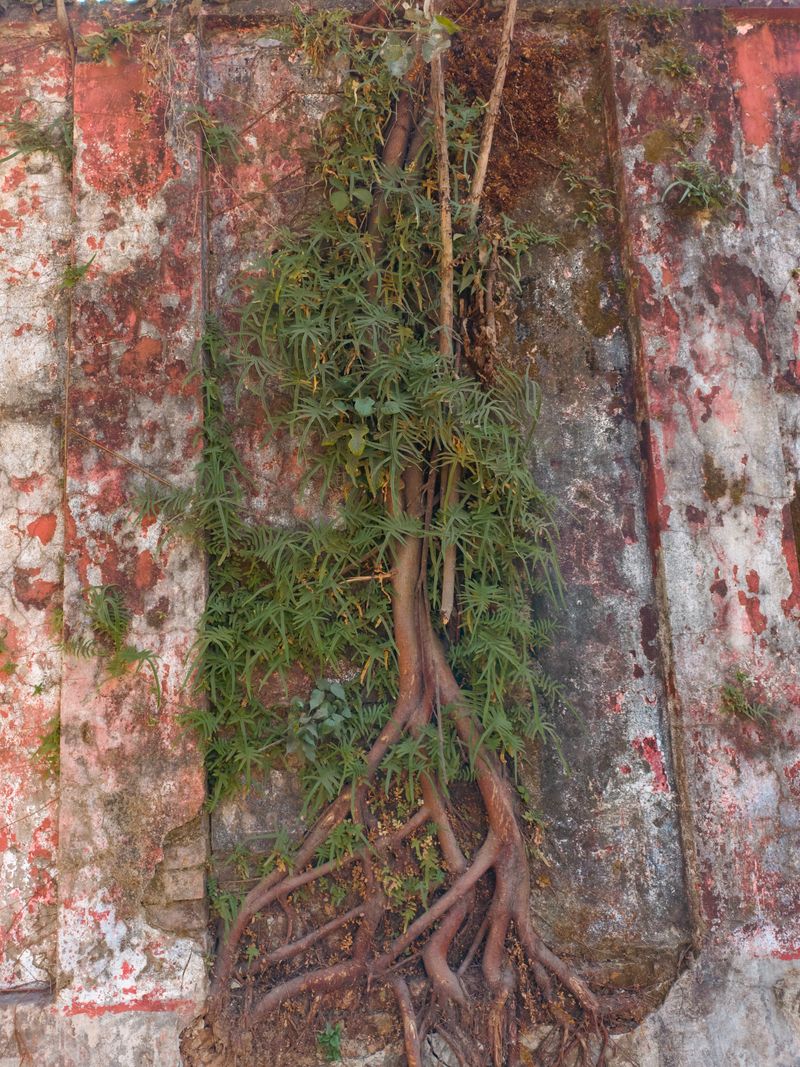
The single biggest variable is how far the tree was planted from the concrete in the first place. A shade tree set close to a driveway is on a collision course from the day it goes in.
Distance bought at planting is the cheapest prevention available. Once a tree is established, that decision is no longer adjustable.
The Species and Its Mature Size
A large shade species develops thick structural roots that lift slabs, while a small ornamental rarely generates enough force to matter. Mature size at planting time predicts hardscape conflict better than almost anything else.
Fast-growing large species compress the timeline further. The same tree that shades a patio in 15 years can be lifting it by year 25.
What the Roots Find Underneath
Roots follow moisture, air, and loose soil, and the edge of a slab frequently offers all three. Where the surrounding ground is compacted, the gap alongside concrete becomes the path of least resistance.
That is why roots so often run directly along a driveway edge rather than away from it. The slab itself creates the conditions that draw them.
How the Concrete Was Built Underneath
Thin concrete over a shallow base lifts sooner than a thick slab poured on a well-compacted bed. What sits under the surface sets how much root force it takes before movement shows.
Older walkways with a thinner section tend to move first for that reason. Two identical trees can produce very different timelines on two different slabs.
Signs Roots Are Lifting Your Sidewalk or Driveway
Hardscape gives plenty of warning before it fails outright. These are the signals worth acting on.
One Panel Sitting Higher Than Its Neighbor
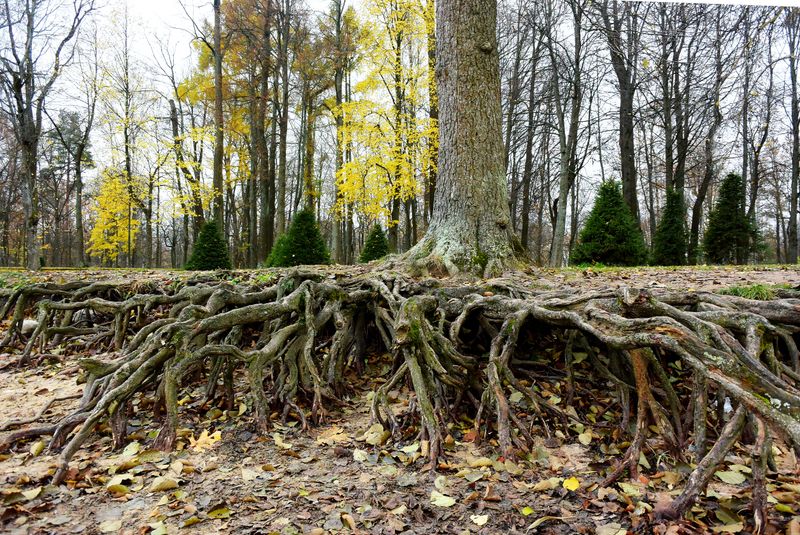
A single slab tilted or raised relative to the one beside it is the classic early signal. The lift usually starts small enough that people step over it without registering the change.
Check the joint line rather than the surface. A panel that has moved will show a step at the joint before the concrete itself shows damage.
Cracks Running Toward the Nearest Tree
A crack that runs on a diagonal pointing back toward a trunk is often root-driven rather than a settlement issue. The direction is the useful clue.
Cracks from ordinary settlement tend to follow a different pattern. Where a crack aims at a tree, a root is a reasonable first suspect.
A Ridge or Hump You Can Feel Underfoot
A gradual rise in a walkway that you notice with your feet before your eyes usually means a thickening root underneath. It develops over seasons rather than suddenly.
This stage is the last comfortable point to intervene. Once the concrete cracks along the ridge, the repair becomes a replacement.
Water Pooling Where It Used to Drain
A section of walkway or driveway that suddenly holds water after rain has usually changed slope, and a thickening root underneath is a common reason. The puddle marks the low side of a panel that has tipped.
Standing water is worth noting even when the lift is too small to see. A puddle that returns after every rain gives you a measurable change to track from one season to the next.
Signs Roots Are Working Against a Foundation
Foundations are affected differently from flatwork, and the mechanism is usually less dramatic than people picture.
Doors and Windows That Have Started Sticking
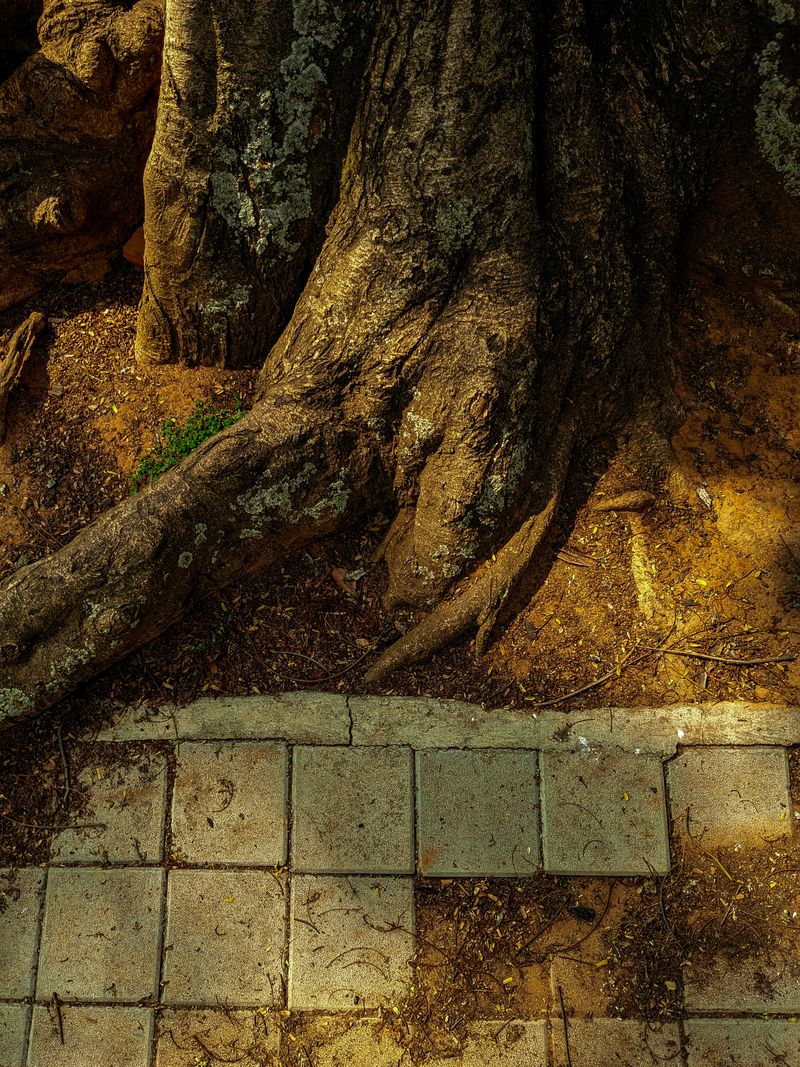
Movement in a slab or pier system frequently shows up first at door and window frames. A door that suddenly needs a shoulder is worth investigating rather than planing.
Seasonal sticking that comes and goes with the weather points toward soil moisture rather than a permanent shift. Persistent sticking that only worsens is the more serious version.
Hairline Cracks Appearing in the Same Season Each Year
Cracks that widen through a dry stretch and close up after heavy rain suggest soil moving with moisture content rather than roots physically pushing. Large trees pull substantial water from the ground during dry spells.
That pattern is common on soils that shrink and swell. It is a reason to watch the moisture rather than assume the roots are prying anything apart.
Damp or Disturbed Ground Along the Foundation Line
Soil that looks heaved, cracked, or unusually dry along one side of a structure can indicate root activity concentrated there. It tends to show up on the side facing a large tree.
Any of these signals warrants an assessment rather than a conclusion. Foundation questions usually need a structural opinion alongside the tree assessment.
Why New Orleans Ground Makes Root Damage Worse
Local conditions change how quickly root damage develops and how it presents. The table below covers the factors that come up most often.
| Factor |
Effect on Hardscape |
What Helps |
| Soft, moisture-holding ground |
Slabs settle and shift more readily |
Watch joint lines yearly, not just surfaces |
| Wet and dry cycles through the year |
Soil volume changes, cracks open and close |
Track whether cracks are seasonal or permanent |
| Large mature shade trees close to slabs |
Thick structural roots lift concrete over time |
Root barriers before new paving goes in |
| Narrow lots with little planting room |
Trees end up closer to hardscape than ideal |
Match species mature size to available space |
Prevention beats repair on every one of these lines. Installing a root barrier while a driveway is being poured costs a fraction of cutting and replacing panels later, and it does not put the tree at risk.
Where a tree and a slab are already in conflict, the options narrow considerably. Cutting major structural roots to save concrete can destabilize a tree, so a professional tree assessment should come before anyone starts trenching near a driveway or walkway.
Protect Your Hardscape Before Roots Force the Repair
The properties that avoid this are the ones where somebody looks at the joint lines once a year and acts on the first raised panel. Nothing about the prevention is complicated or expensive.
At TurnKey Tree Cutting, we assess the trees near your hardscape, identify which ones are on a path toward conflict, and handle stump grinding where old roots are still working against a slab. Call us today to get ahead of a repair you do not need yet.
Frequently Asked Questions
Can tree roots damage a concrete driveway?
Yes. As structural roots thicken over years they can lift slabs from underneath, producing a raised panel, a ridge you feel underfoot, or a crack running back toward the trunk. The process is slow, which is why the early signals appear well before the concrete actually fails.
How far should a tree be from a driveway or sidewalk?
The right distance depends on the species and its mature size, so no single number fits every tree. A large shade species needs considerably more room than a small ornamental. Matching the tree’s mature size to the space available at planting is the cheapest prevention there is.
Do tree roots crack house foundations?
Roots more often affect foundations by changing soil moisture than by pushing through concrete. Large trees draw substantial water from the ground during dry spells, and soils that shrink and swell move with it. Cracks that widen in dry weather and close after rain point toward that mechanism.
What is a root barrier and does it work?
A root barrier is a physical panel installed vertically in the soil to redirect root growth downward and away from hardscape. Installed before or during paving, it is an effective and relatively inexpensive preventive measure. Retrofitting one near an established tree is more complicated and needs assessment first.
Can you cut tree roots to fix a lifted sidewalk?
Sometimes, but cutting major structural roots can destabilize a tree and create a hazard worse than the raised concrete. Whether roots can be cut safely depends on their size, position, and how many the tree relies on. Have the tree assessed before any trenching begins.
Why is my sidewalk cracking near a tree?
A crack running on a diagonal toward a nearby trunk is often root-driven, since a thickening root beneath the slab lifts it unevenly. Settlement cracks generally follow a different pattern. The direction of the crack relative to the tree is the most useful early clue.
Do old roots left in the ground keep damaging a slab?
Yes. Roots left under a slab decay slowly once a tree is gone, and the voids they leave behind can allow continued settlement in the same spot. Grinding the stump and clearing the remaining roots is usually part of stabilizing the ground before any repair or replacement is scheduled.
How do I know if a crack is from roots or normal settling?
Direction and timing are the two useful tests. Cracks aiming toward a nearby tree suggest root involvement, and cracks that open in dry weather and close after rain suggest soil moisture change. Persistent cracks that only widen deserve both a tree assessment and a structural opinion.
Stump Grinding in Tight Spaces
Quick Answer: Stump grinding in tight or hard-to-reach New Orleans spaces relies on compact machines that fit through standard backyard gates, along narrow side yards, and between structures. Crews match equipment size to the access point, protect surrounding hardscape, and reach stumps that larger grinders cannot. The result is full grinding of the stump and surface roots even when the space feels impossible to work in.
At TurnKey Tree Cutting, we grind stumps in some of the most cramped yards across the Greater New Orleans area. Narrow gates, tight side yards, and stumps wedged against fences or foundations are part of our everyday work.
Many homeowners assume a stump stuck in a corner or behind a locked gate simply cannot be reached. In most cases the right machine and a careful approach make the job possible without tearing anything apart.
This article walks through how access is evaluated, what equipment sizes exist, and what you can expect on a tight-space grinding day. Contact us today to schedule a free on-site estimate for your stump.
Why Tight Access Changes a Stump Grinding Job
A stump in an open front yard is straightforward, but the same stump behind a fence or between two buildings is a different task. Access dictates which machine can reach the work and how the crew sets up.
When space is limited, we plan the route from the truck to the stump before any grinding starts. That planning covers gate widths, ground surface, slopes, and anything overhead that could block a taller machine.
Tight access rarely stops the job. It simply shapes the choice of equipment, the time on site, and the protective steps we take along the way.
Common Access Challenges in New Orleans Yards
Older New Orleans neighborhoods were not designed around modern equipment, so most tight-space jobs share a few recurring obstacles. Knowing them ahead of time helps us bring the right machine on the first visit.
Narrow Backyard Gates
Standard residential gates are often the first hurdle, and many measure just wide enough for a person and a wheelbarrow. We measure the gate opening before selecting a grinder so the machine clears the posts and latch hardware.
If a gate is too narrow, we look at whether a section of fence panel can be temporarily removed and reset. That option is discussed with you during the estimate, never assumed.
Side Yards and Alleys
Homes built close to the property line leave slim side yards, sometimes only a few feet across. A compact, walk-behind grinder can travel these paths where a ride-on unit cannot.
We also watch for meters, hose bibs, and downspouts that line these corridors. Mapping them first keeps the machine and your utilities out of harm’s way.
Stumps Against Fences or Foundations
A stump pressed against a fence, slab, or house foundation limits how the grinder can approach. We position the cutting wheel to work the accessible faces first, then reset the angle to reach the tight side.
Protecting the adjacent structure guides every pass in these spots. Where a root runs under a slab, we grind to the edge and explain what can and cannot be reached safely.
Soft or Wet Ground
New Orleans sits low, and yards hold moisture after rain, which affects how heavy a machine the ground will support. On soft turf we may lay boards or mats to spread the weight and avoid rutting.
Timing matters too, so we sometimes recommend grinding after a yard has had a few dry days. That small delay protects your lawn and keeps the crew working efficiently.
Matching Equipment Size to the Space
Stump grinders come in a range of sizes, and the access point usually decides which one fits. Below is a general guide to how machine size relates to the space it can enter.
| Grinder Type |
Typical Access Fit |
Best For |
| Compact walk-behind |
Standard gates and narrow paths |
Backyards, side yards, tight corners |
| Mid-size self-propelled |
Wider gates and open side access |
Larger stumps with moderate access |
| Ride-on or towable |
Open yards and driveways |
Front yards and large or multiple stumps |
The smaller the opening, the more we lean on compact units built to squeeze through gaps. Larger stumps in tight spots take more passes, but a well-matched machine still finishes the job.
What to Expect on a Tight-Space Grinding Day
A hard-to-reach job follows the same core steps as any grinding project, with extra care built into the setup. Knowing the sequence helps you prepare the property and understand the timeline.
Access Walkthrough and Setup
We start by walking the route from the truck to the stump and confirming the machine we brought will clear every point. Gates are opened, fragile items are moved, and the path is cleared of debris.
If a fence panel needs to come off, that happens now with your approval. Ground protection like boards or mats goes down before the grinder rolls in.
The Grinding Itself
The cutting wheel works the stump down in passes, starting with the most accessible face. In tight corners we reposition the machine several times to reach every angle.
Surface roots that spread from the stump are ground as access allows. We keep the work contained so chips and debris stay in the intended area.
Cleanup and Reset
Once grinding wraps, we rake the chips back over the hole or remove them based on what you prefer. Any fence panel or ground protection is put back in place.
We leave the tight space as we found it, minus the stump. A final walk confirms gates, meters, and structures came through untouched.
Estimating Cost for Hard-to-Reach Stumps
Tight access can add time and effort, so it factors into pricing alongside stump size and root spread. Rather than quote a flat figure sight unseen, we base every price on a free on-site look at the actual stump and its surroundings.
Several details shape the cost of a hard-to-reach job. Understanding them helps you see why an in-person estimate is the fair way to price this work.
– Access difficulty: narrower gates and longer walk paths add setup and travel time
– Stump size: diameter and height determine how much material must be ground
– Root spread: exposed surface roots often need grinding along with the main stump
– Ground conditions: soft or sloped ground may call for extra protection or equipment
– Number of stumps: multiple stumps in one visit can change the overall scope
For published national ranges, cost guides like Angi and HomeAdvisor list typical stump grinding prices, though local access and conditions can move the number. The most accurate figure for your yard comes from a free estimate where we see the stump in person.
How Tight-Space Grinding Fits the Bigger Picture
Grinding a hard-to-reach stump is one piece of a larger removal decision, and it helps to see where it fits. If you are still weighing your options, our guide on stump grinding versus stump removal explains the difference between the two approaches.
Access and pricing are closely linked, so many homeowners also review how much stump grinding costs before scheduling. For the full overview of the process end to end, our stump grinding and removal guide ties every stage together.
When you are ready to move forward, our stump grinding service covers tight-space and open-yard jobs across the Greater New Orleans area. Every job starts with a free on-site estimate so nothing is guessed at.
Permits and Protected Trees in New Orleans
Grinding a stump usually does not trigger a permit, since the tree is already down. The permit question more often applies before removal, especially for large or protected trees.
New Orleans and surrounding parishes have rules that can apply to significant or protected trees, and requirements vary by location and tree type. When a job touches a tree that may fall under those rules, we help you understand the process rather than guess at it.
Because we also handle construction permitting and larger removals, we can flag when a permit is likely to matter. That guidance keeps your project on the right side of local requirements from the start.
Schedule Your Tight-Space Stump Grinding
At TurnKey Tree Cutting, we treat cramped New Orleans yards as a normal part of the work rather than an obstacle. Our crews are licensed and insured, our arborists are certified, and every job begins with a free on-site estimate that matches the right machine to your access point.
A stump behind a narrow gate, along a slim side yard, or tight against a foundation is well within our reach, thanks to the right equipment and experience. Call us today to book your free estimate and get that stump ground out for good.
Frequently Asked Questions
Can a stump grinder fit through a standard backyard gate?
Most compact walk-behind stump grinders are built to pass through standard residential gates, which is why crews measure the opening before choosing a machine. If the gate is too narrow, a fence panel can sometimes be removed and reset. The right equipment reaches the great majority of gated backyards.
How do you grind a stump that is against a fence or foundation?
We position the cutting wheel to work the accessible faces of the stump first, then reset the machine’s angle to reach the tight side against the structure. The adjacent fence or foundation guides every pass. Where a root runs under a slab, we grind safely to the edge and explain what cannot be reached.
Does tight access make stump grinding more expensive?
Tight access can add setup and travel time, so it is one factor in pricing alongside stump size, root spread, and ground conditions. It rarely makes a job impossible. The fairest way to price a hard-to-reach stump is a free on-site estimate where the crew sees the actual space.
What size stump grinder do I need for a narrow side yard?
Narrow side yards usually call for a compact, walk-behind grinder that can travel paths only a few feet wide. Larger self-propelled or ride-on machines need wider openings and open ground. During the estimate, the crew matches the machine to your exact access point so it fits on the first visit.
Can you remove a fence panel to reach a stump?
Yes, when a gate is too narrow, a section of fence panel can often be temporarily removed and reset after the grinding is done. This option is always discussed and approved during the estimate, never assumed. Resetting the panel is part of the cleanup so the yard is left intact.
Will grinding damage my lawn in a soft, wet yard?
Low-lying New Orleans yards hold moisture, so on soft turf crews may lay boards or mats to spread the machine’s weight and avoid rutting. Sometimes grinding is scheduled after a few dry days. These steps protect the lawn while still reaching and removing the stump.
Do I need a permit to grind a stump in New Orleans?
Grinding an existing stump usually does not require a permit, since the tree is already down. Permit rules more often apply before removing large or protected trees, and requirements vary by location and tree type. For jobs that may fall under local tree rules, we help explain the process.
How long does a tight-space stump grinding job take?
Time depends on stump size, root spread, and how much repositioning the access requires, so a tight corner takes longer than an open yard. Setup like clearing the path and laying ground protection adds a little time up front. The crew gives a realistic timeframe during the free estimate.
Understanding Tree Root Systems
Quick Answer: Tree root systems anchor a tree, absorb water, and store energy, spreading wide and shallow in the damp, high-water-table soils common across New Orleans and southern Louisiana. Removal is rarely as simple as pulling a trunk, because roots weave through soil and often around foundations, pipes, and hardscape. Stump grinding clears the visible stump but leaves buried roots behind to decay slowly over months or years.
At TurnKey Tree Cutting, we spend our days working with the root systems that hold New Orleans trees upright and keep them fed. Understanding how roots grow and behave helps homeowners make smarter decisions about removal, grinding, and long-term yard planning.
Roots are the hidden half of every tree, and they rarely match what people picture underground. A single mature tree can send roots well beyond the reach of its branches, threading through soil that is often soft, wet, and shallow across our region.
That structure shapes everything about how a tree is removed and what stays behind afterward. Contact us today to schedule a free on-site estimate and get a clear picture of what your specific tree and soil conditions require.
What a Tree Root System Actually Does
A root system carries out three core jobs that keep a tree alive and standing. Each function influences how the roots grow and how difficult they are to remove.
Roots are far more than a passive underground anchor. They actively drive the tree’s health, stability, and long-term response to stress or damage.
Anchoring the Tree
Roots hold a tree upright against wind, storms, and its own weight. In New Orleans, where saturated soil and hurricane-season winds are routine, strong anchoring roots matter enormously. When those roots weaken from rot or disturbance, a tree becomes far more likely to lean or fall, which is why we assess root condition before recommending removal or preservation.
Absorbing Water and Nutrients
Fine feeder roots near the surface pull in water and dissolved nutrients from the soil. Most of this absorption happens in the top foot or so of ground, close to where oxygen is available. This is one reason roots stay shallow in our area, spreading outward instead of driving deep in search of moisture.
Storing Energy Reserves
Larger structural roots store sugars and starches the tree produces during the growing season. These reserves fuel new growth in spring and help the tree recover after stress. Those stored reserves are also why a cut stump can push out new sprouts, since the roots still hold energy even after the trunk is gone.
How Roots Grow in New Orleans Soil
Root growth is shaped heavily by local soil and water conditions, and our region presents a distinctive set of both. Understanding these factors explains why local root systems behave the way they do.
Much of the New Orleans area sits on soft, moist soil with a high water table. Because water and oxygen are readily available near the surface, roots have little reason to grow deep and instead spread wide and shallow. This shallow, spreading habit means roots frequently reach under driveways, patios, foundations, and utility lines long before a homeowner notices.
Soil that shifts, settles, or stays wet can also push roots toward the surface over time. That is why we so often see roots lifting sidewalks or surfacing in lawns across neighborhoods here.
Common Root System Types
Not every tree grows roots the same way, and the pattern affects both stability and removal. The table below outlines the main root types we encounter and what each means for a property.
| Root Type |
How It Grows |
What It Means for Removal |
| Taproot |
A single deep central root, more common in young or certain species. |
Harder to extract fully; often ground rather than pulled. |
| Lateral roots |
Spread wide and shallow, common in local soils. |
Can reach hardscape and pipes; require careful assessment. |
| Feeder roots |
Fine, dense roots near the surface that absorb moisture. |
Left in soil after grinding; break down naturally over time. |
| Buttress roots |
Flared roots at the trunk base that add support. |
May need grinding below grade for a flush finish. |
Why Roots Remain After Stump Grinding
One of the most common questions we hear is why roots are still in the ground after a stump has been ground. The answer comes down to how grinding works and where roots actually go.
Stump grinding uses a rotating cutting wheel to chip the visible stump and the wood just below the surface into mulch. The grinder typically works down several inches to a foot below grade, well enough to clear the stump and level the spot. It does not, and is not designed to, chase every lateral and feeder root that may extend many feet outward.
Those remaining roots are no longer connected to a living trunk, so they stop growing and gradually break down. For a deeper comparison of the two approaches, see our guide on stump grinding versus stump removal, which explains when each method fits.
What Happens to Roots Left in the Ground
Buried roots do not simply vanish once the stump is gone, but they also do not usually cause problems. Knowing what to expect helps homeowners plan replanting and landscaping.
After grinding, the disconnected roots begin a slow process of decay driven by soil moisture, fungi, and microbes. In our warm, damp climate this breakdown can proceed steadily, though large roots may take several years to fully soften and disappear.
As roots decay they can leave small voids or soft spots in the soil, which is worth knowing before planting or paving over the area. If sprouts appear from a leftover stump or root, our guide on how to stop a stump from growing back walks through the options.
Roots, Foundations, and Utilities
Because local roots spread wide and shallow, they frequently interact with the built environment around a home. Understanding this relationship helps homeowners weigh removal decisions.
Roots seek moisture and can follow the paths of least resistance toward irrigation, drainage, and even small cracks in older pipes. Over time this can contribute to lifted pavement, cracked slabs, or intrusion into aging sewer and water lines. When a tree sits close to a foundation, we evaluate both the tree and the surrounding structures before recommending a removal approach.
We always locate and account for utilities during planning, since roots often grow directly alongside buried lines in tight urban lots.
How We Approach Root and Stump Work
Every property is different, so we tailor our approach to the tree, the soil, and what sits nearby. Our process is built around assessing conditions before any equipment touches the ground.
On-Site Assessment First
We start with a free on-site estimate, examining the tree’s size, species, lean, and proximity to structures and utilities. This lets us recommend the right method rather than guessing. Understanding the root situation up front prevents surprises and protects your property.
Matching Method to Conditions
Depending on the situation, we may recommend removal, trimming, stump grinding, or a combination. For stumps, our stump grinding service clears the visible portion efficiently, and our broader stump grinding and removal guide explains how the full process fits together.
Protecting the Surrounding Yard
We work to minimize disruption to lawns, hardscape, and nearby plantings during any root or stump job. Careful planning around shallow local roots reduces the chance of collateral damage. As a licensed and insured team with certified arborists, we bring the training these judgment calls require.
When Root Removal Requires a Permit
Tree work in and around New Orleans can involve permitting, particularly for larger or protected trees. Rules vary by location and situation, so it helps to confirm before work begins.
Permits are often required for removing significant or protected trees, and the exact thresholds depend on the tree, its location, and local regulations. Because requirements differ from place to place, we help homeowners understand what may apply and can assist with construction permitting when a project calls for it. We never guarantee an outcome, but we do make sure the process is handled properly and transparently.
Closing: Making a Confident Removal Decision
Understanding what lies beneath your tree turns a confusing removal into a clear, manageable decision, because roots shape everything from stability to what stays behind after grinding. At TurnKey Tree Cutting, we combine local knowledge of New Orleans soils with the training of certified arborists to guide each step.
You may be weighing removal, weighing grinding, or simply trying to understand what is happening in your yard, and we are ready to help either way. Call us today to schedule a free on-site estimate and get straightforward answers about your tree and its roots.
Frequently Asked Questions
Do tree roots keep growing after the tree is cut down?
Roots stop growing once the trunk is removed, because they can no longer produce or receive energy from leaves. However, stored reserves in the roots can push out new sprouts from a stump for a while. Grinding the stump and treating regrowth helps stop this response.
How deep do tree roots grow in New Orleans?
Most tree roots in the New Orleans area stay shallow, concentrated in the top foot or so of soil. The region’s high water table and moist ground give roots easy access to water and oxygen near the surface, so they spread wide rather than deep. Depths vary by species and soil conditions.
Does stump grinding remove all the roots?
No, stump grinding removes the visible stump and wood a short distance below grade, but it leaves the wider lateral and feeder roots in place. Those disconnected roots stay in the soil and break down naturally over time. The exact depth depends on the equipment and site.
How long do leftover roots take to decompose?
Decay depends on root size, soil moisture, and temperature, and our warm, damp climate generally supports steady breakdown. Small feeder roots may soften within a year or two, while large structural roots can take several years to fully decompose. Keeping the soil moist can encourage the process.
Can tree roots damage my foundation or pipes?
Roots seek moisture and can follow existing cracks or joints in aging pipes and slabs, which may contribute to damage over time. Shallow, spreading local roots make this more likely near foundations and utilities. An on-site assessment helps identify risk before it becomes a costly problem.
Should I remove roots before planting a new tree?
It is often worth clearing or grinding major roots before replanting, since leftover roots and voids can affect new root establishment. The right approach depends on the space and what you plan to plant. We can assess the area and recommend how to prepare the spot properly.
Is a permit needed to remove a tree in New Orleans?
A permit is often required for removing significant or protected trees, though rules vary by location and situation. Because thresholds and requirements differ, it is best to confirm before starting work. We help homeowners understand what may apply and can assist with construction permitting when needed.
What does tree root removal cost?
Cost depends on tree size, root spread, access, and proximity to structures and utilities, so there is no single flat figure. The best way to get an accurate number is a free on-site estimate where we assess the specific conditions. We provide clear pricing after seeing your tree in person.
DIY vs Professional Stump Removal
Quick Answer: Removing a stump yourself in New Orleans can work for small, softwood stumps using grinding rental, chemical, or manual digging methods, but the labor, time, and equipment risk add up fast. Professional grinding clears any stump quickly and safely below grade. The right choice depends on stump size, root spread, budget, and how much physical effort and hazard you are willing to take on.
At TurnKey Tree Cutting, we get asked constantly whether a homeowner should tackle a stump alone or bring in a crew. It is a fair question, because the answer genuinely changes based on the stump in your yard and the tools you already own.
A grapefruit-sized stump from a young ornamental is a very different project than a decades-old oak stump with roots crawling under your patio. The gap in effort, safety, and outcome between the two is enormous, and that gap is exactly what this guide walks through.
We serve homeowners across New Orleans and the Greater New Orleans area, so we see both the wins and the regrets that come with the do-it-yourself route. Contact us today to get a free on-site estimate before you rent equipment you may not need.
Why Stump Removal Is Harder Than It Looks
A stump is only the visible part of the problem, and the root system below it is often wider than the tree’s former canopy. In our New Orleans soil, roots spread shallow and far to find stable footing, which makes full manual removal a much bigger dig than most people expect.
The stump itself is dense, seasoned wood that resists axes, saws, and shovels. Grinding is the method professionals rely on because it turns that wood into chips in minutes rather than fighting it by hand for a weekend.
Understanding what lies beneath helps set realistic expectations. Our guide to tree root systems explains why the below-grade portion drives so much of the difficulty.
The Main DIY Stump Removal Methods
Homeowners generally reach for one of a few approaches, and each trades cost for either time or physical labor. Knowing the strengths and limits of each helps you judge whether the project fits your weekend.
Renting a Stump Grinder
A rental grinder is the fastest DIY option and the closest thing to what a crew uses. The catch is that these machines are heavy, throw debris, and demand real caution, so operator inexperience is where most injuries happen.
Chemical Stump Rot
Chemical accelerants speed up natural decay by feeding fungus and bacteria in the wood. It is low effort but very slow, often taking several months to a year, and the softened stump still has to be dug or broken out afterward.
Manual Digging and Cutting
Digging exposes the roots so you can sever them with a saw, axe, or mattock and lever the stump free. It costs almost nothing in tools but demands serious labor, and hidden roots near utility lines make it risky in older neighborhoods.
Burning the Stump
Burning is sometimes suggested, but it is slow, unreliable on green or damp wood, and often restricted by local fire rules. In a humid climate like ours, stumps rarely burn cleanly enough to finish the job.
What Professional Stump Grinding Involves
Professional grinding uses a purpose-built machine that grinds the stump and major surface roots several inches below grade in a single visit. The result is a clean, level area ready for sod, a garden bed, or a new planting.
A trained crew reads the site first, checking for irrigation, cables, and hardscape before the wheel touches wood. That planning is what keeps grinding fast and controlled rather than a source of surprise damage.
We handle cleanup, backfill options, and the chips the grinder produces so you are not left with a mess. Our stump grinding service covers stumps of nearly any size across the metro area.
DIY vs Professional: A Side-by-Side Look
The clearest way to weigh your options is to compare them across the factors that actually matter. The table below lines up the two paths on effort, speed, risk, and finish quality.
| Factor |
DIY Removal |
Professional Grinding |
| Time to finish |
Hours to many months, method dependent |
Usually one visit |
| Physical effort |
Moderate to very high |
None for the homeowner |
| Safety risk |
Higher, especially with rented machines |
Managed by trained crew |
| Equipment needed |
Rental or hand tools you source |
Provided |
| Finish quality |
Variable, often partial |
Clean, below-grade, level |
Weighing Effort Against Risk
The trade-off at the heart of this decision is simple: DIY saves money up front but transfers time and hazard onto you. Rented grinders cause serious injuries every year, and manual digging strains backs and hits buried lines people did not know were there.
Professional grinding removes that hazard entirely and finishes in a fraction of the time. For anything larger than a small softwood stump, the safety and speed usually outweigh the rental savings.
There is also the question of what you are left with. Even a successful DIY effort often leaves roots and a rough hole, while grinding produces a level surface you can replant right away.
When DIY Actually Makes Sense
DIY is not always the wrong call, and small jobs can be a reasonable weekend project. If the stump is young, softwood, under a few inches across, and clear of any utilities, hand tools or a small rental may be all you need.
The math shifts once size, hardwood density, or root spread enters the picture. A mature oak, magnolia, or live oak stump is rarely a realistic solo project, and that is where a crew earns its keep.
If you are unsure which category your stump falls into, a quick on-site look settles it fast. We would rather tell you honestly that a stump is a fair DIY job than sell you a service you do not need.
What Grinding Costs and What Drives the Price
Cost is usually the deciding factor, and stump grinding pricing depends on more than just the stump you see. Size, wood hardness, root spread, access, and how many stumps you have all move the number.
According to home services marketplace Angi, professional stump grinding commonly falls in a range of roughly one hundred to several hundred dollars per stump, with larger or harder stumps costing more. Because every yard is different, we quote from an on-site look rather than a phone guess.
For a fuller breakdown of the variables, see our article on how much stump grinding costs and how estimates are built.
Permits and Local Rules to Check First
Before removing any significant tree or stump, it is worth confirming whether local rules apply, because requirements vary by property and tree. Permits are often required for large, heritage, or protected trees, and the rules differ between jurisdictions in the Greater New Orleans area.
A DIY project does not exempt you from those rules, so the paperwork is your responsibility on a solo job. We handle construction permitting as part of our services and can help you understand what your specific tree may require.
Checking first protects you from fines and delays. When in doubt, a licensed and insured crew can flag the requirements before work begins rather than after.
Choosing the Right Path for Your Yard and Calling In Help
The DIY versus professional question comes down to matching the method to the stump in front of you and being honest about your time, tools, and tolerance for risk. Small softwood stumps can be a satisfying weekend win, while large or root-heavy stumps almost always favor professional grinding, which is where the crew at TurnKey Tree Cutting helps New Orleans homeowners make the call without pressure.
If you have measured your stump and still are not sure, let a certified arborist take a look and give you a straight answer. Call us today for a free on-site estimate and a clear recommendation for your property.
Frequently Asked Questions
Is it cheaper to remove a stump yourself or hire a professional?
DIY removal has a lower up-front cost since you skip the service fee, but you pay in time, effort, and rental or tool expenses. For small softwood stumps the savings can be real, while larger stumps often make professional grinding the better value once labor and risk are counted.
How long does professional stump grinding take?
Most professional stump grinding is completed in a single visit, often within an hour or two per stump depending on size and root spread. A trained crew and a purpose-built machine grind the stump several inches below grade quickly, which is far faster than any DIY chemical or manual method.
Can I rent a stump grinder and do it myself?
Yes, rental stump grinders are available, and they are the fastest DIY option for a capable homeowner. The trade-off is that these machines are heavy, throw debris, and cause injuries when operated without experience, so caution and protective gear are essential.
Do chemical stump removers really work?
Chemical stump removers can speed up natural decay, but they work slowly, often taking several months to a year before the wood softens. Even then, you still have to dig or break out the remaining stump, so the method suits patient homeowners on small stumps rather than anyone wanting a quick result.
Do I need a permit to remove a stump in New Orleans?
Rules vary by property and tree type, so it depends. Permits are often required for large, heritage, or protected trees in the Greater New Orleans area, and removing a stump yourself does not exempt you from those requirements. Confirm the rules for your specific tree before starting any significant removal.
Is DIY stump removal dangerous?
It can be, depending on the method. Rented grinders throw debris and cause serious injuries without proper training, and manual digging risks back strain and striking buried utility lines. Small hand-dug stumps carry low risk, but larger jobs and power equipment raise the hazard considerably.
After Stump Grinding: Hole and Wood Chips
Quick Answer: After stump grinding, you are left with a shallow depression and a pile of wood chips mixed with soil. Fill the hole with topsoil, reuse the chips as mulch on beds or paths, and wait for remaining roots to decay before replanting in the same spot. In New Orleans yards, plan for settling and drainage so the area levels out cleanly over time.
At TurnKey Tree Cutting, we grind hundreds of stumps across New Orleans and finish every job with a plan for the leftovers. What you do next decides whether that patch of yard heals cleanly or turns into a soggy dip.
Most homeowners are surprised by how much material a single stump produces. The grinding process turns the stump and surface roots into a mound of chips that usually outvolumes the hole itself.
This guide walks through filling the cavity, putting those chips to work, and replanting the spot the right way. Contact us today to schedule a grind or ask about cleanup options for your property.
Why Stump Grinding Leaves a Hole and Chip Pile
Our stump grinding service uses a rotating cutting wheel to chew the stump down below grade, typically six to twelve inches deep. That action carves out a shallow bowl and throws the ground-up wood into a loose pile beside it.
The pile is a blend of wood fibers, bark, and native soil pulled up during grinding. Because ground wood is fluffy and full of air, the pile looks far larger than the stump ever did.
The hole is rarely a clean pit. It is a soft, uneven depression laced with severed root channels that will continue to settle for months as the buried wood breaks down.
Understanding this helps you plan the cleanup instead of scrambling after the crew leaves. If you are still weighing your options, our complete guide to stump grinding and removal walks through the full process from start to finish.
How Much Material to Expect
The volume of chips catches most people off guard, so it helps to estimate before you start. A rough plan keeps you from running short on soil or leaving chips piled where you do not want them.
A medium stump can produce several wheelbarrow loads of ground material once the wood fluffs up. Larger stumps or clusters of surface roots multiply that quickly, especially with older hardwoods common around New Orleans.
Plan for the chips to fill more space than the hole needs, which means you will have extra to spread elsewhere. Deciding on those destinations early makes the whole cleanup smoother and faster.
How to Fill the Hole Left Behind
Filling the hole correctly prevents a sunken spot and keeps water from pooling in your yard. The approach depends on how you plan to use the space afterward.
Backfill With the Chips First
The fastest option is returning a portion of the ground chips to the hole, then capping the top with soil. This reuses material already on site, though the buried wood will compress as it decomposes.
Top With Quality Topsoil
For a lawn or planting bed, fill the cavity with clean topsoil rather than pure chips. Soil packs denser, holds grass seed, and settles far less than raw wood over the first year.
Overfill to Account for Settling
Mound the fill a few inches above grade because the spot will sink as roots and buried chips decay. In our humid New Orleans climate, that breakdown happens quickly, so plan to add more soil later.
Tamp and Water in Stages
Add fill in layers, tamping and watering each one to remove air pockets. This staged method reduces sudden collapse and gives you a firmer, more stable surface.
Smart Ways to Reuse the Wood Chips
The chip pile is a free resource that most homeowners throw away. With a little sorting, those chips can improve beds, paths, and soil across your property.
Mulch for Beds and Trees
Fresh wood chips make a serviceable mulch that suppresses weeds and holds moisture around shrubs and mature trees. Keep the layer two to three inches deep and pulled back from trunks so bark can breathe.
Pathways and Bare Spots
Spread chips along garden paths, under play structures, or over muddy low areas where grass struggles. In a wet city like ours, a chip layer gives footing and cuts down on tracked-in mud.
Compost and Soil Building
Blend chips into a compost pile with nitrogen-rich greens like grass clippings to speed their breakdown. Over time this yields a rich amendment you can work back into garden soil.
Erosion Control on Slopes
Wood chips slow runoff and hold loose soil in place on graded or sloped areas of a yard. In a rain-heavy area like ours, a chip layer on a bare slope reduces washout during heavy storms.
A Quick Comparison of Chip Uses
Different uses suit different chip conditions, so match the material to the job. The table below sorts the common options for a typical New Orleans yard.
| Use |
Best Chip Condition |
What to Watch For |
| Bed mulch |
Fresh or partly aged |
Keep off trunks and stems |
| Pathways |
Coarse, dry chips |
Refresh as they compact |
| Compost blend |
Any, mixed with greens |
Add nitrogen to speed decay |
| Hole backfill |
Chip and soil blend |
Expect settling over months |
Replanting Where the Stump Used to Be
Many homeowners want a new tree, shrub, or lawn right where the old stump stood. The buried roots and leftover wood change how you should approach that spot.
Wait for the Roots to Decay
The old root system and grinding debris are still underground and will pull nitrogen from the soil as they rot. Learning how tree root systems work makes it clearer why this leftover mass takes time to decay before you plant something demanding.
Remove Excess Chips First
Ground wood is a poor rooting medium, so rake out the chip-heavy layer before planting anything permanent. Replace it with topsoil that new roots can actually grow into.
Add Nitrogen to Balance the Soil
Decaying wood ties up nitrogen that seedlings and grass need to establish. A balanced fertilizer or nitrogen-rich amendment helps offset that draw during the transition.
Consider Planting Nearby Instead
If you want a replacement tree soon, planting a few feet away from the old stump avoids the compromised soil entirely. This sidesteps the leftover root mass and gives new roots clean ground.
Local Factors for New Orleans Yards
Our soil and weather shape how the hole and chips behave after grinding. Greater New Orleans sits low and wet, which affects both drainage and decomposition.
The area’s heavy clay and high water table mean a poorly filled hole can hold standing water after a storm. Grading the fill slightly above surrounding grade helps rain run off instead of collecting in the dip.
Our warm, humid seasons also speed decay, so buried chips and roots break down faster than they would in a drier climate. That is good for long-term soil, but it means faster settling that you will need to top off.
Termite pressure is another local reality worth keeping in mind. Keep large piles of wood chips away from the foundation of your home, and use chips as thin mulch rather than deep mounds near the house.
What to Avoid After Grinding
A few common missteps turn a simple cleanup into a lingering yard problem. Steering clear of them saves you a return trip with more soil and seed.
Do not fill the hole with pure wood chips and expect a level lawn, because the wood will settle and leave a dip. Avoid piling chips thick against tree trunks or house siding, where trapped moisture invites rot and pests.
Do not rush to plant a demanding tree in the exact spot before the old roots decay. Giving the soil time and balancing its nitrogen first prevents a struggling replacement down the road.
When to Call a Professional Crew
Some cleanup is easy homeowner work, while other situations call for equipment and experience. Knowing the difference saves you time and a sore back.
A single small stump and its chips are manageable with a rake, wheelbarrow, and a few bags of topsoil. If you are still deciding on scope, our breakdown of DIY versus professional stump removal helps you judge whether a job is worth handling yourself.
Larger stumps, multiple grinds, or heavy root mats produce more debris than most homeowners want to haul. In those cases a full-service crew that handles both tree removal and cleanup saves you the equipment rental and the hauling.
As a licensed and insured team with certified arborists, we can grind the stump, remove or spread the chips, and leave the area graded and ready. We also handle tree removal, trimming, fertilization, and construction permitting when a project needs more than grinding.
Finishing the Job the Right Way
Grinding a stump is only half the work, and how you handle the hole and chips decides whether the spot heals into healthy yard or becomes a nagging low patch. At TurnKey Tree Cutting, we finish every grind with the site in mind, filling with the right material and giving roots time to decay so you are not left guessing what to do next.
If you want the stump gone and the cleanup handled by people who know Greater New Orleans soil, we are ready to help. Call us today to schedule a free on-site estimate and get your yard back in shape.
Frequently Asked Questions
How deep is the hole after stump grinding?
Most stump grinding removes the stump six to twelve inches below grade, leaving a shallow bowl rather than a deep pit. The exact depth depends on the stump size and how far down the roots were ground. The cavity is usually easy to fill with soil or a chip and soil blend.
Can I use the wood chips as mulch right away?
Yes, fresh wood chips work as mulch on beds, around mature trees, and on garden paths. Keep the layer two to three inches deep and pull it back from trunks and stems. For tender annuals or vegetable beds, letting the chips age a few weeks first is a safer choice.
Should I fill the stump hole with the chips or with soil?
For a lawn or planting bed, topsoil is the better fill because it packs denser and settles less than raw wood. You can return some chips to the bottom of the hole, but cap the top with soil. Pure chip fill will sink noticeably as the wood decomposes.
Why does the ground sink where the stump was?
The buried roots and leftover wood chips slowly decompose, and as that material breaks down the fill loses volume and settles. New Orleans humidity speeds this process along. Mounding your fill a few inches above grade and topping it off later keeps the surface level.
How long before I can plant a new tree in the same spot?
Giving the area several months to a year lets old roots and grinding debris decay before you plant something demanding. Remove the chip-heavy layer, add topsoil, and balance the soil with nitrogen first. If you want a tree sooner, plant a few feet away from the old stump instead.
Do wood chips take nitrogen from the soil?
Yes, decaying wood pulls nitrogen from the surrounding soil as it breaks down, which can starve nearby seedlings and grass. Adding a balanced fertilizer or nitrogen-rich amendment offsets that draw. Using chips as surface mulch rather than mixing them into planting soil limits the effect.
What is the best way to get rid of leftover stump grindings?
You can reuse them as mulch, spread them on paths, or blend them into a compost pile with grass clippings. If you have more than you can use, a tree service can haul the excess away. Many homeowners keep a portion for garden use and remove the rest.
Can TurnKey Tree Cutting handle the cleanup too?
Yes, our crews can grind the stump and then spread or remove the chips and grade the area so it is ready for grass or planting. We serve New Orleans and Greater New Orleans and offer free on-site estimates. Call us to arrange grinding and full cleanup in one visit.
How to Stop a Stump from Growing Back
Quick Answer: To stop a tree stump from growing back, you must kill the root system, not just cut the trunk. The most reliable methods are grinding the stump several inches below the soil line, applying an herbicide to the fresh cut, and removing new sprouts as they appear. In New Orleans, where warm, wet conditions push aggressive regrowth, combining grinding with follow-up sprout control gives the most lasting results.
At TurnKey Tree Cutting, we see the same frustration across Greater New Orleans yards every season. A homeowner cuts a tree down, thinks the job is finished, then watches fresh green shoots push up from the old stump within weeks.
The truth is that cutting a tree at ground level does almost nothing to stop it from growing back. The roots are still alive, still storing energy, and in our warm climate they are more than ready to send up new growth.
This guide walks through why stumps regrow, the methods that actually stop it, and how to handle stubborn suckers. Contact us today to have a certified arborist assess your stump and recommend the right approach.
Why Do Tree Stumps Keep Growing Back?
A tree stump grows back because the root system underground is still alive and full of stored energy. When you cut the trunk, the roots interpret the loss of the canopy as an emergency and respond by pushing out new shoots to rebuild a leaf supply.
This survival response is strongest in fast-growing species and in warm, humid regions like southern Louisiana. Species such as crepe myrtle, hackberry, and certain oaks and willows are especially persistent, sending up sprouts again and again until the roots finally run out of stored fuel.
Simply cutting the stump lower does not solve the problem, because the energy is stored below the cut. To truly stop regrowth, you have to either destroy the root system’s ability to sprout or physically remove enough of the stump and roots that new growth cannot take hold.
What Are Suckers and Why Do They Appear?
Suckers are the fast-growing vertical shoots that emerge from a cut stump or from surface roots nearby. They appear because the root system is trying to survive, and they can pop up several feet away from the original trunk.
Where Suckers Come From
Suckers grow from dormant buds along the roots and the base of the stump. Once the canopy is gone, hormones that once suppressed those buds fade, and the buds activate. In New Orleans yards, shallow roots spread wide in our soft, moist soil, so sprouts can surface across a surprising area.
Why Cutting Them Off Is Not Enough
Cutting suckers at the surface removes the visible growth but leaves the roots intact and energized. Each time you cut, the plant may respond by sending up even more shoots. Repeated cutting eventually starves the roots, but it can take many rounds over one or two growing seasons.
How Suckers Spread Across a Yard
Because suckers rise from surface roots, they can appear in flower beds, along fence lines, or in the lawn. Left alone, some species can form a thicket of young growth. Addressing the root system directly is the only way to stop this spread at its source.
Stump Grinding Below the Surface
Stump grinding is the most dependable way to stop a stump from growing back, and depth is what makes it work. A grinder uses a rotating cutting wheel to chew the stump and upper root flare into small chips, and grinding well below the soil line removes the wood where most sprouting buds live.
For simple regrowth prevention, grinding a few inches below grade is often enough. When you plan to replant, install sod, or pour a patio, a deeper grind clears more of the root crown and gives a cleaner working surface. The right depth depends on the tree, its location, and what you plan to do with the space afterward.
Professional grinding also reaches roots that hand tools cannot, and it avoids the chemical exposure that some homeowners prefer to skip. Our team assesses each stump on site and grinds to the depth your project actually needs.
Chemical and Natural Stump Treatments
When grinding is not an option, treatments can help kill the root system over time. These methods work more slowly and are most effective when applied to a fresh cut.
Herbicide on a Fresh Cut
The most effective chemical approach applies a systemic herbicide, such as one containing glyphosate or triclopyr, directly to the freshly cut stump surface. A fresh cut still moves fluids into the roots, carrying the product down where it can prevent sprouting. Always follow the product label and any local application rules.
Epsom Salt and Rock Salt
Some homeowners drill holes in the stump and pack them with Epsom salt or rock salt to draw out moisture and slowly kill the wood. This is a gradual process that can take many weeks or months, and rock salt can harm surrounding soil and nearby plants if overused.
Speeding Natural Decay
Covering a stump to trap moisture, or drilling holes and adding a nitrogen source, encourages fungi and bacteria to break the wood down faster. Natural decay is patient work rather than a quick fix, and it does not always stop determined roots from sprouting in the meantime.
Comparing Methods to Stop Stump Regrowth
Different situations call for different approaches. The table below summarizes how the main methods compare on speed, effort, and how reliably they stop regrowth.
| Method |
Speed |
Effort |
Stops Regrowth? |
| Stump grinding below grade |
Fast |
Low (professional) |
Very reliable |
| Herbicide on fresh cut |
Moderate |
Low |
Reliable if timed right |
| Salt or drilling method |
Slow |
Moderate |
Sometimes |
| Cutting suckers only |
Very slow |
High (repeated) |
Eventually |
For most New Orleans homeowners, grinding paired with sprout monitoring offers the best balance of speed and lasting results. Our stump grinding service handles the heavy work in a single visit.
Handling Persistent Suckers After Treatment
Even after grinding or treatment, a determined root system can push out a few late sprouts. Staying ahead of these suckers is what turns a treated stump into a permanently dead one.
The key is consistency. Remove new shoots as soon as you see them, ideally while they are small and before they can feed energy back to the roots. Each removal further drains the root reserves, and within a season or two the sprouting usually stops for good.
If suckers keep returning after several rounds, the root system may be larger or more vigorous than expected. In that case, a professional evaluation can identify whether deeper grinding or a targeted treatment is the better next step. Understanding how the tree’s root system spreads often explains why the sprouts keep coming.
Do You Need a Permit to Remove a Stump in New Orleans?
Grinding an existing stump on private property is generally straightforward, but removing certain trees is a different matter. In New Orleans, permits are often required for significant or protected trees, especially larger specimens and those in the public right of way, though the specific rules vary by situation.
Because ordinances change and every property is different, it is best to confirm requirements before major tree work rather than after. As a licensed and insured local company, we help homeowners understand when a permit may apply and can assist with construction permitting when a project calls for it.
When your work is limited to grinding a stump that is already cut, permitting is usually not a concern. Still, checking first protects you from surprises, and our team is glad to point you in the right direction.
DIY or Professional Stump Removal?
Homeowners can tackle small stumps with rented equipment or slow chemical methods, but the results and safety trade-offs matter. Renting a grinder is possible, yet these machines are heavy, loud, and hazardous for anyone unfamiliar with them.
Professional grinding is faster, reaches the sprouting wood more completely, and removes the guesswork about depth. It also protects nearby utilities, irrigation lines, and hardscape that a first-time operator might damage. For a fuller comparison, our guide on DIY versus professional stump removal breaks down the real costs and risks.
For grinding depth, cleanup, and long-term regrowth prevention in one visit, professional service usually pays off. Our tree removal and stump services are handled by certified arborists who know local species and soil.
Stop the Regrowth for Good
Stopping a stump from growing back is not about cutting it lower, it is about defeating the living root system underneath. Grinding below the surface, treating a fresh cut when needed, and staying on top of any late suckers together deliver the lasting result most homeowners want.
At TurnKey Tree Cutting, we bring the equipment, the local knowledge, and the certified arborists to handle a stubborn stump so you can move on with your landscaping plans. Call us today for a free on-site estimate and a clear recommendation for your property.
Frequently Asked Questions
Will a tree stump grow back if you do not grind it?
Yes, many stumps will grow back if left untreated, because the roots stay alive and store energy. Fast-growing species in warm climates like New Orleans are especially likely to send up new shoots. Grinding below the surface or treating the cut is what reliably stops regrowth.
What kills a tree stump and its roots permanently?
Grinding the stump several inches below the soil line is the most permanent physical solution, since it removes the wood where sprouting buds live. A systemic herbicide applied to a fresh cut can also kill the roots over time. Combining a treatment with sprout removal gives the most complete result.
How deep should a stump be ground to prevent regrowth?
A grind of a few inches below the soil line is usually enough to stop regrowth for most stumps. When you plan to replant, lay sod, or build over the area, a deeper grind clears more of the root crown. The ideal depth depends on the tree and your plans for the space.
Does Epsom salt really stop a stump from growing back?
Epsom salt can slowly dry out and kill a stump when packed into drilled holes, but it is a gradual method that may take weeks or months. It does not always stop a vigorous root system from sprouting in the meantime. Grinding or a fresh-cut herbicide is faster and more dependable.
Why does my stump keep sending up new shoots?
New shoots, called suckers, appear because the root system is alive and trying to rebuild a leaf supply. Cutting them off removes the visible growth but leaves the roots energized. Removing every shoot promptly, or treating the roots directly, is what finally stops the sprouting.
Can I just cut the sprouts off instead of removing the stump?
You can, but it usually means repeated cutting over one or two growing seasons before the roots run out of stored energy. Each cut can trigger even more shoots in the short term. Grinding the stump is far quicker and removes the source of the sprouting.
Is stump grinding better than using chemicals?
Grinding is generally faster, more reliable, and avoids chemical exposure near your yard and plants. Chemical treatments can work when grinding is not practical, but they act slowly and require careful timing on a fresh cut. Many homeowners choose grinding for a clean, one-visit result.
How long does it take for a treated stump to stop sprouting?
With grinding, sprouting is usually stopped right away since the sprouting wood is removed. With chemical or salt methods, it can take several weeks to a couple of months for the roots to die fully. Removing any late suckers as they appear speeds the process along.
How Much Does Stump Grinding Cost?
Quick Answer: Stump grinding cost in New Orleans depends on stump diameter, root spread, wood hardness, ground conditions, access, and how many stumps you have, so there is no single flat price. Most local pros price per stump or per inch of diameter, with tight-access yards and cypress or oak stumps costing more. The most accurate figure comes from a free on-site estimate that measures the actual job.
At TurnKey Tree Cutting, we get asked about stump grinding cost more than almost any other question from New Orleans homeowners. The honest answer is that the price shifts based on the stump in your yard, not a one-size-fits-all number.
That is not us dodging the question. Stump size, root spread, wood hardness, and how easily we can reach the stump all move the final figure, and a cypress stump wedged beside a fence prices very differently from an open-yard crape myrtle.
This guide breaks down every factor that shapes the cost so you can budget with realistic expectations before anyone shows up. Contact us today to schedule a free on-site estimate and get a firm number for your specific stump.
What Actually Determines Stump Grinding Cost
Stump grinding is rarely a flat fee because no two stumps are the same. A grinder chews through wood and root mass, so the more material there is and the harder it is to reach, the longer the job takes.
Pricing generally follows one of two models: a per-stump rate or a per-inch-of-diameter rate. Both approaches are trying to estimate the same thing, which is how much wood our equipment has to remove and how difficult the site is to work in.
Understanding these drivers helps you compare quotes fairly and spot when a low bid is skipping something important, like grinding deep enough to plant or removing surface roots.
The Main Cost Factors, Side by Side
Below are the factors that most often move a stump grinding quote up or down. Use this as a checklist when you look at your own stump so you know what to point out when you request an estimate.
| Cost Factor |
Why It Moves the Price |
Higher-Cost Signal |
| Stump diameter |
More wood means more grinding time. |
Wide stumps over two feet across |
| Root spread |
Surface roots extend the area we grind. |
Roots running across the lawn |
| Wood hardness |
Dense species wear on the grinder. |
Live oak, cypress, hardwoods |
| Site access |
Tight gates slow the equipment down. |
Narrow side yards, backyards |
| Ground conditions |
Rocks and buried debris raise wear. |
Gravel, rubble, hidden concrete |
| Number of stumps |
Multiple stumps often lower per-unit cost. |
A single small, isolated stump |
How Stump Size Affects the Price
Size is the single biggest driver of what you pay. A grinder has to remove the visible stump plus the crown of roots just below the surface, and that volume grows fast as diameter increases.
Diameter Is Measured at Ground Level
We measure the stump across its widest point at ground level, not the tree trunk higher up. A stump that flares out near the soil is wider than it looks from a standing view, which is why on-site measurement beats a phone estimate.
Grinding Depth Changes the Job
How deep you need the grind matters too. A shallow grind for cosmetic reasons costs less than a deep grind meant for replanting or pouring a slab, since deeper work removes far more root mass.
Height Above Grade Adds Time
Tall stumps left high off the ground require extra passes before we even reach soil level. If a previous crew cut the tree well above grade, expect that added wood to factor into the quote.
How Wood Type and Roots Change the Cost
New Orleans yards hold a lot of dense, slow-growing species, and that hardness shows up in the price. A grinder works harder and slower through live oak or cypress than through soft, fast-growing wood.
Root systems matter just as much as the stump itself. Some species send out wide, shallow surface roots that we may need to grind to give you a usable, level yard, and that extra footage adds time to the job. If you want to understand what is happening below the surface, our guide to understanding tree root systems explains why some stumps fight back harder than others.
Why Site Access Raises or Lowers the Quote
Where the stump sits in your yard can matter as much as its size. Our equipment needs a clear path, and anything that blocks or narrows that path adds labor.
A stump in an open front yard with driveway access is the easiest and least expensive scenario. A stump behind a locked gate, up against a house, or wedged between structures forces us to use smaller machines or hand-clear the area first. For those harder jobs, our approach to stump grinding in tight spaces walks through how confined access changes the work and the timeline.
Does the Number of Stumps Change the Rate
Yes, and usually in your favor. When we grind several stumps in one visit, the cost per stump often drops because we are already mobilized on your property.
The fixed part of any job is getting the crew and equipment to your address. Once we are there, adding a second or third stump spreads that setup cost across more work, so batching stumps together is almost always more economical than scheduling them one at a time across separate visits.
What About National Price Ranges
You will see dollar figures published online, and they can be a rough starting point. According to HomeAdvisor, professional stump grinding commonly runs several hundred dollars per stump, with per-inch-of-diameter pricing as another common structure and small-stump minimums applying on many jobs.
Treat those national numbers as context, not a quote for your yard. New Orleans conditions, dense local hardwoods, and tight historic-neighborhood lots all shift the real figure, which is exactly why a free on-site estimate beats any published average.
Should You Include Removal or Just Grinding
Grinding and full removal are different scopes with different costs, and choosing the right one affects your budget. Grinding chews the stump below grade and leaves the roots to decay, while removal extracts the entire root ball and leaves a larger hole.
Most homeowners choose grinding because it is faster, less invasive, and less expensive than full extraction. To see which fits your project and yard goals, compare the two in our breakdown of stump grinding vs stump removal before you decide.
What Happens After the Grind
The quote often includes what we do with the leftover material, so it is worth asking. Grinding produces a pile of wood chips and a depression where the stump used to be, and cleanup or backfill can be part of the scope.
Some homeowners keep the chips as mulch, while others want the hole filled and leveled for grass or a new planting. Knowing your plan ahead of time helps us quote accurately, and our guide on the hole and wood chips after stump grinding covers your options for the aftermath.
Do You Need a Permit for Stump Work
Permit rules depend on the tree and the location, not the stump grinding itself. For significant or protected trees, a permit is often required before removal, and rules vary by municipality and by whether the tree sits on public right-of-way.
Grinding a stump from a tree already removed on private property is usually more straightforward, but larger jobs or protected species can carry requirements. We handle construction permitting as part of our services and can advise on what your specific situation needs. For the full picture on stump work from start to finish, our stump grinding and removal guide ties every step together.
How to Get an Accurate Number for Your Yard
The only way to know your real cost is an on-site look, and ours is free. When we visit, we measure the actual stump, check the wood, gauge access, and confirm ground conditions before giving you a firm price.
That is far more reliable than a phone guess, because we can see the surface roots, the gate width, and the soil you are dealing with. Our stump grinding service page explains what is included, and every estimate comes with no obligation to book.
Get Your Free On-Site Stump Grinding Estimate
Stump grinding cost is not a mystery once you know the factors, and the fastest way to a real number is letting us measure your stump in person. At TurnKey Tree Cutting, we serve New Orleans and the Greater New Orleans area as a licensed and insured team with certified arborists who quote each job on its own terms.
We would rather give you an honest, accurate estimate than a vague range that changes on the day of the work. Call us today to schedule your free on-site stump grinding estimate and get a firm price for your yard.
Frequently Asked Questions
Is stump grinding cheaper than full stump removal?
Stump grinding is generally less expensive than full removal because it is faster and less invasive. Grinding chews the stump below the surface and leaves the roots to decay in place, while removal extracts the entire root ball, which takes more equipment, time, and cleanup, raising the overall cost.
How is stump grinding usually priced?
Local pros commonly price stump grinding two ways, either a flat rate per stump or a rate per inch of stump diameter, often with a minimum charge for small jobs. Both models estimate how much wood the grinder removes, so the wider and harder the stump, the higher the price.
Does grinding one large stump cost more than several small ones?
It can, since size is the biggest cost driver, but the number of stumps also matters. A single wide, dense stump may cost more than a few small ones, and grinding several stumps in one visit usually lowers the per-stump price because the crew and equipment are already on site.
Why do I need an on-site estimate instead of a phone quote?
An on-site estimate is far more accurate because we can measure the stump at ground level, check the wood hardness, gauge access, and spot surface roots or buried debris. A phone quote misses those details, and in New Orleans yards those factors move the final price significantly.
Does the tree species affect stump grinding cost?
Yes, wood hardness is a real cost factor. Dense species common in New Orleans, such as live oak and cypress, grind slower and wear on the equipment more than soft, fast-growing wood. Harder stumps take longer to grind, which raises the labor portion of the price.
Do wood chips and the leftover hole cost extra to handle?
Sometimes, depending on the scope you choose. Grinding leaves a pile of wood chips and a depression, and you can keep the chips as mulch at no added cost or ask us to backfill and level the area. Cleanup and fill can be included or added, so it is best to confirm upfront.
Do I need a permit before removing a tree and grinding the stump?
Possibly, since permit rules depend on the tree and the location. For significant or protected trees, a permit is often required before removal, and rules vary by municipality and by public versus private property. Grinding a stump from an already-removed tree on private land is usually more straightforward.
Are free estimates really free, or is there a catch?
Our on-site estimates are genuinely free with no obligation to book. We visit, measure the stump, assess the site, and give you a firm price so you can budget with confidence. You are welcome to compare it against other quotes before deciding, and there is no pressure to schedule.
Stump Grinding vs Stump Removal
Quick Answer: In New Orleans, stump grinding shaves a stump down to below-grade chips while leaving the root system in the soil, and it is faster, cheaper, and less invasive. Full stump removal digs out the entire stump and root ball, leaving a large hole but eliminating regrowth and clearing the ground for construction, replanting, or new hardscaping projects.
At TurnKey Tree Cutting, we get asked about the difference between stump grinding and full stump removal on nearly every New Orleans property we visit. Both methods clear an unwanted stump, but they work in very different ways and suit very different goals.
Grinding uses a rotating cutting wheel to reduce the stump to chips, while full removal extracts the stump along with its root ball. Choosing between them comes down to your budget, your plans for the space, and what lies beneath the surface.
This guide breaks down how each method works, the pros and cons of both, and the factors that shape the right call for your yard. Contact us today to schedule a free on-site estimate anywhere across Greater New Orleans.
How Stump Grinding Works
Stump grinding uses a machine with a spinning steel wheel to chew a stump down into small wood chips. The grinder passes over the stump repeatedly, cutting it to several inches below ground level so it disappears from view.
The root system stays in the ground and decomposes naturally over time. Because the equipment only touches the stump itself, grinding is quick and leaves the surrounding soil and landscaping largely undisturbed.
Our crews handle stumps of many sizes with grinders sized to the job, from compact walk-behind units for tight yards to larger machines for wide hardwood stumps. When you want a stump gone without tearing up your yard, grinding is usually the practical answer.
The wood chips produced during grinding fill the shallow depression left behind, and they can be raked out for mulch or hauled off entirely. Because the process is contained to the stump footprint, it works well for stumps near patios, fences, and garden beds where wider digging would cause damage.
How Full Stump Removal Works
Full stump removal pulls the entire stump out of the ground, including the main root ball and often the larger anchoring roots. This is a more aggressive process that uses digging equipment, and sometimes an excavator, to lift the whole mass free.
The result is complete elimination of the stump and most of its roots, which rules out regrowth and clears the ground for new use. The trade-off is a large hole and significant soil disturbance that must be backfilled afterward.
Because it takes more equipment, labor, and cleanup, full removal costs more and takes longer than grinding. We recommend it when the space needs to be fully cleared, such as before construction, a new foundation, or a major landscaping change.
The size and species of the tree play a large role in how involved removal becomes, since deep taproots and wide lateral roots take more effort to extract. In older New Orleans yards, roots can also wrap around utility lines or run under walkways, which is why our arborists survey the site before choosing this route.
Grinding vs Removal: Side-by-Side Comparison
The fastest way to see the difference is to compare the two methods across the factors that matter most. The table below lays out how grinding and full removal stack up on cost, speed, cleanup, and the end result.
| Factor |
Stump Grinding |
Full Stump Removal |
| Roots |
Left in the soil to decompose |
Root ball extracted with the stump |
| Ground disturbance |
Minimal, yard stays mostly intact |
Significant, leaves a large hole |
| Speed |
Faster, often a single visit |
Slower, more labor and equipment |
| Relative cost |
Lower |
Higher |
| Regrowth risk |
Low, but possible from live roots |
Eliminated with the roots gone |
| Best for |
Clearing a stump from view |
Construction and full site clearing |
Why the Root System Changes the Decision
The biggest practical difference between the two methods is what happens to the roots. Grinding leaves them in place, while full removal pulls the main root ball out with the stump.
For most yards, leaving the roots to decompose is perfectly fine, since dead roots break down over time and rarely cause problems. Understanding how tree root systems spread helps explain why grinding rarely disturbs the wider yard and why removal creates a larger footprint.
Live roots are the exception, because a stump that was cut from a healthy tree can sometimes push up suckers or sprouts. In those cases, either full removal or a targeted follow-up treatment stops the regrowth for good.
Pros and Cons of Stump Grinding
Grinding is the more popular choice for most homeowners, but it is not right for every situation. Weighing its strengths against its limits helps you decide if it fits your yard.
Faster and Lower Cost
Grinding takes far less time than digging out a root ball, and many stumps are handled in one visit. Because it uses one machine and less labor, it is the more affordable option for routine stump work. For a look at the variables that shape pricing, see our guide on how much stump grinding costs.
Protects Your Yard
The grinder only works on the stump, so your lawn, garden beds, and nearby roots stay mostly undisturbed. This matters in established New Orleans yards where mature plantings and irrigation lines run close to old stumps.
Roots Stay Behind
The main downside is that the root system remains in the soil. In most cases the roots simply rot away, but a stump with live roots can occasionally push up new shoots, which is why some situations call for removal instead.
Pros and Cons of Full Stump Removal
Full removal solves problems that grinding cannot, but it comes at a higher cost and leaves more cleanup behind. Understanding both sides keeps expectations realistic.
Complete and Permanent
Pulling the stump and root ball eliminates any chance of regrowth and clears the ground entirely. This is the method to choose when nothing can be left behind, such as before pouring a slab or planting a new tree in the same spot.
More Disruption and Cost
Digging out the roots tears up a wide area and leaves a sizeable hole that needs backfilling. The extra equipment, labor, and cleanup make it the more expensive and time-consuming option of the two.
When It Is Worth It
Full removal earns its cost when the space has to be usable ground, not just a hidden stump. Construction projects, new foundations, and full landscape rebuilds are the classic cases where digging everything out is the right move.
Which Method Is Right for Your Property
The best method depends on what you plan to do with the space and what is under the surface. A stump in the middle of a lawn you simply want gone is a different job from a stump where a new addition will sit.
For most New Orleans homeowners who want a clean yard without heavy digging, grinding is the practical and cost-effective choice. When the ground needs to be fully cleared for building or major replanting, full removal is worth the added cost and cleanup. Our full stump grinding and removal guide covers the wider process from start to finish if you want the complete picture.
Our arborists assess the stump, its location, the surrounding roots, and your goals before recommending an approach. If you are still torn between doing it yourself and hiring a crew, our breakdown of DIY versus professional stump removal walks through the safety and equipment trade-offs.
What Happens After the Stump Is Gone
Both methods leave the ground in a different state, and knowing what to expect helps you plan the finish. Grinding leaves a mound of wood chips over a shallow depression, while full removal leaves an open hole.
Ground chips can be raked out and used as mulch or hauled away, and the depression is topped with soil and reseeded. A removal hole is backfilled and compacted so the area settles level over the following weeks.
Either way, some settling is normal as the ground adjusts, so a little topsoil later is common. Our stump work is handled by our professional stump grinding service, and we return the area to a clean, level finish before we leave.
Permits and Protected Trees in New Orleans
Removing a stump itself rarely requires a permit, but taking down the tree that produced it sometimes does. In New Orleans, local rules can apply to significant or protected trees, and requirements vary by property and species.
Before we remove a live or heritage tree, we help confirm whether local approval is needed so the work stays compliant. Rules differ across parishes and neighborhoods, so we check the specifics rather than assume.
If your project also touches construction access or a new build, our team handles construction permitting coordination as part of the job. Getting this squared away early keeps timelines on track and avoids surprises later.
Grinding, Removal, and a Clear Path Forward
Choosing between stump grinding and full stump removal comes down to cost, cleanup, and what you want the space to become. At TurnKey Tree Cutting, we walk every New Orleans property owner through both options so the choice fits the yard and the budget.
Our licensed and insured crews and certified arborists handle stumps of every size across Greater New Orleans, and every visit starts with a free on-site estimate. Call us today to have your stump assessed and get a clear recommendation for your property.
Frequently Asked Questions
Is stump grinding cheaper than full stump removal?
Yes, stump grinding is generally the more affordable option. It uses a single machine and less labor, and most stumps are handled in one visit, while full removal requires digging equipment, more time, and backfilling. We provide a free on-site estimate so you get an accurate price for your specific stump.
Will a stump grow back after grinding?
In most cases the roots simply decompose in the soil and the stump does not return. Occasionally a stump with live roots can send up new shoots, which is why some situations call for full removal or a follow-up treatment. Our arborists assess the stump before recommending the safest approach.
How deep does stump grinding go?
Stump grinding typically cuts the stump down to several inches below ground level so it is no longer visible and the spot can be reseeded or covered. The exact depth depends on the stump size and what you plan to do with the area afterward, such as replanting or laying new sod.
What is left in the ground after grinding versus removal?
After grinding, the root system stays in the soil to decompose naturally, and the surface is topped with soil once the chips are cleared. After full removal, the stump and most of the root ball are gone, leaving an open hole that we backfill and compact so the ground settles level.
Do I need a permit to remove a tree stump in New Orleans?
Removing a stump on its own rarely requires a permit, but taking down a significant or protected tree sometimes does, and the rules vary by property and species. We help confirm whether local approval is needed before removing a live or heritage tree so the work stays compliant.
Which method is better before building or landscaping?
Full stump removal is usually the better choice before construction or major replanting because it clears the ground and eliminates the root ball. Grinding leaves the roots in place, which is fine for a simple cleanup but not ideal where a foundation, patio, or new tree will go in the same spot.
How long does stump grinding take?
Most stumps are ground in a single visit, and the actual grinding often takes under an hour depending on size and access. Larger hardwood stumps or those in tight spaces take longer, and our crews size the equipment to the job so the work stays efficient without damaging your yard.
Can you grind a stump in a tight or hard-to-reach spot?
Yes, we use compact grinders that fit through gates and around obstacles to reach stumps in confined areas. Access, nearby structures, and underground utilities all factor into the plan, and our arborists evaluate the site first to choose the right equipment for a safe, clean result.
Stump Grinding and Removal Guide
Quick Answer: Stump grinding shaves a stump into chips a few inches below grade, while full removal extracts the entire root ball and leaves a large hole. Grinding is faster, cheaper, and less disruptive, which makes it the common choice for New Orleans yards. The right method depends on the stump size, root spread, nearby structures, and whether you plan to replant, build, or repave in that spot.
At TurnKey Tree Cutting, we help New Orleans property owners understand the difference between stump grinding and full stump removal before they commit to either one. Both methods clear an old stump, but they solve different problems and carry different costs, timelines, and aftercare.
This guide walks through how each method works, what drives the price, why stumps sometimes try to regrow, and how to care for the site once the work is done. We serve New Orleans and the Greater New Orleans area with licensed, insured crews and certified arborists.
The right call comes down to your goals and the conditions on the ground, whether you are clearing a single backyard stump or prepping a lot for a new project. Contact us today to schedule a free on-site estimate and get a straight recommendation for your property.
Stump Grinding vs. Stump Removal: What Is the Difference?
Grinding and removal are often used interchangeably, but they are two distinct services. Grinding uses a rotating cutting wheel to reduce the visible stump and upper roots into mulch, usually a few inches to a foot below the surface. Removal pulls the entire stump and its main root system out of the ground.
Each approach fits different situations, so the better choice depends on what you plan to do with the space afterward. For a deeper side-by-side breakdown, see our guide on stump grinding vs. stump removal.
The table below summarizes the practical trade-offs between the two methods.
| Factor |
Stump Grinding |
Stump Removal |
| Ground disturbance |
Minimal, leaves a shallow depression |
Significant, leaves a large open hole |
| Roots |
Main roots left to decay in place |
Root ball extracted from the soil |
| Typical timeline |
Often finished in a single visit |
Longer, more labor and cleanup |
| Best for |
Most yards, replanting nearby |
Building, repaving, full root clearance |
How the Stump Grinding Process Works
Stump grinding is the more common request because it is efficient and leaves the surrounding lawn mostly intact. Knowing the steps helps you understand what you are paying for and how to prepare the area beforehand.
Site Assessment and Prep
Before any grinding starts, we check the stump size, the surrounding soil, and anything hidden nearby such as irrigation lines, utility markers, or landscaping. Clearing loose rocks and debris protects the equipment and keeps the work safe.
We also confirm access to the stump, since a machine needs a clear path through gates and tight yard corners. If access is limited, we plan the approach around it, which we cover in our guide on stump grinding in tight spaces.
The Grinding Pass
The grinder’s cutting wheel moves back and forth across the stump, chewing the wood into small chips. Our crew works down in stages, lowering the stump below grade rather than trying to remove it in one aggressive cut.
Grinding depth is a choice, and it changes the outcome. A few inches is enough to hide the stump under sod, while deeper grinding suits replanting or a smoother finished surface.
Cleanup and Backfill
Once grinding is finished, we rake the chips level and can backfill the depression with the mulch or with soil. The result is a flat spot ready for grass, mulch, or a new bed.
Some homeowners keep the chips as free mulch, while others want the site cleared entirely. We handle either preference during the same visit.
What Determines Stump Grinding and Removal Cost
Cost is one of the first questions we hear, and the honest answer is that it varies by the specific stump. There is no single flat rate that fits every yard, because several factors combine to set the price.
Size and Root Spread
Diameter is the biggest driver. A wide stump with a broad root flare takes more time and more passes than a narrow one, and hardwood species resist the cutter more than soft, decayed wood.
The visible stump is only part of the picture, since the root system underground affects both grinding and full removal. Our overview of tree root systems explains why some species are far more work than their surface size suggests.
Access, Location, and Number of Stumps
A stump in an open front yard is simpler than one wedged between a fence and a slab. Difficult access, soft or wet ground, and hidden obstacles all add labor.
Clearing several stumps in one visit is usually more efficient per stump than separate trips. For a fuller breakdown of pricing, see our guide on how much stump grinding costs.
Getting an Accurate Number
Because so much depends on the site, an on-site look is the only way to give a firm figure. National services such as HomeAdvisor and Angi publish broad ranges, but those averages do not account for your species, soil, or access.
We provide free estimates so you get a real number for your property, not a guess. Weighing the work yourself is fine too, and our DIY vs. professional stump removal guide lays out that decision honestly.
Will a Ground Stump Grow Back?
This is one of the most common worries, and the short answer is that it can, depending on the species and how deeply the stump was ground. Grinding removes the trunk and upper roots but leaves the deeper root system in the soil, and some trees send up new shoots from those roots.
Species like crape myrtle, hackberry, and certain oaks are known for stubborn regrowth in Gulf Coast yards. Suckers appearing around the old stump site are the usual sign that the roots are still active.
Grinding deeper and staying on top of any new sprouts sharply reduces the odds of a comeback. Our detailed guide on how to stop a stump from growing back covers the practical steps for keeping the site clear for good.
Aftercare: What to Do Once the Stump Is Gone
The work does not quite end when the grinder shuts off. A little follow-up turns the ground stump into a clean, usable part of your yard and prevents surprises later.
Grinding leaves a mound of chips and a shallow depression, and both need a decision. You can use the chips as mulch on beds or backfill the hole so the ground sits level.
Fresh chips are high in carbon and can pull nitrogen from soil as they break down, so replanting grass or a tree in that exact spot benefits from added soil and fertilizer. We walk through this in our guide on the hole and wood chips after stump grinding.
If you want a new tree or lawn where the stump was, give the ground time and support to recover, and mixing fresh topsoil into the backfill gives roots and grass a better start than raw chips alone. Our tree fertilization service can help new plantings establish in soil that a mature tree once dominated, so healthy soil is what turns a cleared stump into a spot that grows well again.
Do You Need a Permit to Remove a Stump in New Orleans?
Rules vary by location and by the tree, so it is worth checking before work begins on anything significant. Grinding an old stump on private property is generally straightforward, but permits are often required for removing living, large, or protected trees, and requirements differ from one jurisdiction to the next.
Trees in the public right-of-way, on the neutral ground, or covered by local protections may carry stricter rules than a stump already sitting in your backyard. Because ordinances change, we confirm what applies before starting.
We handle construction permitting coordination as part of our tree work, so you are not left guessing about local requirements. When a permit is genuinely needed, we help you navigate it rather than skip it.
Our Stump and Tree Services in Greater New Orleans
Stump work rarely happens in isolation, since a stump usually means a tree came down or needs attention. We handle the full lifecycle so one crew can cover the whole job.
Stump Grinding
Our core stump grinding service removes unwanted stumps below grade and cleans up the site. It is the fastest way to reclaim a patch of yard from an old tree.
Tree Removal and Trimming
When a whole tree needs to come out, our tree removal service takes it down safely and can grind the stump in the same project. For trees you want to keep healthy, our tree trimming service manages growth, clearance, and structure before problems start.
One Coordinated Crew
Bundling removal, grinding, and cleanup into one visit saves time and usually reduces total cost. Licensed, insured, and led by certified arborists, we handle the work from the first cut to the final rake.
Choosing the Right Approach for Your Property
Deciding between grinding and full removal comes down to what that piece of ground needs to do next, and there is rarely a one-size answer. For most New Orleans yards, grinding an old stump below grade is the efficient, lower-impact choice, while full removal makes sense when you are building, repaving, or clearing every root.
At TurnKey Tree Cutting, we look at the actual stump, the soil, and your plans before recommending a path, and the best next step is a free on-site estimate where a certified arborist sizes up the stump and gives you a real number. Call us today to schedule your visit and get your yard back.
Frequently Asked Questions
Is stump grinding better than stump removal?
For most residential yards, grinding is the better fit because it is faster, less disruptive, and usually cheaper. Full removal is better when you need every root gone for construction, repaving, or planting a new tree in the exact spot. The right choice depends on your plans for the space.
How deep should a stump be ground down?
Most stumps are ground a few inches to about a foot below grade, which is enough to hide the stump under soil and grass. If you plan to replant or resurface, deeper grinding gives a smoother result. The ideal depth depends on your goal for that area of the yard.
Does stump grinding remove the roots?
Grinding removes the trunk and the upper portion of the roots, but the deeper root system stays in the soil to decay naturally over time. Full stump removal is the method that extracts the main root ball. For most yards, leaving the deeper roots to break down is not a problem.
How long does stump grinding take?
Many single stumps are ground in under an hour, though large or wide stumps with heavy root flare take longer. Access, hardness of the wood, and the number of stumps all affect the timeline. A crew can give you an accurate estimate after seeing the stump in person.
What happens to the hole after stump grinding?
Grinding leaves a shallow depression and a pile of wood chips. You can backfill the hole with the chips or with fresh soil to level the ground. If you plan to replant grass or a tree there, mixing in topsoil helps the new growth establish.
Can I plant a new tree where a stump was ground?
You can, but the spot needs preparation first, since leftover chips and old roots can crowd new growth and pull nitrogen from the soil. Clearing chips, adding fresh topsoil, and fertilizing gives a young tree a much better start. Giving the area a little recovery time also helps.
Do I need a permit to grind a stump in New Orleans?
Grinding an existing stump on private property is generally straightforward, but permits are often required for removing living, large, or protected trees, and rules vary by jurisdiction. Trees in the public right-of-way may carry stricter requirements. It is best to confirm local rules before starting significant work.
How much does stump grinding cost in New Orleans?
There is no flat rate, because cost depends on stump diameter, root spread, wood hardness, access, and how many stumps you have. National sources like HomeAdvisor and Angi publish broad averages, but only an on-site look gives a firm number. We provide free estimates so you get real pricing for your property.
