How to Protect and Care for Live Oak Trees in New Orleans
Caring for a mature live oak in New Orleans is mostly protection rather than intervention. Its roots spread far wider than the canopy and sit relatively shallow, so most preventable damage comes from what happens at ground level rather than from anything in the branches. Keep traffic, paving, and construction out of the root zone, keep pruning conservative, and address structural issues on the heavy horizontal limbs early rather than late.
At TurnKey Tree Cutting, we get called about live oaks with more emotion attached than any other tree. People inherit them with a house, and they are usually older than everyone involved in the conversation.
Here’s the thing about a mature live oak: it has already survived more than anything you are likely to do to it, and the damage that actually kills one is almost always slow and accidental. It happens at ground level, over years, and nobody notices until the canopy starts thinning.
So this is about protection, not intervention. Contact us today to have your oaks assessed while everything is still going in the right direction.
What Makes a Live Oak Different From Everything Else on Your Block
Live oaks do not behave like the other shade trees around them, and a few of those differences change how you should treat one.
The Canopy Grows Out, Not Up
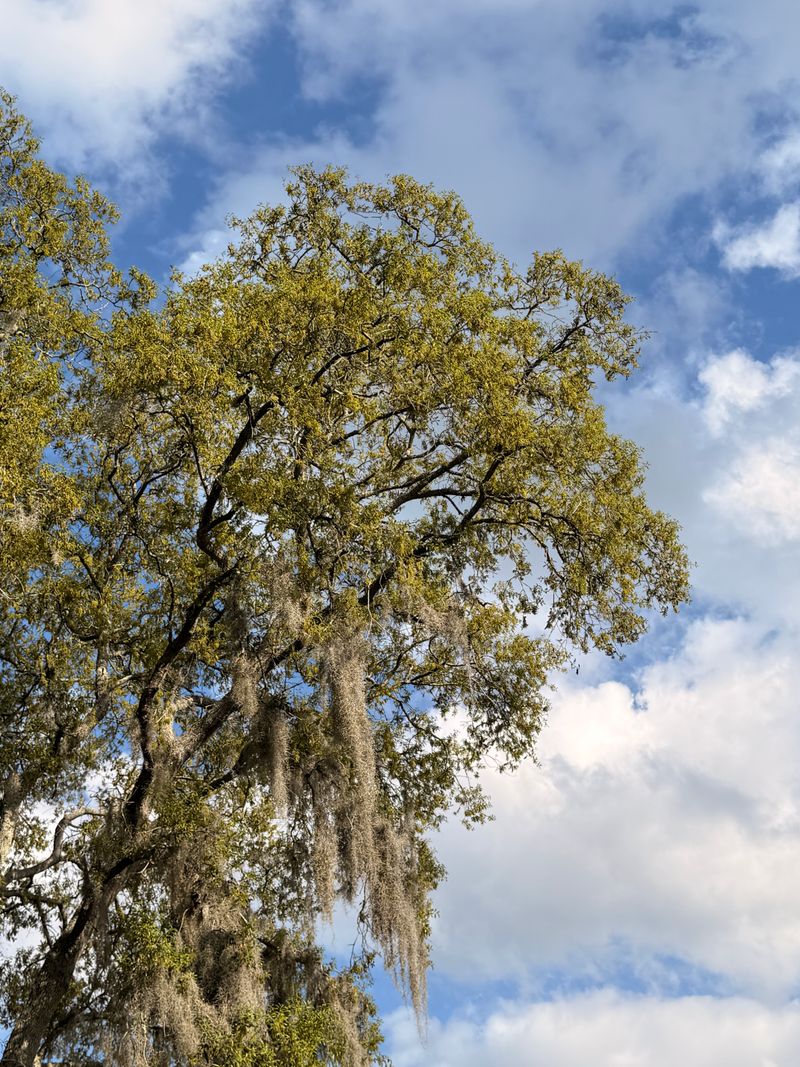
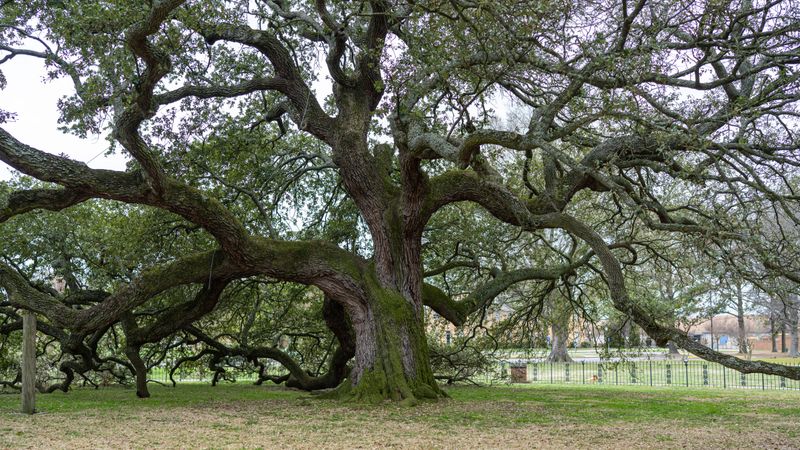
A live oak spreads horizontally in a way most trees do not, often ending up considerably wider than it is tall. Those long lateral limbs are the signature of the species and also its main structural challenge.
Heavy horizontal wood carries load differently from an upright trunk. That is why structural attention on a mature oak focuses on the limbs rather than on height.
It Holds Its Leaves Through Winter
Live oaks stay green through the cool months and then drop and replace their foliage in spring, which surprises owners expecting a bare tree in January. A live oak shedding heavily in March is doing exactly what it should.
Knowing this saves a lot of unnecessary worry. Leaf drop at the wrong time of year is the signal worth paying attention to.
It Is Built for This Coast
Salt exposure and wind are conditions live oaks handle better than most species do, which is a large part of why they dominate the older neighborhoods here. A healthy one is genuinely well suited to the Gulf Coast.
That resilience cuts both ways. Because they tolerate so much, a live oak in real trouble has usually been in trouble for a while.
It Operates on a Much Longer Timeline
These trees measure their lives in centuries rather than decades, which means both damage and recovery move slowly. A stress event shows up in the canopy seasons after the cause.
It also means a mature live oak is effectively irreplaceable on a residential timeline. Nothing you plant catches up.
So What Does Live Oak Tree Care in New Orleans Actually Involve?
Not much, and that is the point. Three things cover most of what a healthy mature oak requires.
Conservative Pruning, Not Shaping
The right pruning on a mature live oak clears deadwood, addresses structural concerns on the heavy limbs, and stops there. University of Florida horticulture guidance puts the useful amount of thinning on a mature tree at roughly 5 to 10 percent of live foliage, and cautions that taking much more costs the tree stored energy reserves.
Resist the urge to open it up for a view or a lawn. Our tree trimming approach on mature oaks is deliberately restrained for exactly this reason.
Attention to the Heavy Horizontal Limbs
The long lateral branches are what make a live oak beautiful and what fail when something goes wrong. Cracks, cavities, and unusual movement in a major limb deserve a look rather than a wait.
Structural problems on these limbs are far more manageable when caught early. Left alone, they tend to resolve themselves during a storm, at the worst possible moment.
Soil It Can Actually Use
Mature oaks in developed yards often sit in compacted ground with turf competing for the top layer. Nutrient support helps where the soil genuinely cannot supply what the tree needs.
That decision should follow an assessment rather than a guess. We handle tree fertilization only where the site shows it will make a difference.
The Root Zone Thing (This Is Where the Damage Actually Happens)
A live oak’s roots spread much farther than most people assume, commonly extending two to three times beyond the edge of the canopy, with a significant portion of the system sitting in the upper twelve inches of soil. That combination makes them unusually easy to damage without noticing.
Almost everything harmful happens here. Parking on the root zone, trenching a utility line through it, paving over it for a patio or a wider driveway, or piling construction material on it during a renovation all compact or sever roots the tree depends on.
The cruelty of it is the delay. Decline traced to soil compaction can take three to seven years to surface, long after anyone connects the thinning canopy to the renovation, and by then the correction is limited.
Protecting that area is mostly a matter of deciding it is off limits. Mark the root zone before any contractor arrives, route equipment and material storage well outside it, and keep a layer of mulch rather than turf over as much of it as the yard allows. Mulch holds moisture and shields the top layer of soil from further compaction, which is where much of the root system sits.
What About Hurricane Season?
Live oaks handle wind better than most species here, which is a real part of why so many old ones are still standing. A structurally sound oak is generally not the tree to worry about.
The exception is a limb that already has a problem. A crack, a cavity, or a poorly attached major branch is where a healthy tree fails, and that is worth identifying before the season rather than after.
A pre-season look is mostly a structural one. We check the major limb attachments, note any deadwood heavy enough to come down on something, and flag cavities or cracks that have changed since the last visit.
Resist any suggestion to thin a live oak heavily for wind. Light, correct thinning does let some wind pass through a canopy rather than push against it, but the amount that actually helps is small. Heavy thinning reverses the benefit, because removing an excessive number of interior laterals weakens branch structure and costs the tree reserves it needs to recover from whatever the season brings.
Bottom Line
A mature live oak in New Orleans mostly needs you to leave its root zone alone and keep the pruning honest. Everything else is monitoring.
At TurnKey Tree Cutting, we assess the structure, watch the limbs that matter, and tell you plainly when an oak needs nothing at all. Call us today to have your live oaks looked at by someone who works on them regularly.
Frequently Asked Questions
How do you take care of a live oak tree?
Protect the root zone, keep pruning conservative, and monitor the heavy horizontal limbs for cracks or cavities. Most preventable damage to a mature live oak happens at ground level through compaction, trenching, or paving rather than in the canopy. Feeding helps only where a soil assessment shows the ground cannot supply what the tree needs.
How far do live oak roots spread?
Live oak roots commonly extend two to three times beyond the dripline, with much of the system in the upper twelve inches of soil, which makes them easier to damage than owners expect. That spread is why parking, trenching, and paving near a mature oak carry real consequences. Treat the area well outside the dripline as part of the tree.
Why is my live oak dropping leaves in spring?
Spring leaf drop is normal for a live oak. These trees hold their foliage through the cool months and then shed and replace it in spring, so heavy leaf drop in early spring is expected rather than alarming. Leaf drop at other times of year is the pattern worth investigating.
Should live oaks be trimmed before hurricane season?
Live oaks benefit from having deadwood cleared and structural problems on major limbs addressed before hurricane season. Light thinning offers a modest wind benefit, but heavy thinning reverses it by weakening branch structure and removing reserves the tree needs to recover afterward. A pre-season assessment identifies the specific limbs that warrant attention.
Can you build near a live oak tree?
Construction near a mature live oak carries real risk to the tree, mostly through root damage from trenching, grading, compaction, and material storage. Damage often does not appear in the canopy for several years. Planning equipment access and utility routes around the root zone is what protects the tree.
How old are the live oaks in New Orleans?
Many mature live oaks in the older neighborhoods are well over a century old, and the species is capable of living considerably longer. Their age is a large part of why they are effectively irreplaceable on a residential timeline. Nothing planted today catches up within an owner’s lifetime.
What are signs a live oak is in trouble?
Signs a live oak is in trouble include canopy thinning, smaller or paler leaves than previous seasons, deadwood appearing in the upper crown, and any crack, cavity, or unusual movement in a major limb. Because these trees tolerate stress well, visible symptoms often mean the underlying problem has been developing for a while.
Do live oaks need fertilizer?
Some live oaks do, particularly mature trees in compacted yard soil where turf competes for the top layer and leaf litter is removed each year. Others in undisturbed ground do not. A soil and canopy assessment is the reliable way to decide, since feeding a tree that does not need it can cause its own problems.
Tree Fertilization and Soil Care for Baton Rouge, LA Properties
Trees on Baton Rouge properties often struggle less with rainfall than with the soil holding them, since developed lots tend to have compacted, disturbed ground that limits what roots can reach. Tree fertilization works best when it follows an assessment of the site rather than a bag off a shelf. Thin canopy, pale color, and slow growth are the usual signals. Sitting farther inland than New Orleans, the area also tends to see drier stretches in late summer.
At TurnKey Tree Cutting, we see the same pattern on Baton Rouge properties again and again: a tree that gets plenty of water and still looks tired. The problem is almost never rainfall in this part of Louisiana.
It is usually what is happening below grade. Construction, turf competition, and years of foot and vehicle traffic leave soil that roots cannot work with, and no amount of watering fixes that.
This covers what soil care actually involves on a developed lot, the signals worth watching, and how tree fertilization decisions get made. Contact us today to have the soil and trees on your property assessed before anything is applied.
What Soil Care Means on a Developed Baton Rouge Lot
Soil care is the part of tree health that nobody sees and most people skip. On a lot that was graded, built on, and landscaped, the ground around a tree bears little resemblance to what that species evolved in.
Native forest soil is loose, layered, and covered in decomposing organic matter that feeds the system continuously. A residential lot is typically compacted subsoil with turf on top and the leaf litter raked away every fall.
That difference is the whole argument for soil care. You are replacing an input the site used to supply on its own, and doing it based on what the ground is actually short of rather than a general assumption.
Common Reasons Baton Rouge Trees Run Short on Nutrients
Nutrient shortfalls on developed property usually trace back to a handful of causes. Most of them are about the site rather than the tree.
Compaction From Construction and Traffic
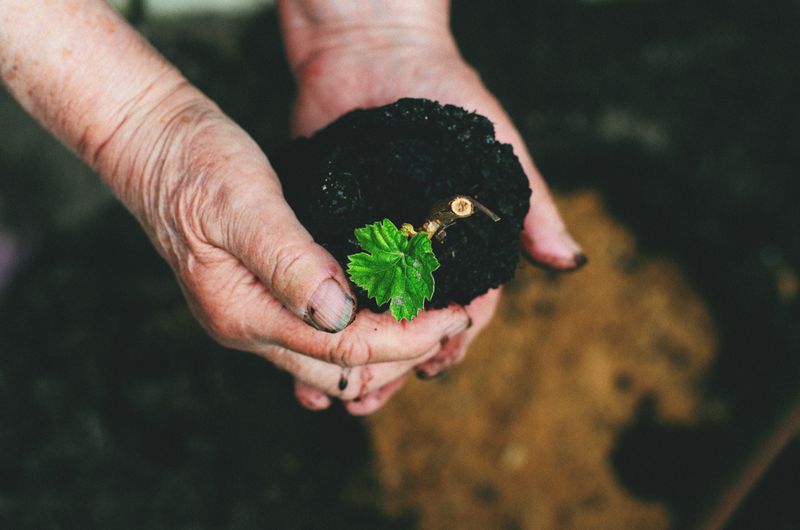
Soil compacted during construction stays compacted for decades. Tight ground restricts root growth and limits how water and air move through the profile, so a tree can sit in wet soil and still be under stress.
Driveways, parking pads, and regular foot traffic keep the pressure on long after the builders leave. This is the single most common underlying issue we find on established lots.
Compaction is usually worst where people walk and park, and ground that has had its structure pressed out of it recovers very slowly on its own.
Turf Competing for the Same Ground
Lawn grass is an aggressive competitor in the top layer of soil, which is exactly where fine tree roots do most of their work. A thick, well-fed lawn running right up to a trunk is taking resources the tree needs.
The competition is invisible because both look healthy for a while. Over time the tree usually gives ground, since grass recovers from shortage faster than a mature canopy does.
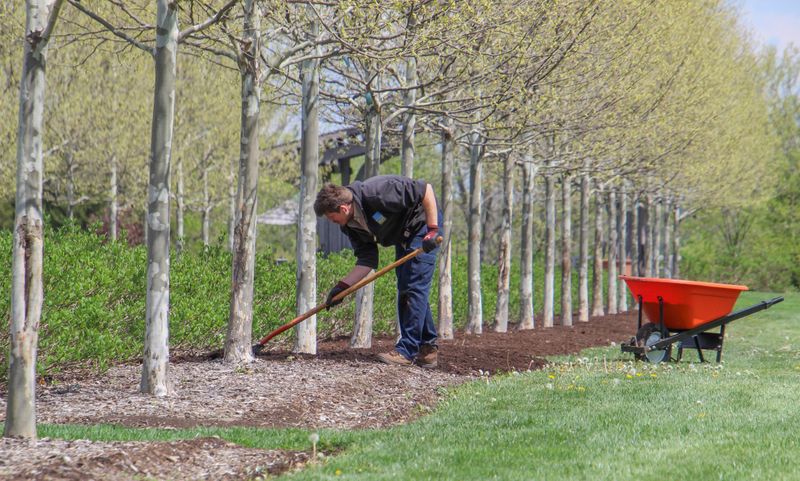
Widening a mulched bed outward from the trunk eases that pressure, since every foot of turf replaced gives fine roots ground they no longer have to share.
Organic Matter Removed Every Season
In a natural setting, leaves fall and break down where they land, returning nutrients to the root zone. On a maintained property that material is bagged and hauled away.
Doing that for 20 years removes a substantial amount of what the soil would otherwise recycle. The nutrients do not replace themselves.
Mulch spread over the root zone returns part of what the raking takes away, though it breaks down more slowly than a natural leaf layer. It is a partial substitute rather than a full one.
Inland Position and Late-Summer Dry Spells
Sitting farther from the coast than New Orleans, Baton Rouge tends to get less rain through the back half of summer. Trees under nutrient stress handle that stretch far worse than well-fed ones.
Drought stress and nutrient shortage compound each other. A tree that would ride out August comfortably can decline noticeably when both hit at once.
A tree with a restricted root zone also has less soil to draw on once the ground dries. The same dry stretch hits it harder than it hits a tree with room to spread.
Warning Signs a Tree Needs Soil Attention
Trees signal nutrient problems long before anything dramatic happens. These are the ones worth watching for.
Thinning Canopy From the Top Down
A canopy that has grown noticeably sparse, particularly in the upper crown, is a common early signal. You can often see more sky through the tree than you could a few seasons back.
Compare against the same tree in older photos rather than against neighboring trees. Thinning happens gradually enough that memory is unreliable.
The upper crown tends to show it first, since it sits at the end of the longest transport path. Steady thinning over several seasons is worth an assessment even while the tree still leafs out.
Pale, Small, or Off-Color Leaves
Leaves that come in smaller than usual or hold a washed-out yellow-green often point to a nutrient issue rather than a water one. Where the discoloration starts matters. Fading that begins in the older, lower foliage points toward nitrogen and other nutrients a tree can move internally, while yellowing that appears first in the newest leaves at the branch tips points toward iron or manganese instead.
Pattern matters more than the color itself. Uniform paleness across the whole canopy suggests something different from patchy discoloration on a few limbs.
Growth That Has Slowed or Stopped
Very short new growth at the branch tips, year over year, indicates a tree running on limited resources. Measuring the current season’s extension against last year’s gives you a rough read.
A mature tree naturally slows down, so context matters. A sharp change over two or three seasons is more meaningful than slow growth on an old specimen.
Extension growth is a relatively honest indicator because it reflects what the tree could afford to build that season. Read it across several branches rather than one, since any single limb can be shaded or damaged.
How Tree Fertilization and Soil Needs Are Assessed
Feeding decisions should follow an assessment rather than lead it. The table below shows what gets looked at and why it changes the plan.
| What Gets Assessed |
Why It Matters |
What It Changes |
| Soil condition and compaction |
Tight ground limits what roots can reach |
Whether feeding alone will accomplish anything |
| Canopy density and leaf color |
Shows how the tree is currently coping |
Urgency and how much correction is needed |
| Root zone extent and what covers it |
Turf, paving, and traffic all restrict uptake |
Where treatment is placed and how far out |
| Species and its site suitability |
Requirements differ widely between species |
What the tree is actually short of |
Applying a general-purpose product without that picture is guesswork, and overfeeding carries its own problems. Our tree fertilization work starts from what the site shows rather than a fixed formula.
Trees on properties across the wider region get the same approach. Our Baton Rouge tree services cover the assessment along with the treatment, so the plan matches the ground it is going into.
What This Means for Your Baton Rouge Property
A mature tree that is quietly underfed will keep looking acceptable for years and then decline faster than the owner expects. Catching it while the signals are still subtle is far cheaper than responding after the canopy thins.
At TurnKey Tree Cutting, we assess the soil and the tree together and recommend feeding only where it will actually change something. Call us today to have the trees on your property looked at properly.
Frequently Asked Questions
Do trees in Baton Rouge need fertilizer?
Many do, particularly on developed lots where construction compacted the soil and seasonal leaf litter is removed every year. Trees in undisturbed ground with natural organic matter often do not. An assessment of the specific site is the reliable way to tell, since feeding a tree that does not need it can cause its own problems.
How do I know if my tree has a nutrient deficiency?
Watch for a thinning canopy, leaves that come in smaller or paler than usual, and new growth at the branch tips that has shortened over several seasons. Where the fading starts is a useful clue, since older lower leaves point somewhere different from the newest growth. A soil and canopy assessment confirms what the symptoms suggest.
Can you over-fertilize a tree?
Yes, and it is a real risk when product is applied without knowing what the soil is short of. Excess nutrients can push weak, rapid growth, burn roots, and run off into local water. Applying based on an assessment rather than a default schedule avoids most of that risk.
Does grass compete with trees for nutrients?
It does, and the competition happens in the top layer of soil where fine tree roots do most of their work. A thick, regularly fed lawn running right to the trunk takes resources the tree needs. Mulched beds around the base reduce that pressure considerably.
Why does my tree look stressed even though it gets plenty of water?
Water is rarely the limiting factor in this part of Louisiana. Compacted soil restricts root growth and limits how air and water move through the profile, so a tree can sit in wet ground and still be under stress. Soil condition is usually the more useful thing to investigate.
Is soil in Baton Rouge different from New Orleans?
Baton Rouge sits farther inland from the coast, which generally means less direct salt exposure and somewhat drier stretches in late summer. On developed lots in either area, the bigger factor is usually construction disturbance rather than the natural soil type. Site conditions vary lot to lot.
When is the best time to fertilize trees?
Timing depends on the species, the deficiency, and the treatment being used, so a fixed calendar date is less useful than it sounds. What matters more is that the application follows an assessment. A crew evaluating the tree can advise on timing for that specific situation.
How often should established trees be assessed?
An annual look is reasonable for most mature trees on developed property, with closer attention to any tree already showing thin canopy or poor color. Problems caught early are usually correctable. Trees that have been declining for several seasons need a more involved evaluation.
How Trees Affect Property Value in New Orleans
Mature, well-kept trees generally raise property value in New Orleans, while neglected or failing ones pull the other way. Industry estimates put the lift from the low single digits to the mid-teens as a percentage, depending on the tree, its condition, and where it sits relative to the house. Species, health, and placement matter more than sheer count. A declining tree close to a structure can read as a liability to a buyer rather than an asset.
At TurnKey Tree Cutting, we get asked about resale value most often by owners who are about to list, and by then the options have narrowed. Tree value is built over years, not in the 2 weeks before a photographer arrives.
The research on this is consistent in direction even where the exact figures vary. Well-maintained trees add to what a property fetches, and trees in visible decline subtract from it.
What follows is what actually drives that number and how to protect it. Contact us today to have us assess the trees on your property and tell you which ones are carrying value.
How Much Value Do Trees Actually Add to a New Orleans Home?
The honest answer is that the number varies, and anyone quoting a precise figure for your specific lot is guessing. What the industry does agree on is the direction.
The Arbor Day Foundation puts the effect of large trees in yards and along streets at roughly 3 to 15 percent of a home’s value. The spread is that wide because a single specimen oak shading a front elevation is a different asset from a row of scrubby volunteers along a back fence.
For a New Orleans property, treat those figures as a direction rather than a promise. The practical takeaway is that trees are part of what a buyer prices, and their condition is visible from the curb before anyone opens a listing sheet.
What Makes One Tree Worth More Than Another?
Not every tree on a lot pulls the same weight. Four factors do most of the work in separating an asset from a liability.
Species and Local Fit
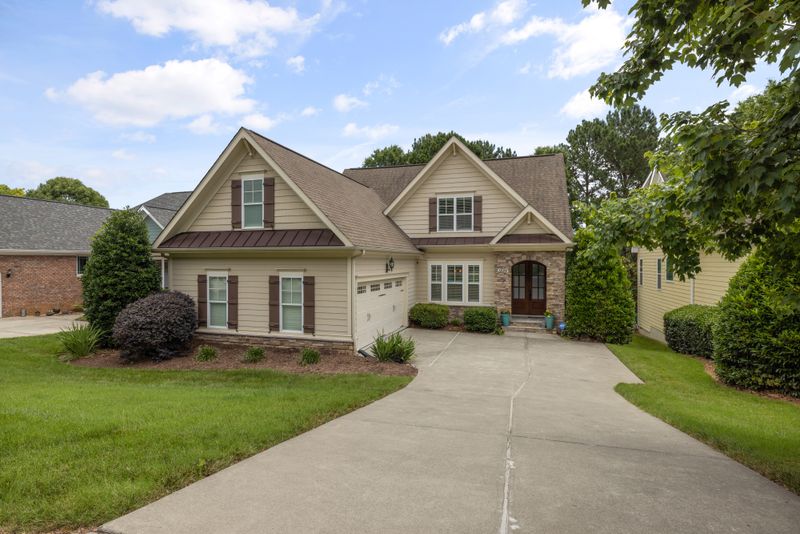
A tree suited to Gulf Coast conditions carries more value than one fighting the climate, because buyers and appraisers alike tend to respond to a tree that looks like it belongs. Live oaks and other established local species look permanent.
Poorly suited or short-lived species do less for a property and often cost more to maintain. Planting settles the species question, which is why it matters so much on an older lot.
Species also sets the maintenance burden a buyer inherits, since some trees drop heavy limbs or shed constantly while others stay tidy on a routine care schedule. A tree that reads as low-maintenance is generally easier for a buyer to picture living with.
Condition and Structure
A healthy tree with sound structure is an asset. A tree with major deadwood, a visible lean toward the house, or a cavity at the base reads as a pending expense to anyone walking the property.
This is the factor owners have the most control over. Consistent tree trimming keeps a tree in the condition that supports value rather than undermines it.
Condition is also among the easiest factors for a non-expert to judge from the driveway, which is part of why it shapes first impressions. A buyer who could not name a single structural defect can often still tell whether a tree has been cared for.
Placement Relative to the House
Where a tree stands changes what it does. A mature canopy shading the west face of a house is a comfort and energy benefit a buyer can feel on a July walkthrough.
The same tree planted too close to a foundation or hanging over a roofline flips the calculation. Placement is why 2 similar trees on the same street can affect value in opposite directions.
Placement also affects what the tree costs to maintain over time, because a canopy sitting above a roof or a driveway needs attention on a shorter cycle than one out in the open. Access matters alongside it, since a tree hemmed in by fences, sheds, and utility lines is harder to work on safely.
Size and Maturity
Size is the hardest quality to replace, because a mature canopy takes decades to grow and cannot be bought back. That scarcity is most of why established trees carry the value they do.
It also means a mature tree lost to neglect is a permanent reduction, not a temporary one. Replanting resets the clock rather than restoring the asset.
Why Does Tree Condition Matter So Much in New Orleans?
Local conditions raise the stakes on both sides of the ledger. Gulf Coast heat makes shade a tangible benefit rather than an abstract one, and a canopy over the right elevation is something a buyer notices immediately.
The storm exposure works the other way. A tree that already looks compromised raises a question in a buyer’s mind about the next hurricane season, and that question tends to show up as a price adjustment or a repair request.
Saturated soil after heavy rain compounds it, since root plates tend to lift more easily there than in drier inland ground. The result is that condition carries more weight in this market than it would in a place where trees are never really tested.
How Do You Protect the Value Your Trees Already Carry?
Protecting tree value is mostly unglamorous maintenance done on a schedule. Three habits do most of the work.
Keep Structure Sound Before Problems Compound
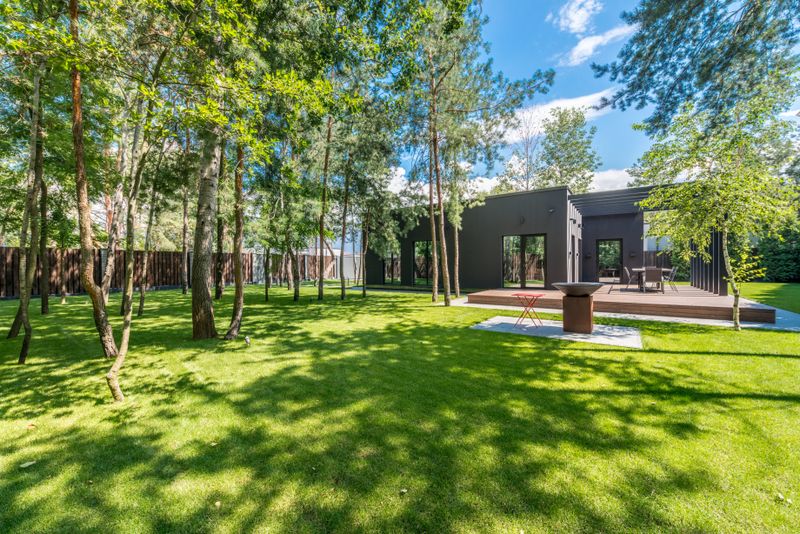
Removing deadwood and correcting structural issues early keeps a tree sound and its value intact. Problems left alone rarely stay the same size.
A tree that has been maintained consistently also costs less to keep that way, because nothing has been allowed to become a major intervention. The savings compound alongside the value.
Feed the Tree When the Soil Cannot
Urban and suburban soils frequently lack what a mature tree needs, particularly where turf and hardscape compete for the same ground. Nutrient shortfalls usually show up as thin canopy and poor color long before anything dramatic happens.
A soil-informed program is more useful than guessing at a bag of fertilizer. Our tree fertilization work starts from what the site actually needs rather than a default schedule.
Deal With Failing Trees on Your Schedule
Not every tree can be saved, and a genuinely failing one near a structure is subtracting value every month it stands. Handling it deliberately costs less than handling it after a storm.
It also removes the item a buyer’s inspector would otherwise flag. Clearing that question before listing is usually cheaper than negotiating it afterward.
Planned tree removal also lets you control the timing, the access route, and what happens to the stump, none of which stays in your hands once a limb comes down on its own. That control is much of what separates a planned removal from an emergency one in cost and disruption.
Where New Orleans Homeowners Should Start
Tree value is the rare part of a property that improves on its own if you protect it and declines quietly if you do not. The gap between those two outcomes is a maintenance schedule, not a large budget.
At TurnKey Tree Cutting, we assess what your trees are actually worth keeping, flag the ones working against you, and build a plan around both. Call us today to get an honest read on the trees on your property.
Frequently Asked Questions
Do trees increase the value of a home?
Well-maintained mature trees generally increase what a property is worth, and widely cited industry estimates place the effect somewhere from the low single digits into the mid-teens as a percentage. The exact figure depends heavily on species, condition, and placement, so treat published ranges as direction rather than a guarantee.
Can a tree lower property value?
Yes. A tree in visible decline, leaning toward a structure, or dropping large deadwood over a driveway reads to buyers as a pending expense rather than an asset. In storm-exposed markets it can also raise questions about future risk, which frequently surfaces as a price adjustment or a repair request during negotiation.
Should I remove trees before selling my house?
Remove the ones that are genuinely failing or clearly hazardous, and keep the healthy ones. Buyers value mature canopy, so clearing out sound trees usually costs more than it returns. The goal is to eliminate the items an inspector would flag, not the trees themselves.
Which trees add the most value to a property?
Mature, structurally sound trees of species suited to the local climate add the most, especially when placed to shade the house without crowding it. Size matters because a mature canopy cannot be replaced quickly. A well-placed established shade tree typically outperforms several small ornamentals.
How close to a house should a large tree be?
Distance depends on the species and its mature size, so there is no single number that fits every tree. A canopy overhanging the roofline or roots running directly against a foundation generally creates more problems than benefits. An assessment of the specific tree and structure is more useful than a rule of thumb.
Does tree trimming improve curb appeal?
Yes, and it is one of the more visible returns available on a property. Clearing deadwood, lifting a canopy off the roof, and restoring the sightline to the front elevation change how the house presents from the street. The effect shows up immediately in listing photos.
How long does it take for a tree to add value to a property?
Meaningful canopy takes years rather than seasons, which is why mature trees carry the value they do. A newly planted tree contributes little at first and grows into its value over a decade or more. That timeline is the main argument for protecting the mature trees already on the lot.
Do dead trees need to be disclosed when selling a home?
Disclosure requirements vary and are worth confirming with your real estate agent or attorney for your situation. Practically, a dead or failing tree is usually visible during a buyer’s inspection regardless. Addressing it before listing generally costs less than negotiating over it later.
Signs Your Tree Is Stressed
Quick Answer: A stressed tree in New Orleans usually shows wilting leaves, early leaf drop, branch dieback, or cracked and peeling bark before it fails. These signals point to root damage, poor drainage, pests, disease, or storm strain common to Louisiana’s wet, heavy soils. Catching the symptoms early and pairing correct watering, mulching, and pruning with professional care gives most declining trees a strong chance to recover.
At TurnKey Tree Cutting, we see stressed trees across New Orleans and the Greater New Orleans area every season, and most of them send warning signs long before they become dangerous. Reading those signs early is the difference between a tree you can save and one you eventually have to remove.
Our climate puts unusual pressure on trees, from waterlogged clay soils and salt intrusion to hurricane winds and long, humid summers. A tree that looks fine one month can slide into decline quickly once its roots or bark are compromised.
This guide walks through the most common signs of a stressed tree, what each one usually means, and the practical steps that help it recover. Contact us today to have a certified arborist inspect a tree you are worried about before small problems turn into costly ones.
What a Stressed Tree Is Actually Telling You
Tree stress is the visible result of something interfering with how a tree takes up water, moves nutrients, or defends itself. When roots sit in saturated soil, when pests feed on the canopy, or when construction cuts through the root zone, the tree redirects energy to survival and shows it in the leaves, branches, and bark.
The tricky part is that different problems can produce similar symptoms. Wilting can come from too little water or from too much, and thinning leaves can signal anything from drought to root rot to a soil deficiency.
That overlap is why we recommend a professional diagnosis rather than guesswork. Identifying the true cause first is the only way to choose a remedy that actually works instead of one that masks the problem.
Leaf Symptoms: Wilting, Drop, and Discoloration
Leaves are usually the first place stress shows up, because they depend directly on healthy roots and steady water movement. Watching how and when the canopy changes gives strong clues about what is happening underground.
Wilting or Drooping Leaves
Wilting means the tree cannot move enough water to its canopy, and in our region that often points to root problems rather than a dry spell. Saturated soil after heavy rain suffocates roots and stops water uptake just as effectively as drought does.
Check the soil a few inches down before assuming the tree needs water. If it is soggy, the fix is improving drainage and aeration, not adding more water to an already flooded root zone.
Premature Leaf Drop
A tree shedding leaves well before fall is trying to reduce the surface area it has to support. This defensive move usually signals root damage, disease, or serious water imbalance somewhere in the system.
Occasional inner-leaf drop is normal, but heavy or early loss across the canopy is not. When leaf drop shows up out of season, it is worth having the tree looked at promptly.
Discolored or Scorched Leaves
Yellowing between leaf veins often points to a nutrient deficiency, while browned edges can signal salt stress, heat, or root injury. In New Orleans, salt intrusion from storm surge and flooding is a frequent and underestimated cause.
Pattern matters here, since scattered discoloration reads differently than uniform yellowing. A targeted soil and root evaluation, sometimes paired with deep root fertilization, is how we pin down and correct the cause.
Branch and Canopy Warning Signs
Beyond the leaves, the branches and overall canopy shape reveal how far stress has progressed. These signs often point to problems that have been building for a while.
Dieback in the Canopy
Dieback is when branches die from the tips inward, usually starting at the top or outer edges of the crown. It signals that the tree cannot supply its farthest growth and is retreating to protect its core.
Progressive dieback is a serious sign that should not wait. The sooner the underlying cause is addressed, the more of the canopy we can usually preserve.
Bare Branches and Thinning Crown
A canopy that looks sparse or lets through more light than it used to is losing vigor. Thinning often accompanies root stress, compaction, or pest pressure that the tree can no longer fully outgrow.
Comparing a tree to healthy neighbors of the same species helps here. If one is noticeably thinner, that gap is a reason to investigate rather than wait another season.
Sudden Leaning or Weak Branch Unions
A tree that begins to lean, or that develops cracks where branches meet the trunk, may have compromised roots or structural defects. In a hurricane-prone area, these are safety concerns as much as health concerns.
Freshly disturbed soil at the base or exposed roots on one side raises the risk further. Our hurricane season tree care checklist covers how to spot and reduce these failure points before a storm.
Bark and Trunk Problems
The bark protects everything beneath it, so damage here often reflects deeper trouble. Trunk symptoms tend to be slower to appear but more serious when they do.
Cracks, Peeling, and Missing Bark
Vertical cracks, peeling sections, or areas of missing bark expose the living tissue underneath to pests and rot. Some peeling is natural for certain species, but large or spreading damage is not.
Bark that sounds hollow or flakes away to reveal dark, soft wood underneath points to internal decay. That kind of finding usually calls for a professional assessment of whether the tree is still structurally sound.
Fungus, Cankers, and Oozing
Mushrooms or shelf fungus growing on the trunk or roots are a strong sign of internal decay, since these organisms feed on dead or dying wood. Sunken cankers and oozing sap also indicate disease or wounds the tree is struggling to close.
Many of these issues trace back to fungal and pest problems common in our humid climate. Our overview of common tree diseases and pests in Louisiana explains what to watch for and when treatment can still help.
Common Causes of Tree Stress in New Orleans
| Warning Sign |
Likely Causes |
Typical First Step |
| Wilting leaves |
Saturated soil, root rot, drought |
Check soil moisture, correct drainage or watering |
| Early leaf drop |
Root damage, disease, water imbalance |
Professional inspection of roots and canopy |
| Yellow or scorched leaves |
Nutrient deficiency, salt stress, heat |
Soil test and targeted fertilization |
| Canopy dieback |
Root loss, disease, prolonged stress |
Arborist diagnosis and corrective pruning |
| Cracked or peeling bark |
Decay, wounds, construction damage |
Structural assessment for safety |
| Fungus or cankers |
Internal rot, fungal disease |
Evaluation of whether the tree is salvageable |
Our soils, drainage, and storm exposure make certain stressors far more common here than in drier regions. Knowing which ones you are dealing with points you toward the right fix.
How to Save a Stressed Tree
Once the cause is identified, most stressed trees respond well to a combination of corrected care and professional treatment. The goal is to relieve the stressor and give the tree resources to rebuild.
Water Correctly for the Season
Both overwatering and underwatering drive tree stress, and the balance shifts with our wet and dry stretches. Deep, infrequent watering that reaches the root zone beats frequent shallow sprinkling that stays near the surface.
During soggy periods, the priority is drainage rather than added water. Our guide on how often to water your trees breaks down the timing that works for local conditions.
Mulch and Feed the Root Zone
A proper mulch ring conserves moisture, moderates soil temperature, and protects roots from mower damage. Applied incorrectly, though, mulch piled against the trunk traps moisture and invites rot.
Feeding matters too, since depleted soils leave trees without the nutrients they need to recover. We explain correct technique in our post on mulching trees correctly, and deep root feeding often accelerates recovery.
Prune and Call in a Professional
Removing dead, diseased, or crossing branches redirects the tree’s energy toward healthy growth and reduces failure risk. Improper cuts, however, can create new wounds and worsen the decline.
Serious symptoms deserve expert eyes, which is why knowing when to call a certified arborist matters. For a full picture of keeping local trees healthy, see our guide to keeping New Orleans trees healthy.
When a Tree Cannot Be Saved
Not every stressed tree can recover, and recognizing that early protects your property and your budget. A tree with extensive internal decay, major root loss, or a compromised trunk may become a hazard no treatment can reverse.
Signs like large hollow cavities, significant lean with soil heaving, or dead sections covering much of the canopy often mean removal is the safer choice. We always evaluate whether saving the tree is realistic before recommending its removal.
When removal is necessary, addressing it promptly is far better than waiting for a storm to make the decision. A certified arborist can tell you honestly which trees are worth the effort to save.
Save Your Tree Before It Becomes a Hazard
The trees around your home are worth protecting, and the earlier you act on the warning signs, the more options you have. At TurnKey Tree Cutting, we combine certified arborists, honest assessments, and full-service care to give stressed trees across New Orleans their best chance at recovery.
Your tree may need a diagnosis, a treatment plan, or a careful removal, and we are ready to help you make the right call. Call us today to schedule a free on-site estimate with a certified arborist who can tell you exactly what your tree needs.
Frequently Asked Questions
How can I tell if my tree is stressed or dying?
A stressed tree shows recoverable signs like wilting, early leaf drop, yellowing, or minor dieback, while a dying tree has widespread dead branches, extensive bark loss, or fungus signaling internal decay. A certified arborist can scratch-test the bark and inspect the roots to tell you which stage your tree is in and whether it can be saved.
Can a stressed tree recover on its own?
Some mildly stressed trees recover once the stressor is removed, such as improved drainage after flooding or corrected watering during drought. However, stress caused by disease, pests, root damage, or decay usually needs targeted treatment. The safest approach is an early professional evaluation, since waiting often lets a fixable problem become a fatal one.
Why are my tree’s leaves turning yellow in the summer?
Summer yellowing in New Orleans often comes from waterlogged roots, nutrient deficiencies, salt stress, or heat rather than simple drought. Because the causes overlap, a soil test and root inspection are the reliable way to confirm the issue. Correcting drainage and adding targeted fertilization frequently restores healthy green color.
Is a leaning tree always a sign of stress?
Not always, since some trees grow at a natural angle toward light. A sudden new lean, especially with cracked or heaving soil at the base, is a serious warning that roots may be failing. In our hurricane-prone area, a newly leaning tree should be inspected quickly because it can become a safety hazard in high winds.
How much does it cost to treat a stressed tree?
Cost depends on the tree’s size, the cause of the stress, and whether treatment involves fertilization, pruning, drainage work, or removal. Because every situation differs, we provide a free on-site estimate after inspecting the tree. This lets us diagnose the real problem and quote only the work that will actually help.
Do I need a permit to remove a stressed tree in New Orleans?
Permits are often required for removing significant or protected trees, and rules vary by property and location. Trees on public property or those meeting certain size thresholds commonly need approval before removal. We help homeowners work through construction permitting and local requirements so a needed removal is handled properly.
How does mulch help a stressed tree?
Correctly applied mulch conserves soil moisture, moderates temperature, suppresses competing weeds, and protects roots from mower and trimmer damage. The key is a ring of a few inches kept away from the trunk. Mulch piled against the bark traps moisture and invites rot, so technique matters as much as the material.
When should I call an arborist instead of handling it myself?
Call a certified arborist when you see canopy dieback, fungus on the trunk or roots, sudden leaning, large cracks, or decline you cannot explain. These signs often reflect problems that basic watering or pruning cannot fix. A professional diagnosis identifies the true cause early, which gives your tree the best chance of full recovery.
When to Call a Certified Arborist
Quick Answer: Call a certified arborist in New Orleans when a tree shows dieback, leaning, cracks, fungal growth, storm damage, or roots near your foundation, and before any work near power lines or protected trees. An arborist diagnoses tree health, assesses structural risk, and recommends whether to prune, treat, or remove, protecting your property and the tree across Greater New Orleans conditions.
At TurnKey Tree Cutting, we field calls every week from homeowners who are not sure whether a tree problem needs a professional or a Saturday afternoon with a ladder. The honest answer depends on the tree, the risk, and what is around it, and getting that call right protects both your safety and your property.
New Orleans trees face pressures that trees in drier climates never see, from waterlogged soils to hurricane-force winds. Knowing when to bring in a certified arborist, rather than guessing, is one of the most practical skills a local homeowner can build.
This article walks through the clear signs it is time to call a pro, what a certified arborist actually does, and where do-it-yourself care ends and expert help begins. Contact us today to schedule a free on-site estimate if you already suspect something is wrong.
What Does a Certified Arborist Actually Do?
A certified arborist is a tree care professional who has earned credentials by demonstrating knowledge across tree biology, diagnosis, and safe work practices. That training is what separates them from a general landscaper with a chainsaw.
The role goes well beyond cutting. An arborist reads a tree the way a doctor reads a patient, looking at the canopy, trunk, roots, and surrounding site to understand what is happening and why.
Their work includes diagnosing disease, evaluating structural risk, and recommending the least invasive fix that still solves the problem. When removal is genuinely necessary, they plan and execute it safely.
That last point matters more than most homeowners expect. An arborist often recommends against removal, treating or pruning a tree that a less careful crew would have taken down, which protects both your canopy and your budget.
Warning Signs It Is Time to Call an Arborist
Some tree problems are subtle, and others are urgent. Recognizing the difference early can be the gap between a simple treatment and a costly emergency.
Visible Decay or Fungal Growth
Mushrooms or conks growing at the base of a trunk often signal internal rot, even when the canopy still looks green. Because decay hollows a tree from the inside, the outside can look healthy long after the structure has weakened.
Soft, crumbling bark and cavities in the trunk are related red flags. An arborist can assess how far the decay has spread and whether the tree can be saved or has become a hazard.
Leaning, Cracks, or Root Heave
A tree that suddenly leans, or shows soil lifting on one side of its base, may be failing at the roots. This is especially common in the saturated soils around Greater New Orleans, where root anchorage is often compromised.
Vertical cracks in the trunk and large dead limbs overhead are also serious. These are not wait-and-see problems, and a professional assessment should come quickly.
Dieback in the Canopy
When branches at the top of a tree lose leaves or die back while lower limbs stay full, the tree is often struggling to move water and nutrients upward. Our team treats this pattern as a signal to investigate root health and possible disease.
Progressive thinning across seasons points to a deeper issue. Catching it early sometimes allows treatment, such as deep root fertilization, before the decline becomes irreversible.
Pest Infestation or Disease Spread
Boring holes, sawdust-like frass, sticky residue, or unusual leaf spotting can all indicate pests or pathogens. Left unchecked, some problems spread from one tree to the next across a yard.
Our region has its own recurring threats, which we cover in our guide to common tree diseases and pests in Louisiana. An arborist can identify the culprit and recommend a targeted response rather than a guess.
DIY Tree Care vs. When You Need a Pro
Plenty of tree care is genuinely homeowner-friendly. Watering correctly, spreading mulch, and light pruning of small, low branches are all reasonable to handle yourself with basic tools.
The line gets crossed when the work involves height, power tools overhead, or trees near structures and utility lines. That is where the risk of injury and property damage climbs sharply, and where professional judgment matters most.
The table below sketches a general dividing line, though any job that feels beyond your comfort is worth a phone call rather than a gamble.
| Task |
Usually DIY-Friendly |
Call a Professional |
| Watering and mulching |
Yes |
Only if soil issues persist |
| Pruning small, low branches |
Yes |
Large limbs or high cuts |
| Work near power lines |
Never |
Always |
| Removing a leaning or damaged tree |
No |
Always |
| Diagnosing disease or decline |
No |
Always |
Storm and Hurricane Damage in New Orleans
Few regions test trees like ours does. Between summer storms and hurricane season, local trees take repeated stress that can weaken them long before a limb finally fails.
After a major storm, hanging limbs, split trunks, and partially uprooted trees demand professional attention because the loads involved are dangerous to handle alone. A trained crew can release tension safely and decide what stays and what goes.
Preparing ahead of the season matters just as much, which is why we maintain a hurricane season tree care checklist for local homeowners. Proactive assessment now is far cheaper than emergency cleanup later.
When Permits and Protected Trees Come Into Play
Tree work in New Orleans is not always as simple as deciding to remove a tree. Rules vary by location, and permits are often required for significant or protected trees, particularly those on public rights-of-way or above a certain size.
Because requirements differ from one property and jurisdiction to the next, it helps to confirm before work begins rather than after. Our team handles construction permitting and can guide you through what a given project is likely to require.
Getting this step right avoids delays and complications down the line. It also ensures that valuable, healthy trees are not removed when a less drastic option would serve you better.
Mature trees add real value to a property and take decades to replace, so the decision to remove one is worth careful thought. A professional assessment helps you weigh safety, cost, and long-term value before anything is cut.
How an Arborist Protects Long-Term Tree Health
Calling a professional is not only about crisis response. Much of an arborist’s value comes from keeping healthy trees healthy through the stresses unique to our environment.
Soil and Root Support
Compacted, waterlogged, or nutrient-poor soil quietly undermines trees across the region. Targeted fertilization delivered to the root zone can restore what local soils often lack.
We explain the approach in our overview of deep root tree fertilization. Healthy roots are the foundation for everything above ground.
Watering and Environmental Stress
Both too little and too much water create problems here, and the right amount changes with season and species. Our guide to how often to water your trees helps homeowners avoid the most common mistakes.
An arborist can also spot early stress from salt, flooding, or heat before it becomes visible decline. Catching those signals early keeps small issues from compounding.
Structural Pruning Over Time
Well-timed pruning shapes a tree for strength, reducing the odds of storm failure years down the road. Poorly done cuts, by contrast, can invite decay and weaken the very structure they were meant to improve.
This is one reason overhead pruning belongs with professionals. The goal is a tree that is both safer and healthier for the long run.
Keeping New Orleans Trees Healthy
For a fuller picture of year-round care, our pillar guide to keeping New Orleans trees healthy ties these topics together. It connects watering, feeding, pest management, and storm readiness into one practical framework.
Reading the signs of a stressed tree early is central to that framework. Our breakdown of signs your tree is stressed can help you decide when a closer look is warranted.
Used together, these resources help you know what you can manage yourself and when a professional call is the smarter move. The earlier you catch a problem, the more options you usually have.
Trust Your Trees to a Certified Arborist
Knowing when to call an expert is half diagnosis and half judgment about risk, and you do not have to make that call alone. At TurnKey Tree Cutting, our licensed and insured team of certified arborists serves New Orleans and Greater New Orleans with free, no-pressure estimates.
A leaning trunk, a storm-damaged limb, or a tree in slow decline all deserve an on-site assessment that gives you clear answers and safe options. Call us today to schedule your free estimate and protect the trees that shade your property.
Frequently Asked Questions
What is the difference between an arborist and a regular tree service?
A certified arborist has earned credentials demonstrating knowledge of tree biology, diagnosis, and safe work practices, while a general tree service may only cut and haul. Both can remove a tree, but an arborist can also diagnose why a tree is failing and recommend whether removal is even the right answer.
When should I call an arborist instead of handling a tree myself?
Call a professional when work involves height, power tools overhead, trees near structures or power lines, or any tree that is leaning, cracked, storm-damaged, or in decline. Light pruning of small low branches, watering, and mulching are usually safe to handle yourself with basic tools and care.
Can a leaning tree be saved, or does it have to be removed?
It depends on the cause and severity. A tree leaning from recent root failure or saturated soil is often a hazard that needs removal, while a long-standing, stable lean may be fine. Only an on-site assessment can tell the difference safely, which is why a professional look matters.
Do I need a permit to remove a tree in New Orleans?
Permits are often required for significant or protected trees, especially larger specimens or those on public rights-of-way, and rules vary by location and situation. It is best to confirm requirements before work begins. Our team handles construction permitting and can help you understand what your specific project likely needs.
How do I know if a tree is dangerous?
Warning signs include sudden leaning, soil lifting at the base, vertical trunk cracks, large dead limbs overhead, mushrooms or conks at the base, and hollow or crumbling wood. Any of these near a home, driveway, or walkway warrants prompt professional evaluation rather than a wait-and-see approach.
What does an arborist look for during an inspection?
An arborist evaluates the whole tree and its site, including canopy density, dieback patterns, trunk integrity, root condition, and signs of pests or disease. They also consider what is around the tree, such as structures and utilities, then recommend the least invasive step that resolves the risk or health issue.
Is deep root fertilization worth it for my trees?
For trees in compacted, waterlogged, or nutrient-poor soil, targeted fertilization delivered to the root zone can meaningfully support recovery and long-term health. Because local soils often lack what trees need, it can be a valuable step, though an assessment determines whether your specific tree would benefit.
How much does it cost to hire a certified arborist?
Cost depends on tree size, condition, access, and the specific service, so a single flat figure is not realistic. National sources such as Angi and HomeAdvisor publish broad ranges, but the accurate way to know is a free on-site estimate. We assess your tree in person and quote the actual work involved.
Protecting Trees from Salt, Flood, and Storm Stress
Quick Answer: Coastal trees around New Orleans face three overlapping threats: salt water intrusion that scorches roots and leaves, prolonged flooding that starves roots of oxygen, and high winds that snap limbs and loosen anchorage. Protecting them means improving drainage, flushing salt from soil, choosing salt-tolerant species, pruning for wind resistance, and watching for early stress signs so you can act before a tree fails.
At TurnKey Tree Cutting, we work with coastal Louisiana trees every day, and we see how salt, standing water, and storms combine to wear them down. The pressures here are different from those inland, and trees that thrive elsewhere often struggle within a few blocks of brackish water.
Living below sea level near tidal marshes means your yard faces conditions most trees were never built to handle. A single storm surge or a season of poor drainage can quietly damage roots long before the canopy shows it.
This guide walks through how salt, flooding, and wind affect your trees and what you can do to keep them standing. Contact us today to schedule a free on-site assessment if your trees are already showing stress.
Why Coastal Louisiana Is Hard on Trees
Trees near the Gulf and Lake Pontchartrain deal with pressures that rarely hit trees further north. Salt in the soil and air, a high water table, and frequent tropical systems all stack up in the same landscape.
Most shade and ornamental trees evolved in well-drained, low-salt conditions, so our environment pushes them to their limits. Understanding each threat separately is the first step toward protecting the whole tree.
The three biggest challenges are salt water intrusion, prolonged flooding, and storm-driven wind. Each one damages a tree in a different way, and they often compound one another during a single weather event.
How Salt Water Intrusion Damages Trees
Salt reaches trees two ways along the coast: through the soil after surge or brackish flooding, and through wind-blown spray during storms. Both interfere with how a tree takes up water and nutrients.
When salt builds up in the root zone, it makes it harder for roots to pull in moisture, so a well-watered tree can still show drought-like symptoms. Foliage often tells the story first.
Signs of Salt Stress
Salt damage frequently shows as leaf scorch, where edges and tips turn brown while the center stays green. You may also see stunted growth, early leaf drop, or dieback starting at the branch tips.
Evergreens can brown on the side facing the water or the prevailing wind, a common sign of salt spray. Because these symptoms mimic other problems, it helps to have a professional confirm the cause before treating it.
Flushing Salt From the Soil
Where drainage allows, deep, slow watering with fresh water can help leach salt below the root zone. This is most effective after a surge or saltwater flood event and when the soil is not waterlogged.
Improving soil structure and adding organic matter also helps water move through and carry salt away. In yards with poor drainage, correcting the drainage problem usually matters more than any single flush.
Choosing Salt-Tolerant Species
If you are replanting near brackish water, species selection makes a lasting difference. Live oak, bald cypress, southern magnolia, and cabbage palm tend to handle coastal salt better than many alternatives.
Placing more sensitive trees further from the water and shielding them with hardier plantings can reduce spray exposure. We can walk your property and suggest species matched to your specific salt and drainage conditions, and to how exposed a given spot is to wind off the water.
How Flooding and Waterlogged Soil Hurt Roots
Roots need oxygen, and standing water cuts off that supply. When soil stays saturated for days, roots begin to suffocate, decline, and become vulnerable to rot.
In our low-lying neighborhoods, water often lingers after heavy rain or a storm, which turns a short flood into a lasting root problem. The damage happens underground, so the canopy may look fine while the anchoring roots weaken.
Trees stressed this way often show thinning canopies, yellowing leaves, and slow recovery after each wet spell. Left unaddressed, root decline is one of the more common reasons a mature tree eventually fails in a windstorm.
Improving Drainage Around Trees
Grading soil so water moves away from the trunk, adding French drains, and avoiding compacted soil all help roots breathe. Standing water within the drip line is a warning sign worth correcting.
A layer of mulch over the root zone supports soil health, but it should never pile against the trunk. For more on doing this correctly, see our guide on mulching trees correctly.
Watering Wisely in Wet Soil
It sounds odd, but overwatering is a real risk here, especially in clay-heavy yards that already hold water. During wet stretches, trees usually need less supplemental water, not more.
Matching watering to your soil and the season protects roots from both drought and drowning. Our overview of how often you should water your trees covers this in more depth, including how to adjust as our rainy stretches come and go.
How Storms and Wind Stress Trees
High winds from tropical systems put enormous force on trunks, limbs, and root plates. A tree already weakened by salt or waterlogged soil is far more likely to fail when that force arrives.
Wind can snap limbs, split trunks, and lift shallow root systems out of saturated ground. Preparing before storm season is far safer and less costly than dealing with a downed tree afterward.
Pruning for Wind Resistance
Thoughtful structural pruning reduces wind resistance and removes weak, crossing, or dead limbs before they become projectiles. The goal is a balanced canopy that lets wind pass through rather than catch it.
Topping a tree is not the answer, since it creates weak regrowth that fails more easily later. Sound pruning by a trained crew keeps the tree healthy and safer in a blow, and it is best done well ahead of storm season rather than in a rush before a system arrives.
Recognizing High-Risk Trees
Leaning trunks, cracks, cavities, mushrooms at the base, and exposed or lifting roots all point to a higher chance of failure. Trees near your home, driveway, or power lines deserve closer attention, since a failure in those spots carries real consequences.
Because much of this risk sits underground, a professional inspection often catches problems an owner cannot see from the yard. Our checklist on hurricane season tree care helps you prepare year to year, and a quick walk-through before storm season often surfaces issues in time to fix them.
Reading the Warning Signs Early
Catching stress early gives a tree the best chance to recover. The signs below often overlap, which is why matching the symptom to the right cause matters so much.
The table pairs common symptoms with the coastal stressor most likely behind them, along with a first step to take.
| Warning Sign |
Likely Coastal Cause |
First Step |
| Brown leaf edges and tips |
Salt in soil or spray |
Confirm salt, then flush if drainage allows |
| Yellowing leaves, thin canopy |
Waterlogged, oxygen-starved roots |
Improve drainage around the tree |
| Dieback at branch tips |
Combined salt and root stress |
Schedule a professional assessment |
| Leaning trunk or lifting roots |
Wind plus soft, saturated soil |
Treat as urgent; inspect before storms |
When symptoms overlap or a tree sits near your home, it is worth having a trained eye confirm the cause. Our guide to signs your tree is stressed explains what to watch for between visits.
Building Long-Term Tree Resilience
Protecting coastal trees is less about a single fix and more about steady, informed care. Healthy soil, proper watering, smart pruning, and the right species work together over time.
Feeding roots the nutrients they lose in salty, waterlogged soil is a big part of that resilience. Deep root feeding delivers nutrition below the surface where stressed roots can use it.
We often pair drainage work with a nutrition plan to help a struggling tree rebuild. You can learn more about our deep root tree fertilization approach or our full fertilization service for coastal properties. For the broader picture, our hub on keeping New Orleans trees healthy ties these practices together.
Protecting Your Coastal Trees Before the Next Storm
Salt, flooding, and wind will keep testing every tree in Greater New Orleans, but informed care makes a real difference in how they hold up. Improving drainage, flushing salt when you can, feeding stressed roots, and pruning for wind all shift the odds in your tree’s favor.
If your trees are showing any of the signs above, the safest move is a professional look before conditions worsen. At TurnKey Tree Cutting, we serve New Orleans and the Greater New Orleans area with licensed, insured, certified arborists and free estimates.
Call us today to have your coastal trees inspected before the next storm tests them.
Frequently Asked Questions
How does salt water damage trees?
Salt water damages trees by building up in the soil and interfering with how roots absorb moisture, which produces drought-like symptoms even in wet ground. Salt spray also lands directly on leaves during storms, scorching foliage. Over time this leads to leaf browning, dieback, and weakened growth.
What are the signs of salt stress in coastal trees?
The clearest signs are leaf scorch, where edges and tips turn brown while the leaf center stays green, along with stunted growth and early leaf drop. Evergreens often brown on the side facing the water. Because these mimic other issues, a professional should confirm salt as the cause before treatment.
Can flooding kill a tree in New Orleans?
Yes, prolonged flooding can kill a tree by cutting off oxygen to the roots, causing them to suffocate and rot. In low-lying areas where water lingers, days of saturation can trigger lasting root decline. The canopy may look normal at first, so damage is easy to miss until the tree weakens.
How can I protect my trees before hurricane season?
Start with structural pruning to remove dead or weak limbs and reduce wind resistance, then inspect for leaning trunks, cracks, and lifting roots. Correcting drainage and feeding stressed roots also helps trees withstand wind. A professional inspection catches root and structural risks that are hard to spot from the ground.
Which trees handle coastal salt best?
Live oak, bald cypress, southern magnolia, and cabbage palm generally tolerate coastal salt better than many other species. Placing more sensitive trees further from brackish water and shielding them with hardier plantings also helps. Matching the species to your specific salt and drainage conditions gives the best long-term result.
Should I flush salt out of the soil after a flood?
If your soil drains well and is not still waterlogged, deep and slow watering with fresh water can help move salt below the root zone. This works best after a surge or saltwater flood. In yards with poor drainage, fixing the drainage problem usually matters more than any single flush.
Do I need a permit to remove a storm-damaged tree?
Permits are often required for significant or protected trees, but rules vary by location and situation, so it is best to confirm before removal. Some properties and tree types have added restrictions. We can help you understand what applies to your tree and handle construction permitting when a project calls for it.
Hurricane Season Tree Care Checklist
Quick Answer: Preparing your New Orleans trees for hurricane season means inspecting for weak limbs, thinning dense canopies, removing dead or leaning trees, and clearing debris before a named storm forms. A pre-season assessment by a certified arborist reduces the odds of falling branches damaging your home or blocking your street, and it should be finished well before peak activity in the Gulf.
At TurnKey Tree Cutting, we know that a healthy tree can still become a hazard when Gulf winds push through the neighborhood. Every summer we help homeowners across New Orleans get ahead of storm season before the first named system appears.
Hurricane season along the Louisiana coast runs from early summer into late fall, and the trees on your property are part of the equation whether you plan for them or not. A limb that survived last year may not survive the next big blow if it is already weakened or leaning.
This checklist walks through the inspections, trims, and removals worth handling before a storm is on the radar. Contact us today to schedule a pre-season tree assessment for your property.
Why Hurricane Prep Matters for Local Trees
Trees in the Greater New Orleans area face a tough combination of saturated soil, high water tables, and strong seasonal winds. Roots that cannot anchor deeply are more likely to fail when the ground is soft and the wind is loud.
A tree that looks fine in calm weather can hide decay, cracks, or root damage that only shows up under stress. Getting an expert set of eyes on your canopy before the season starts helps you catch these issues while there is still time to act.
Preparation is also about protecting what surrounds the tree, from your roof to your fence to the power lines overhead. For a broader look at keeping local trees in good shape year round, see our guide on keeping New Orleans trees healthy.
Storm-prone trees also react to conditions that build up over months, not just the wind on the day of the storm. Drought stress, pest damage, and poor pruning from previous years can all leave a tree more vulnerable when the season arrives.
Start With a Pre-Season Inspection
A thorough inspection is the foundation of every storm-prep plan. Before you decide what to trim or remove, you need to know the true condition of each tree.
Check for Dead or Hanging Limbs
Dead wood is the first thing to fail in high wind, and it often lands on roofs, cars, or walkways. Walk your property and look up into the canopy for branches with no leaves, peeling bark, or limbs already hanging loose from a previous storm.
Look for Leaning or Shifting Trunks
A trunk that has started leaning, especially with soil heaving or cracking at the base, may have compromised roots. This is a warning sign worth flagging for a professional before the season peaks, since a leaning tree can fail suddenly under load.
Inspect the Base and Root Zone
Mushrooms, soft or hollow spots, and exposed or damaged roots all point to hidden decay. If you notice these signs, or if a tree already shows stress, have it evaluated so you understand the real risk.
Trim Before the Storms Arrive
Strategic trimming reduces wind resistance and removes the parts of the tree most likely to break. The goal is a balanced, open canopy that lets wind pass through rather than catching it like a sail.
Thin the Canopy for Airflow
Selective thinning removes crowded interior branches so gusts move through the crown instead of pushing against a dense wall of foliage. Done correctly, thinning keeps the tree’s natural shape while lowering the strain on major limbs during a storm.
Clear Branches Near Structures and Lines
Limbs hanging over your roof, driveway, or near utility lines are the ones most likely to cause damage or outages. Trimming these back early gives you a safer buffer before the wind picks up.
Time Your Trimming Correctly
Heavy pruning is best handled well ahead of peak season so cuts have time to heal and the tree is not stressed during a storm. Waiting until the last minute forces rushed work and leaves fresh wounds on a tree right when it faces the most strain.
Avoid Over-Trimming or Topping
Cutting too much or topping a tree can weaken it and trigger fast, poorly attached regrowth that fails in the next storm. This is where a certified arborist matters, so consider when to call a certified arborist for larger jobs.
Remove High-Risk Trees Early
Some trees are beyond a simple trim and are better removed before they threaten your home. Dead trees, severely leaning trees, and trees with major structural defects fall into this category.
Removal takes planning, equipment, and often permitting, so it is not a task to leave until a storm is days away. Handling it early means the work is done on your schedule rather than during a rushed pre-storm crush when crews are booked solid.
We assess each tree individually and only recommend removal when it is the safest path forward. Where a tree can be saved with pruning or care, we say so.
Species matters too, since some trees hold up to wind far better than others common to the region. Older or shallow-rooted trees near your home deserve a closer look, and if one has already dropped major limbs in past storms, that history is worth taking seriously.
Your Hurricane-Season Tree Care Checklist
Use the checklist below as a season-long guide. Working through these tasks in order gives you the best chance of entering peak season with a property that is ready.
| Task |
When to Do It |
Why It Matters |
| Full property tree inspection |
Early season, before storms |
Finds decay, leaning, and hidden hazards while there is time to fix them |
| Remove dead and hanging limbs |
As soon as spotted |
Dead wood fails first in high wind |
| Thin dense canopies |
Pre-season |
Lets wind pass through instead of catching the crown |
| Clear limbs over roof and lines |
Pre-season |
Reduces damage to structures and outage risk |
| Remove high-risk trees |
Early, never last-minute |
Avoids the pre-storm booking crunch |
| Support tree health and roots |
Throughout the season |
Stronger trees withstand wind better |
| Grind stumps and clear yard debris |
Before each storm |
Loose debris becomes airborne in high wind |
Support Root and Tree Health
A well-nourished tree with a strong root system stands up to wind better than a stressed one. Storm prep is not only about cutting; it is also about keeping trees resilient from the ground up.
Deep-root feeding can help trees in poor or compacted soil build the strength they need, which is common in parts of the Greater New Orleans area. Learn more about deep root tree fertilization and our fertilization services if your trees need a boost.
Coastal properties face an added challenge from salt and flooding, so it helps to understand protecting trees from salt, flood, and storm stress. Healthy roots are one of the best defenses a tree has.
Understand Local Permitting
Tree work in New Orleans is not always as simple as picking up a saw. Permits are often required for significant or protected trees, and the rules vary by property, tree type, and location.
Removing or heavily pruning certain trees may need city approval, especially for larger or public-facing specimens. The requirements change over time, so it is worth confirming current rules before major work rather than assuming.
We handle construction permitting and can help you sort out what applies to your specific situation. Getting this sorted early keeps your storm prep on schedule and avoids surprises.
Don’t Wait Until a Storm Is Named
Once a system enters the Gulf, tree crews across the region get booked fast and the safest windows for removal disappear. The homeowners who fare best are the ones who handled inspections, trims, and removals weeks in advance.
Planning ahead also gives you time to make the right calls rather than rushed ones. A tree that could have been trimmed safely in June is far harder to deal with when a storm is 48 hours out.
Early prep also protects your budget and your schedule, since emergency work under pressure is rarely the cleanest or easiest option. When trees are inspected and trimmed on a calm timeline, you keep control over the process instead of reacting to a forecast.
Get Your Trees Storm-Ready With a Trusted Local Team
Preparing your trees for hurricane season is one of the most practical steps you can take to protect your home, and it is easier with an experienced crew guiding the way. At TurnKey Tree Cutting, we are licensed and insured, our certified arborists know New Orleans trees, and we offer free estimates so you can plan with clear information.
Every property is different, and the right mix of inspection, trimming, and removal depends on your specific trees and how they sit relative to your home. Call us today to schedule your pre-season assessment and get ahead of the next storm.
Frequently Asked Questions
When should I prepare my trees for hurricane season in New Orleans?
Start your tree prep in early summer, before any named storm forms in the Gulf. Inspections, trimming, and removals take time to schedule and complete, so the earlier you begin, the more options you have and the less likely you are to face a booked-solid crew when a storm approaches.
How does trimming help a tree survive a hurricane?
Proper trimming thins dense canopies so wind passes through rather than pushing against a solid wall of foliage. It also removes dead, weak, and overhanging limbs that are most likely to break and cause damage. Done correctly by a professional, trimming lowers the strain on major limbs during high wind.
Should I remove a leaning tree before a storm?
A tree that has started leaning, especially with soil cracking or heaving at the base, may have compromised roots and can fail suddenly in wind. It is worth having a certified arborist evaluate it early. If removal is the safest option, handling it before storm season avoids a rushed, last-minute situation.
Do I need a permit to remove a tree in New Orleans?
Permits are often required for significant or protected trees, though the rules vary by tree type, size, and location, and they change over time. It is best to confirm the current requirements before major work rather than assume. We can help you handle permitting so your project stays on schedule.
What trees are most dangerous during a hurricane?
Dead trees, severely leaning trees, and trees with hollow trunks, major cracks, or damaged roots pose the greatest risk in high wind. Trees with limbs hanging over your roof or near power lines are also high on the list. A pre-season inspection helps identify which trees on your property need attention.
Can healthy trees still fall in a hurricane?
Yes, even healthy trees can fail in extreme wind, especially when saturated soil weakens their anchoring. Strong roots and a well-maintained canopy improve the odds, but no tree is guaranteed to withstand a major storm. Reducing risk through inspection and trimming is about improving those odds, not eliminating all danger.
How much does hurricane tree prep cost?
Cost depends on the number of trees, their size, their condition, and the mix of work needed, from trimming to removal to stump grinding. Because every property is different, the most accurate way to know is a free on-site estimate. We assess your trees in person and give you a clear picture before any work begins.
What should I do with yard debris before a storm?
Clear loose branches, remove stumps that could shift, and secure or store yard items that can become airborne in high wind. Debris left in the yard turns into projectiles during a hurricane. Grinding old stumps and clearing fallen limbs early are simple steps that reduce hazards around your home.
Mulching Trees Correctly
Quick Answer: Mulching trees correctly means spreading a two to four inch layer in a wide ring around the trunk, never piled against the bark. In New Orleans, proper mulch holds moisture through hot summers, moderates soil temperature, and suppresses weeds. The most common mistake is volcano mulching, where mulch is heaped high against the trunk, which traps moisture and invites rot, pests, and slow decline.
At TurnKey Tree Cutting, we see mulch mistakes on New Orleans properties more often than almost any other tree care error. A tree with the wrong mulch setup can decline slowly for years before anyone notices the cause.
Mulch is one of the simplest ways to keep a tree healthy, yet it is easy to get wrong. Done well, it protects roots and locks in moisture; done poorly, it does the opposite.
This guide walks through the do’s and don’ts of mulching so your trees get the benefit without the harm. Contact us today to have our certified arborists assess the mulch and soil around your trees.
Why Mulch Matters for New Orleans Trees
Mulch is a protective layer of organic material spread over the soil above a tree’s root zone. In our Gulf Coast climate, it plays a bigger role than many homeowners expect.
New Orleans summers bring long stretches of heat, and our clay-heavy soils can swing between soggy and bone-dry. A proper mulch layer buffers those extremes, keeping soil moisture and temperature steadier for the roots below.
Mulch also breaks down over time, feeding the soil with organic matter and supporting the microbes trees depend on. That slow feeding is one reason a mulched tree often outperforms an unmulched one in the same yard.
The Do’s of Mulching Trees
Getting mulch right comes down to a few habits. Follow these and your trees gain most of the benefit that mulch can offer.
Do Use the Right Depth
Aim for a layer roughly two to four inches deep across the root zone. That range is enough to hold moisture and block weeds without smothering the soil beneath.
Too thin and the mulch dries out and stops suppressing weeds. Too thick and it can starve roots of oxygen and hold water against the base of the tree, so measure as you spread.
Do Create a Wide Mulch Ring
Spread mulch outward in a broad ring rather than a narrow collar. A wider ring covers more of the feeder roots, which reach well beyond the trunk.
Ideally the ring extends toward the drip line, the outer edge of the canopy where much of the root activity happens. The wider you can reasonably go, the more root zone you protect and cool.
Do Pull Mulch Back From the Trunk
Leave a few inches of bare soil around the base so the trunk flare stays visible. The trunk flare is where the trunk widens into the roots, and it needs air, not cover.
Keeping mulch off the bark prevents constant moisture against the trunk, which is what leads to rot and disease. This single habit prevents the most damaging mulch mistake of all.
Do Refresh and Maintain Mulch
Organic mulch breaks down and thins out, so check it once or twice a year. Rake and fluff the existing layer before adding more to prevent it from matting into a water-shedding crust.
Top up only enough to return to the two to four inch target, not on top of an already deep layer. Regular light maintenance beats occasional heavy dumping every time.
The Don’ts of Mulching Trees
Just as important as the good habits are the mistakes to avoid. These are the errors we correct most often on local properties.
Don’t Pile Mulch Against the Trunk
Never heap mulch up against the bark in a cone or mound. This traps moisture, softens the bark, and creates an entry point for decay and boring insects.
Bark is built to be exposed to air, not buried. Mulch touching the trunk is the setup that causes slow, hidden decline in otherwise healthy trees.
Don’t Build a Mulch Volcano
Volcano mulching is the practice of piling mulch high around the trunk so it looks like a cone or volcano. It is common because it looks tidy, but it is one of the most harmful things you can do to a tree.
The piled mulch encourages roots to grow up into the mound and circle the trunk, eventually girdling it. Beneath the pile, the bark stays wet and begins to break down, so keep the base open and flat instead.
Don’t Use Too Much Mulch
More mulch is not better. A layer beyond four inches can block oxygen and rainfall from reaching the roots, and it can hold standing moisture in our humid climate.
Excess mulch also encourages shallow root growth as roots chase moisture upward. Stick to the target depth and resist the urge to keep adding.
Don’t Ignore What Lies Beneath
Before adding fresh mulch, look at what is already there. A matted, sour-smelling, or fungus-crusted layer should be broken up or partly removed rather than buried.
Piling new mulch over a compacted old layer traps problems underneath. A quick check each season keeps the root zone healthy rather than sealed off.
Mulch Do’s and Don’ts at a Glance
Grid-shaped guidance is easy to scan, so here is the core of correct mulching side by side. Use it as a quick reference before you spread.
| Practice |
Do |
Don’t |
| Depth |
Keep it two to four inches |
Pile it deeper than four inches |
| Trunk contact |
Pull mulch back from the bark |
Heap mulch against the trunk |
| Shape |
Spread a flat, wide ring |
Build a cone or volcano |
| Coverage |
Reach toward the drip line |
Cover only a narrow collar |
| Upkeep |
Fluff and refresh each season |
Dump new mulch over old |
Choosing the Right Mulch
The type of mulch you use matters almost as much as how you apply it. In our area, organic mulches tend to serve trees best over the long run.
Shredded hardwood, bark, wood chips, and pine straw all break down to feed the soil while holding moisture. Wood chips and shredded bark knit together well and resist washing away during heavy Louisiana rains.
Skip fresh, undecomposed material heaped thickly around young trees, and be cautious with dyed or rubber products that add no soil benefit. When in doubt, a natural, aged organic mulch is the safe and effective choice.
How Mulching Supports Overall Tree Health
Mulch works alongside the other care a tree needs rather than replacing any of it. Proper mulching pairs closely with watering and feeding routines.
By holding moisture, a good mulch ring reduces watering stress during dry spells, which supports a sensible schedule around how often you water your trees. It also improves the soil so roots can take up nutrients delivered through deep root tree fertilization more effectively.
Mulch is one piece of a larger plan for keeping New Orleans trees healthy through our demanding seasons. When mulch, water, and feeding work together, trees are far better equipped to handle heat, storms, and pests.
When to Call a Professional
Some mulch situations call for a trained eye rather than a bag from the store. If you spot signs of trouble, it is worth having an expert look.
Buried trunk flares, roots circling near the surface, fungus in the mulch, or a tree that has quietly lost vigor can all trace back to mulching problems. Our certified arborists can diagnose what a mulch layer may be doing to the roots underneath.
We also fold mulch review into broader visits, including our fertilization service and general health assessments. Correcting a mulch issue early is far easier than reversing years of hidden damage.
Protect Your Trees With Correct Mulching
Mulch is a small effort that pays off across the life of a tree, but only when it is applied the right way. At TurnKey Tree Cutting, our certified arborists know how New Orleans soil, heat, and rain shape what your trees need at the root zone.
We are licensed and insured, we serve New Orleans and the Greater New Orleans area, and we offer free estimates on the care your trees need. Call us today to schedule an on-site look at the mulch and soil around your trees.
Frequently Asked Questions
How deep should mulch be around a tree?
A layer of about two to four inches works well for most trees. That depth holds moisture and suppresses weeds without cutting off oxygen to the roots. Going deeper than four inches can trap water and starve roots, so measure as you spread rather than eyeballing it.
What is volcano mulching and why is it bad?
Volcano mulching is piling mulch high against the trunk so it forms a cone. It is harmful because the mounded mulch keeps the bark wet, invites rot and pests, and encourages roots to circle upward and girdle the tree. A flat, wide ring with the trunk exposed is the correct alternative.
Should mulch touch the trunk of a tree?
No, mulch should never touch the trunk. Leave a few inches of bare soil around the base so the trunk flare stays visible and the bark can breathe. Constant moisture against the bark leads to decay, disease, and insect entry, which is the most common mulching mistake we correct.
How wide should a mulch ring be?
Wider is generally better, ideally extending toward the drip line at the outer edge of the canopy. A tree’s feeder roots reach well past the trunk, so a broad ring protects and cools far more of the root zone than a narrow collar around the base.
What type of mulch is best for trees?
Organic mulches such as shredded hardwood, bark, wood chips, and pine straw are the strongest choices. They hold moisture, resist washing away in heavy rain, and break down to feed the soil. Aged, natural material is preferable to fresh, undecomposed piles or dyed and rubber products.
How often should I replace or refresh mulch?
Check mulch once or twice a year, since organic material breaks down and thins over time. Fluff and rake the existing layer to prevent matting, then top it up only enough to return to the two to four inch target. Avoid dumping fresh mulch over a deep or compacted old layer.
Can too much mulch hurt a tree?
Yes, excess mulch can be as harmful as none at all. A layer beyond four inches can block oxygen and rainfall from reaching the roots and hold standing moisture in our humid climate. It can also push roots to grow shallowly upward, chasing moisture near the surface.
Does mulching help trees during New Orleans summers?
Mulch is especially valuable in our long, hot summers. It buffers soil temperature swings and slows evaporation, so roots stay cooler and moisture lasts longer between rains or waterings. That steadier root environment helps trees hold up better through the heat and dry stretches.
How Often Should You Water Your Trees?
Quick Answer: In New Orleans, water young trees deeply two to three times per week during their first two growing seasons, then taper to weekly as roots establish. Mature trees usually need supplemental water only during drought, about once every two to four weeks. Our humid, rainy climate reduces watering needs, but sandy fill soils and summer dry spells still leave many trees thirsty when rainfall stalls.
At TurnKey Tree Cutting, we get asked about tree watering more than almost any other care question in the Greater New Orleans area. The right schedule depends on the tree’s age, the season, and how much rain our humid climate has actually delivered that week.
Watering sounds simple, yet it is where many well-meaning homeowners either drown their trees or leave them parched. Getting it right protects your investment and keeps your canopy strong through hurricane season and summer drought alike.
Below, we break down watering by tree age, season, and soil, then answer the questions we hear most. Contact us today to schedule a free on-site assessment if you are unsure what your trees need.
Why Watering Needs Vary So Much
Trees are not on a fixed schedule the way a lawn sprinkler is. A newly planted maple and a century-old live oak have completely different root systems, and each pulls water in its own way.
The amount of rain we receive, the drainage of your soil, and the time of year all shift the equation week to week. That is why a single rule of thumb rarely works for every tree on a property.
Understanding these variables helps you read your own trees instead of guessing. When you know what drives the need, you can water with confidence and avoid the two most common mistakes: overwatering and neglect.
Watering Young and Newly Planted Trees
Young trees are the most demanding because their roots have not spread far enough to find water on their own. The first two years after planting are the critical window for building a healthy, deep root system.
Water Deeply, Not Frequently
Aim for slow, deep watering that soaks the root zone rather than quick surface sprinkles. Deep watering encourages roots to grow downward, which makes the tree far more drought-resistant as it matures.
A soaker hose or a slow trickle from a garden hose for several minutes works better than a fast blast. The goal is moisture reaching eight to twelve inches down, where the roots actually live.
How Often in the First Season
During the first growing season, plan on watering two to three times per week when rain is scarce. In our summer heat, newly planted trees can dry out quickly, so check the soil often rather than assuming the schedule holds.
If we have had steady rain, you can skip a session. The schedule is a starting point, not a mandate, and the soil moisture check below tells you what your tree truly needs.
Tapering in Year Two
By the second year, roots have spread enough that you can reduce watering to about once per week during dry stretches. This gradual step-down trains the tree to rely on its own expanding root network.
Keep watching during long dry spells, since a young tree can still stress before it is fully established. A layer of mulch helps hold moisture and reduce how often you need to water at all.
Watering Mature and Established Trees
Established trees have wide, deep roots that reach moisture most of the year, so they need far less attention. In a normal New Orleans year, rainfall often covers their needs entirely.
The exception is drought. During extended dry periods, even large oaks and magnolias benefit from a deep soak every two to four weeks to prevent stress that can invite disease and pests.
When you do water a mature tree, focus on the area under the outer canopy, not against the trunk. That is where the active feeder roots sit, and a long, slow soak there does the most good.
The Humid Climate Factor in New Orleans
Our subtropical climate is a double-edged sword for tree watering. High humidity and frequent rain mean trees often get plenty of moisture without any help from you.
That same humidity, however, can mask a problem. A tree can look fine while its root zone slowly dries during a rain-free stretch, especially in fast-draining sandy fill soil common around the region.
The takeaway is to water based on actual conditions, not the calendar. Track recent rainfall and check your soil rather than assuming our climate always keeps trees hydrated.
Watering During Drought and Dry Spells
Even in a rainy region, New Orleans sees summer dry spells and occasional drought that stress trees fast. When several weeks pass with little rain, both young and mature trees may need help.
Signs Your Tree Needs Water
Wilting leaves, early leaf drop, and browning edges often signal drought stress before lasting damage sets in. Curling or dull, off-color foliage in midsummer is another common warning sign.
Catching these signals early lets you respond before the tree declines. If you notice several of these signs, review our guide on signs your tree is stressed and adjust your watering.
How to Water in a Drought
During drought, water deeply and less often rather than lightly every day. A long, slow soak that reaches the deep roots outlasts a quick surface watering that evaporates by afternoon.
Early morning is the best time, since less water is lost to evaporation and foliage dries before nightfall. Deep, infrequent soaking builds resilience for the next dry stretch.
Protecting Roots During Stress
Drought rarely arrives alone in our area, and salt, flood, and storm stress can compound the strain on roots. Pairing smart watering with the steps in our guide on protecting trees from salt, flood, and storm stress gives trees a stronger footing.
Healthy roots recover faster from every kind of stress. Consistent, appropriate watering is one of the simplest ways to keep that root system strong year-round.
Quick Watering Reference
The table below summarizes typical watering guidance for our climate. Treat it as a starting point and always adjust for recent rainfall and your specific soil.
| Tree Stage |
Typical Frequency (Dry Weather) |
Watering Method |
| Newly planted (year 1) |
2 to 3 times per week |
Slow, deep soak at the root ball |
| Establishing (year 2) |
About once per week |
Deep soak across the root zone |
| Mature (established) |
Only during drought, every 2 to 4 weeks |
Long soak under the outer canopy |
| Any stage in drought |
Deep and infrequent, early morning |
Slow soaker hose or drip |
How to Check If Your Tree Actually Needs Water
The most reliable schedule is the one your soil tells you to follow. A quick moisture check takes seconds and saves you from both overwatering and neglect.
Push a screwdriver or your finger four to six inches into the soil near the root zone. If it comes out dry and the soil is hard, it is time to water; if it is cool and moist, wait a few days.
This simple habit adapts your watering to real conditions rather than a rigid calendar. Over time you will learn how your specific trees and soil behave through each season.
Watering, Mulch, and Fertilization Work Together
Watering is one piece of a larger tree-health picture. Mulch and proper feeding both influence how much and how often you need to water.
A two to three inch mulch ring holds soil moisture and reduces evaporation, so trees stay hydrated longer between waterings. Applied correctly, it can meaningfully cut your watering workload, as we explain in our guide on mulching trees correctly.
Feeding matters too, since a well-nourished tree uses water more efficiently. Our deep root tree fertilization service and fertilization options help trees build the strong roots that make watering easier. For the full picture, see our hub on keeping New Orleans trees healthy.
Watering Mistakes We See Most Often
A few recurring errors do the most damage across the properties we visit. Knowing them helps you sidestep the most common causes of tree decline.
The biggest is shallow, frequent watering that keeps roots near the surface and leaves trees fragile in drought. The second is watering right against the trunk, which invites rot instead of reaching the feeder roots farther out.
Overwatering is just as harmful as neglect, since soggy soil suffocates roots and encourages disease. When you match watering to age, season, and soil, you avoid nearly all of these pitfalls.
Get Expert Help With Your Tree Care
Watering may be the foundation of tree health, but reading a tree’s true condition takes an experienced eye. Our licensed and insured team of certified arborists assesses your specific trees, soil, and site to build a care plan that fits, so this is a good time to call in help from TurnKey Tree Cutting.
We serve New Orleans and the Greater New Orleans area with tree removal, trimming, stump grinding, and fertilization, plus free on-site estimates. Call us today to schedule your visit and keep your trees thriving through every season.
Frequently Asked Questions
How often should I water a newly planted tree in New Orleans?
Water a newly planted tree deeply two to three times per week during dry weather in its first growing season. Skip sessions after steady rain, and always check soil moisture first. Deep, slow watering builds the strong root system a young tree needs to survive our summer heat.
Do mature trees need to be watered at all?
Established trees usually get enough moisture from our humid climate and regular rainfall. The main exception is drought, when a deep soak every two to four weeks helps prevent stress. In a normal New Orleans year, mature trees rarely need supplemental watering.
How much water does a tree need per session?
The goal is moisture reaching eight to twelve inches deep in the root zone, not a fixed number of gallons. A slow soak for several minutes with a hose or soaker line usually gets there. Deep, infrequent watering beats quick, shallow sprinkling every time.
Can you overwater a tree?
Yes, overwatering is as harmful as neglect. Constantly soggy soil suffocates roots, encourages root rot, and invites disease. If the soil near your tree stays wet several days after watering, hold off and let it dry before watering again.
What is the best time of day to water trees?
Early morning is best because less water evaporates and foliage dries before nightfall, which reduces disease risk. Watering in the heat of the afternoon wastes water to evaporation. Evening watering can leave leaves damp overnight, so morning is the safer choice.
How do I know if my tree is getting too little water?
Watch for wilting, early leaf drop, browning leaf edges, and dull or curling foliage in midsummer. A quick soil check confirms it: push a screwdriver several inches down, and if the soil is dry and hard, the tree needs water.
Does rain in New Orleans replace the need to water?
Often, but not always. Our humid climate provides plenty of moisture much of the year, yet sandy fill soils drain fast and summer dry spells still occur. Track recent rainfall and check soil moisture rather than assuming rain has done the job.
Should I water differently during hurricane season?
Focus on keeping trees healthy and well-rooted rather than heavily watered before storms. Waterlogged soil can loosen a tree’s grip, so avoid overwatering ahead of heavy rain. Balanced, consistent care throughout the season leaves trees more resilient when severe weather hits.
Common Tree Diseases and Pests in Louisiana
Quick Answer: Louisiana trees face a heavy load of diseases and pests because the warm, humid, wet climate around New Orleans favors fungi, insects, and rapid spread. The most common threats include oak wilt, scale insects, wood-boring beetles, Eastern tent caterpillars, and a range of fungal cankers, root rots, and leaf blights. Early signs are wilting, dieback, oozing bark, holes, webbing, or thinning canopies that call for a certified arborist.
At TurnKey Tree Cutting, we work on trees across New Orleans and the Greater New Orleans area every week, and the same handful of problems show up again and again. The subtropical climate that keeps our region green also keeps fungi, beetles, and caterpillars thriving year round.
Knowing what to watch for is the difference between a treatable problem and a lost tree. A dark streak on an oak, a sticky film on your leaves, or a cluster of small holes in the bark can each signal something worth checking before it spreads.
This guide walks through the tree diseases and pests we see most often in Louisiana, what they look like, and when a tree is telling you it needs help. Contact us today to schedule a free on-site estimate if anything here matches what you are seeing in your yard.
Why Louisiana Trees Face More Threats
Our region sits in a warm, humid, and often waterlogged environment for much of the year. That combination creates ideal conditions for the fungi and insects that damage trees, and it gives problems a long window to develop.
Heavy rain, high humidity, and frequent flooding stress root systems and leave openings for infection. Storm damage, poor drainage, and compacted urban soils add to that pressure, especially in older New Orleans neighborhoods.
Because so many local trees are already coping with heat and moisture stress, they have fewer reserves to fight off disease and pests. Catching trouble early gives your trees the best chance to recover and stay standing through hurricane season.
The Most Common Tree Diseases in Louisiana
Fungal and vascular diseases move quickly in our climate, and several are worth knowing by name. Below are the ones we encounter most often on local properties.
Oak Wilt
Oak wilt is a fungal disease that clogs a tree’s water-carrying vessels, causing rapid wilting, leaf discoloration, and dieback from the top down. Red oaks tend to decline fastest, sometimes within a single season, while live oaks may decline more slowly. It is worth noting that many oak declines in our area are actually caused by drought stress or other look-alike issues, so a professional diagnosis matters before you assume the worst.
The fungus can spread through connected root systems and by insects moving between fresh wounds. Avoiding pruning during warm, active months and sealing any storm wounds promptly helps reduce the risk to your oaks.
Fungal Cankers and Dieback
Cankers are sunken, discolored, or oozing areas on branches and trunks where fungi have infected the bark and the wood beneath. Left alone, they can girdle a limb and cause the section above them to die back.
Humid conditions and existing wounds make cankers more likely to take hold. Removing affected limbs and improving air circulation through proper pruning are common ways we help slow their progress.
Root Rot and Wet-Soil Fungi
Poorly drained, frequently saturated soils around New Orleans create prime conditions for root-rot fungi. These pathogens attack the roots and lower trunk, leading to thinning canopies, early leaf drop, and trees that lean or become unstable.
Because the damage happens underground, root rot is often advanced by the time the canopy shows it. Improving drainage and avoiding overwatering are important, and severely affected trees may need removal for safety.
Leaf Blights and Spots
Leaf blights, anthracnose, and various leaf spots show up as browning, blotches, or premature leaf drop, especially after long wet stretches. They are usually more cosmetic than fatal, but repeated heavy infections weaken a tree over time.
Raking and disposing of fallen infected leaves reduces the fungal load for the next season. Good spacing and airflow help leaves dry faster, which limits how easily these fungi establish.
The Most Common Tree Pests in Louisiana
Insects are the other half of the picture, and several are widespread across the Greater New Orleans area. Here is how the most common ones behave and what they leave behind.
Scale Insects
Scale are small, immobile insects that attach to stems and the undersides of leaves, feeding on sap under a waxy or shell-like cover. Heavy infestations cause yellowing, leaf drop, and a sticky residue called honeydew that often leads to black sooty mold.
Because they sit still and blend in, scale are easy to miss until a branch starts declining. Monitoring the undersides of leaves and treating infestations early keeps them from spreading across the canopy.
Wood-Boring Beetles
Borers are beetle larvae that tunnel through bark and wood, disrupting the tree’s ability to move water and nutrients. Telltale signs include small round or D-shaped exit holes, sawdust-like frass, and dieback in the upper canopy.
Borers tend to target trees already weakened by drought, flooding, or injury. Keeping trees healthy and well cared for is the best defense, since vigorous trees are far less attractive to boring insects.
Eastern Tent Caterpillars
Eastern tent caterpillars build silky, web-like nests in the forks of branches, usually in spring, and feed on the surrounding leaves. A single season of feeding rarely kills an established tree, but it can defoliate branches and stress trees that are already struggling.
The nests are easy to spot and can be pruned out or removed while they are small. Repeated defoliation year after year is the bigger concern, so persistent infestations are worth addressing.
Aphids and Sap-Feeders
Aphids and similar sap-feeding insects cluster on new growth, draining fluids and leaving behind honeydew and, often, sooty mold. They rarely kill a healthy tree on their own, but they can distort new leaves and invite secondary problems.
Large populations can build quickly in warm weather. Light infestations often correct themselves, while heavier ones on valued trees may warrant targeted treatment.
How to Spot a Tree in Trouble
Most diseases and pests announce themselves through visible symptoms if you know where to look. The table below groups the warning signs by where they usually appear.
| Where You See It |
Warning Sign |
Possible Cause |
| Leaves |
Wilting, spots, yellowing, early drop |
Oak wilt, leaf blight, scale, aphids |
| Bark and Trunk |
Oozing, sunken areas, small holes, sawdust |
Cankers, wood-boring beetles |
| Branches |
Silky nests, dieback, dead limbs |
Tent caterpillars, borers, cankers |
| Whole Canopy |
Thinning, leaning, general decline |
Root rot, advanced disease or infestation |
| Nearby Ground |
Sticky residue, black mold, dropped debris |
Scale, aphids and honeydew buildup |
If several of these signs show up together, the tree likely needs a professional look before the problem advances further.
Keeping Your Trees Resistant to Disease and Pests
The strongest defense against local diseases and pests is a healthy, well-maintained tree. Vigorous trees resist infection, recover from injury faster, and are far less attractive to boring insects and sap-feeders.
Proper watering, correct mulching, and balanced soil nutrition all build that resilience. Our deep root tree fertilization service delivers nutrients directly to the root zone, and our guide on how often you should water your trees explains how to avoid the over- and under-watering that stresses local trees.
Routine care also creates chances to catch problems early. Reading the signs your tree is stressed and folding tree checks into your broader plan for keeping New Orleans trees healthy keeps small issues from becoming removals.
When to Bring in a Certified Arborist
Some symptoms are easy to manage on your own, and others call for a trained eye. Knowing the difference protects both your trees and your budget.
You can usually handle minor leaf spots, small caterpillar nests, and light aphid clusters with basic care and monitoring. Widespread dieback, oozing cankers, borer exit holes, rapid oak decline, or a leaning tree are different matters that deserve professional evaluation.
Our certified arborists diagnose the actual cause rather than guessing at the symptom, then recommend treatment, pruning, or removal based on what the tree needs. When decline is advanced or a tree threatens people or property, an on-site assessment is the safe next step.
Protect Your Louisiana Trees Before Small Problems Spread
Louisiana’s climate keeps diseases and pests active nearly year round, so the trees on your property are always facing some level of pressure. The good news is that most problems are manageable when caught early, and healthy trees shrug off the majority of threats on their own.
At TurnKey Tree Cutting, our licensed and insured team and certified arborists help New Orleans and Greater New Orleans property owners identify what is affecting their trees and decide on the right course of action. Call us today to schedule your free on-site estimate and keep your trees strong through every season.
Frequently Asked Questions
What are the most common tree diseases in Louisiana?
The most common tree diseases in Louisiana include oak wilt, fungal cankers and dieback, root rot in wet soils, and various leaf blights and spots. Our warm, humid climate favors fungi, so these problems appear often across New Orleans and the Greater New Orleans area, especially after long rainy stretches.
How do I know if my tree has oak wilt?
Oak wilt often shows as rapid wilting, leaf discoloration, and dieback that starts at the top and moves down. Red oaks can decline within a single season, while live oaks may decline more slowly. Because oak wilt spreads through roots and wounds, a certified arborist should confirm it quickly.
What pests attack trees in New Orleans?
The most common tree pests around New Orleans are scale insects, wood-boring beetles, Eastern tent caterpillars, and aphids. Scale and aphids feed on sap and leave sticky honeydew, borers tunnel through wood, and tent caterpillars build silky nests in branch forks during spring.
Are Eastern tent caterpillars harmful to trees?
Eastern tent caterpillars build web-like nests and feed on nearby leaves, mostly in spring. A single season rarely kills an established tree, but heavy or repeated defoliation stresses trees that are already struggling. Removing nests while they are small helps limit the damage they cause.
Why do trees get sick more often in humid climates?
Warm, humid, and frequently wet conditions create ideal environments for the fungi and insects that damage trees. Moisture lets fungi spread easily, flooding and poor drainage stress roots, and the long growing season gives problems more time to develop. That is why Louisiana trees face steady pressure.
Can a diseased or infested tree be saved?
Many diseased or infested trees can be saved when problems are caught early, through pruning, treatment, and improved care. Advanced cases, such as extensive root rot or a leaning, unstable tree, may be beyond recovery. A certified arborist can evaluate the tree and recommend the safest option.
How much does tree disease and pest treatment cost?
Cost depends on the tree’s size, the type and severity of the problem, and the work required, so there is no single flat price. The most accurate way to know is a free on-site estimate. Our team assesses the tree in person and gives you clear options before any work begins.
When should I call a certified arborist about my tree?
Call a certified arborist when you see widespread dieback, oozing cankers, borer exit holes, rapid oak decline, or a leaning tree. These signs point to problems that need a trained diagnosis. Minor leaf spots or small caterpillar nests can often be handled with basic care and monitoring.
