
Many storm-damaged trees in New Orleans can be saved when the trunk is intact, the roots are still anchored, and enough living canopy remains to regrow. Broken limbs can usually be pruned back to sound wood. A split trunk, a lifted root plate, or a crown stripped down to a few branches usually points to removal. Borderline trees often deserve a wait-and-see season before anyone makes the final call.
At TurnKey Tree Cutting, we hear the same question after storms roll through New Orleans. Owners look at a live oak missing a limb or a pine with a snapped top and want to know whether the tree can be saved.
The honest answer depends on where the damage is, not on how dramatic it looks from the porch. A tree with a torn canopy can recover well, while a tree that looks mostly fine can be failing at the base.
This guide walks through how the keep-or-remove call gets made and what recovery actually involves. Contact us today to have a storm-damaged tree assessed before anything gets cut.
What Decides Whether a Storm-Damaged Tree Can Be Saved
Whether a storm-damaged tree can be saved comes down to the trunk, the roots, and how much living canopy is left. Texas A&M Forest Service puts one question ahead of all three: other than the storm damage, was the tree healthy and structurally sound to begin with?
Canopy damage is the most visible kind and usually the least serious. Broken branches can be cut back to sound wood, and a mature shade tree can often recover after losing a single major limb if the rest of its structure is good.
Trunk and root damage are different, because those parts hold the whole tree up. Once either one is compromised, the question stops being about recovery and becomes whether the tree can still stand safely over your house, car, or fence.
Storm Damage a Tree Can Usually Recover From
Most of the damage we see after a storm sits in the canopy. That is good news, because a canopy can regrow when the trunk and roots underneath it are sound.
Broken Branches and Hanging Limbs
Snapped branches and limbs hung up in the canopy are the most common storm damage on New Orleans properties. Removing them cleanly, back to a healthy branch or the trunk, lets the tree close the wound and keeps a loose limb from dropping on someone later.
Clearing large hanging limbs is not a ladder job for the homeowner. LSU AgCenter advises leaving large broken or hanging limbs, and any overhead chainsaw work, to an arborist.
Louisiana also requires an arborist license for paid tree work such as pruning and removal, according to the Louisiana Department of Agriculture and Forestry. Asking to see that license is a fair first question after any storm.
Leaf Loss After High Winds
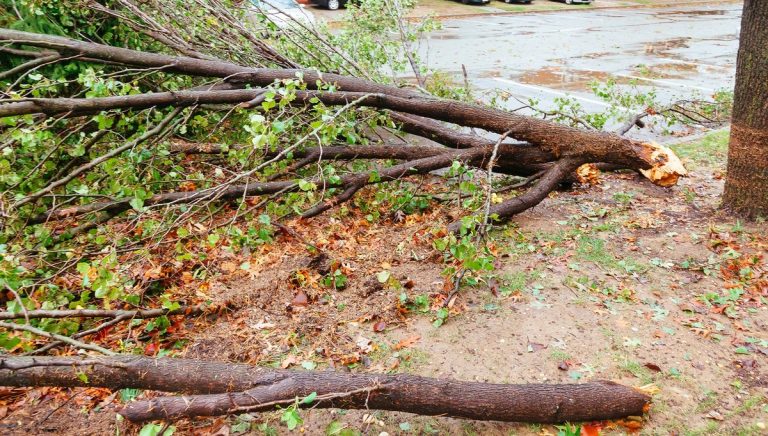 A tree stripped of its leaves can look dead when it is not. University of Florida IFAS research on hurricane-damaged trees found that leaf loss means the tree temporarily cannot make food, not that it has died.
Most trees leaf out again within a few months or by the following spring. If a tree has not pushed new leaves by the spring or early summer after the storm, UF/IFAS notes it is not likely to recover.
Pines are the exception to that patience. The same research notes that pines may not recover once defoliated, so they need a closer look sooner.
Small Wounds and Scraped Bark
Bark scraped by a falling neighbor tree or a flying limb is usually survivable when the wound is small compared to the limb or trunk it sits on. Texas A&M Forest Service notes that the larger a wound is relative to the limb, the less likely it is to seal.
The International Society of Arboriculture recommends removing loose bark and trimming jagged edges with a sharp knife, without cutting into living tissue. Skip the wound paint, since ISA notes that research shows dressings do not reduce decay or speed up closure.
Storm Damage That Usually Means Removal
Some damage takes away the parts a tree needs to stand or feed itself. When we find one of these, the conversation shifts from recovery to how to take the tree down safely.
Split or Cracked Trunks
A trunk that has split down its length is the clearest removal case. Texas A&M Forest Service describes a split trunk as damage too severe to recover from, because the tree has lost the connection that carries water and sugars between its roots and leaves.
Splits often start where two stems of similar size grow from the same point, or where decay was already hiding inside the wood. A crack you can see through, or one that opens and closes in the wind, belongs in the same category.
A split trunk over a roof or driveway is a job for our tree removal crew, taken down in controlled sections.
A Lifted Root Plate or a New Lean
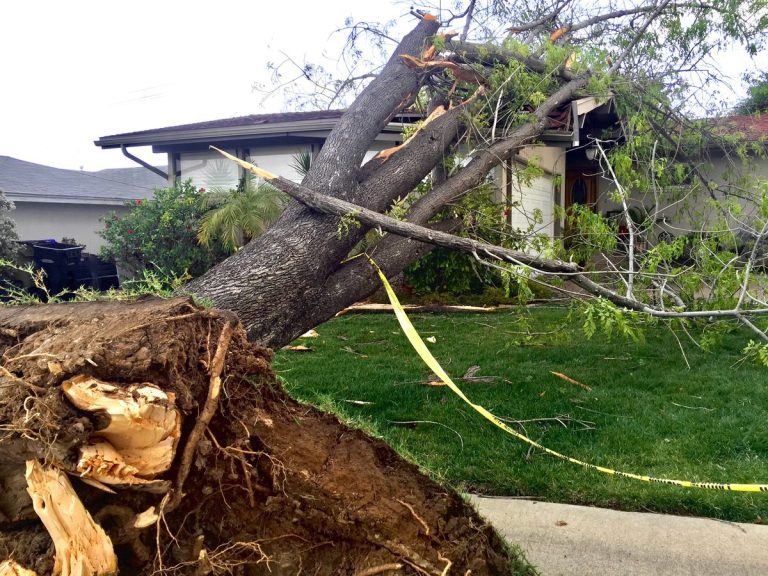 A tree that has always leaned is not the same as one that started leaning during the storm. The signal that matters is fresh soil heaving up on one side of the base, which means the roots on the other side have let go.
Saturated ground makes this worse. Wet soil holds a root plate loosely, so a tree that shifted once can keep moving after the wind has stopped.
LSU AgCenter guidance after hurricanes is direct on this point: remove larger overturned trees and trees with failed trunks. We treat a fresh lean on a large tree as urgent, not as something to watch.
A Crown Stripped Down to a Few Branches
Leaves are how a tree feeds itself, so a crown torn down to bare scaffold limbs leaves the tree almost nothing to rebuild with. Texas A&M Forest Service calls a tree left with only a trunk and a few branches a hopeless case.
Young trees are a partial exception, since Texas A&M Forest Service notes they can handle a lot of damage and recover quickly. The warning sign for them is a lost central leader, the main upright stem, which can leave a surviving tree stunted or misshapen.
How a Damaged Tree Is Brought Back
Recovery is slower and more patient than most owners expect. The table below sets out the usual approaches and where each one fits.
| Approach | What It Involves | Best For |
|---|---|---|
| Cleanup pruning | Removing broken, torn, and hanging limbs back to sound wood | Canopy damage on a tree with a sound trunk and roots |
| Wait and see | Pruning only what is broken, then watching for new leaves | Valuable trees that sit on the borderline |
| Staged pruning | Shaping regrowth gradually over later visits instead of all at once | Trees that lost large limbs but kept their structure |
| Removal | Taking the tree down safely and cleaning up the site afterward | Split trunks, lifted roots, or crowns with little left |
The biggest mistake after a storm is cutting too much. Texas A&M Forest Service warns against pruning too much at once, and UF/IFAS research found that topping and large cuts leave trees more likely to fail in the next storm.
Our tree trimming service focuses on the cleanup cuts first and leaves the rest of the canopy to rebuild. Pines get a follow-up look, because UF/IFAS found that pines can appear green and healthy right after a hurricane and still decline over the following months or even years.
What This Means for Your New Orleans Trees After a Storm
Most storm-damaged trees deserve a careful look before a saw comes out, because canopy damage often heals while trunk and root failure rarely does. Getting that call right protects both the tree you want to keep and the house sitting under it.
At TurnKey Tree Cutting, our certified arborists sort the keepers from the removals and handle whichever job the tree actually needs. Call us today to have our licensed and insured crew look over a storm-damaged tree.
Frequently Asked Questions
Does homeowners insurance pay for tree removal after a storm?
It often does when wind or another covered event brings a tree down onto an insured structure, usually up to a set limit. A tree that hits nothing, or one that failed from neglect, is commonly the owner’s expense, so confirm your terms with your insurer. Our guide to homeowners insurance and tree removal has more detail.
How long does it take a tree to recover from storm damage?
Recovery is usually measured in seasons, not weeks. UF/IFAS research found most trees that lose leaves in a hurricane leaf out again within a few months or by the following spring. Rebuilding lost limbs and canopy takes longer, and a tree that shows no new leaves by the next spring or early summer is unlikely to recover.
Should you cut off broken tree branches after a storm?
Yes, broken and hanging branches should come off, because they can fall without warning and leave ragged wounds that heal poorly. Cut them back cleanly to a healthy branch or the trunk. Leave large limbs and any overhead chainsaw work to a licensed arborist, and avoid removing healthy canopy while you are at it.
Can a tree with a split trunk be saved?
Usually not. A trunk that has split down its length has lost the connection that moves water and sugars between the roots and leaves, and Texas A&M Forest Service treats that as damage too severe to recover from. A split tree near a house, driveway, or play area should be assessed and removed promptly.
Is a leaning tree after a storm dangerous?
A tree that started leaning during a storm can be dangerous, especially if soil has heaved up on one side of the base. That lifted soil means the roots on the other side have let go. Keep people and vehicles clear and have it assessed quickly, because saturated ground can let it keep moving.
Do you need a licensed arborist to remove a storm damaged tree in Louisiana?
For paid tree work, yes. The Louisiana Department of Agriculture and Forestry requires an arborist license for anyone who removes, prunes, or trims trees for a fee. Ask any crew that knocks on your door after a storm to show its license and a current certificate of insurance.
Do trees grow back leaves after a hurricane?
Most do. UF/IFAS research on hurricane-damaged trees found that losing leaves does not mean a tree has died, and most trees leaf out again within a few months or by the following spring. Pines are the main exception, since they may not recover once defoliated.
Should a tree be topped after storm damage?
No, because topping removes large sections of the crown at once and leaves big wounds that let decay in. UF/IFAS research found that topping and large pruning cuts make trees more likely to fail in later storms. Clean up the broken limbs and let the remaining canopy rebuild instead.