
A home renovation in New Orleans needs a tree permit when the work affects a tree the city controls, most often one standing in the public right-of-way near the street. Removals fully inside a private lot frequently do not require one, though larger trees can still raise questions. The trigger is usually the tree’s location rather than the size of the renovation. Confirm the rules for your specific tree with the city before any work begins.
At TurnKey Tree Cutting, we see the renovation calls that go wrong almost always come from somebody finding out about the tree after the contractor was booked. A pool excavation stopped by a curbside oak is an expensive way to learn this.
You do not need a large project to run into it. Widening a driveway, pouring a patio, or trenching a new line to a garage can all put you in the same conversation.
This walks through what actually triggers a tree permit question on a homeowner-scale renovation in New Orleans and how to check before your schedule depends on the answer. Contact us today to have the trees around your project looked at before the first crew shows up.
Why Does a Home Renovation Raise a Tree Permit Question in New Orleans?
The question comes up because your project boundary and the city’s tree interests overlap more often than you would expect. New Orleans exercises control over the trees it owns, and a meaningful number of those sit along the front of residential lots.
That means the relevant issue is usually not how ambitious your renovation is. It is whether the work touches a tree, or a tree’s roots, in ground the city controls rather than ground you own.
The second reason is practical rather than regulatory. Renovation work routinely damages trees you intend to keep, and a tree killed by your own excavation becomes a removal you did not budget for, and one that may then need approval.
Which Home Projects Run Into Trees Most Often?
Certain renovations bump into trees far more than others. If your project is on this list, ask the question early.
- Driveway widening or replacement: the most frequent conflict, since driveways meet the street where city trees stand
- Pool installation: excavation and equipment access both cut through root zones
- Room additions and rear extensions: the new footprint frequently sits under an existing canopy
- Patios, decks, and hardscape: paving over a root zone damages trees without removing them
- New utility or sewer connections: trenching from the house to the street crosses the right-of-way
- Detached garages and outbuildings: these usually go where a tree already is
The common thread is ground disturbance rather than building height. Anything that digs, paves, or drives heavy equipment across a root zone belongs in this conversation.
When Should You Check Whether a Tree Permit Applies?
Use the table below as a first pass. It tells you which part of your project deserves a check rather than an assumption.
| Your Project | What to Check First |
|---|---|
| Work at the street edge or curb cut | Whether any tree involved is in the public right-of-way |
| Removing a tree inside your property line | The tree’s size and whether it raises any review |
| Excavation near a mature tree you are keeping | How far the root zone extends past the canopy |
| Trenching a utility line to the street | Whether the route crosses a city tree’s roots |
| Paving over ground beneath a canopy | Whether the tree survives being covered |
| Any project where equipment must cross the yard | An access route that stays off the marked root zones |
Because requirements are updated over time, confirm the current rules for your specific tree with the city rather than relying on what applied to a neighbor’s project. That single call is usually the whole due diligence.
What Are Your Options If a Tree Is in the Way?
A tree in the project footprint is not automatically a dead end. Most situations come down to 4 paths.
Adjust the Design Around the Tree
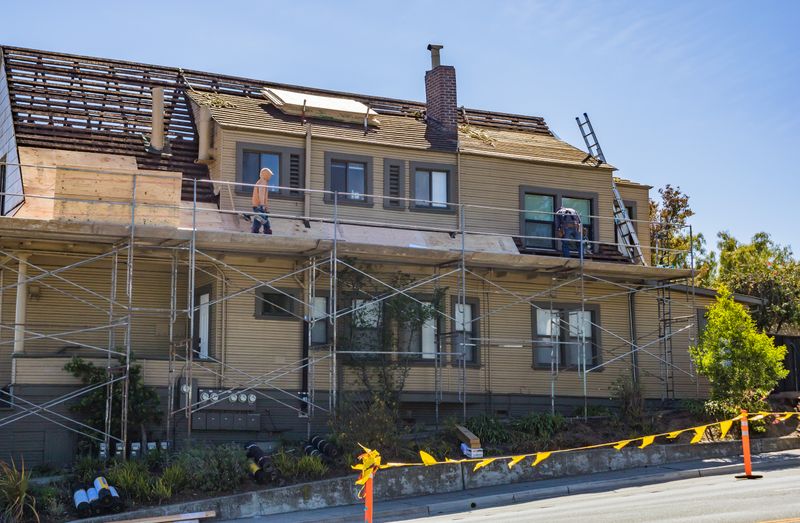
The cheapest fix is frequently a small change to the plan. Shifting a patio 3 feet, narrowing a driveway apron, or rotating a shed footprint often clears the conflict entirely.
Design changes are far easier before drawings are final. Once permits are in and a crew is scheduled, the same adjustment costs real money.
Route Access and Utilities Differently
Where the tree itself is not in the footprint but the equipment path or trench is, rerouting solves it. A utility line that curves around a root zone protects the tree without changing your project.
Discuss this with your builder before the work is priced. Access routes are usually chosen for convenience unless somebody raises the tree.
Confirm Whether Removal Is Permitted
If the tree genuinely has to go, the next question is what its removal requires. A small tree well inside your lot is a different situation from a mature specimen near the curb.
Get that answer before you build a schedule around it. Our construction permitting work covers exactly this check on homeowner-scale projects.
Schedule the Removal Into the Right Phase
Where removal is cleared, it belongs early in the sequence rather than whenever the crew is available. Taking a tree out after the slab is poured means working around the new structure.
Coordinating it with demolition is usually cleanest. Our tree removal crews schedule around a renovation timeline rather than treating it as a standalone job.
How Do You Protect the Trees You Are Keeping?
Trees you intend to keep are the ones most often lost, because nobody assigns responsibility for protecting them. A few decisions made before work starts prevent most of it.
- Mark the root zones: flag or fence them so crews can see the boundary
- Choose one equipment path: concentrate traffic on a single route away from trees
- Keep material stacks off root zones: dumpsters and pallets compact soil badly
- Do not change the grade under a canopy: adding or cutting soil there is often fatal
- Tell every trade on site: the tile crew needs to know as much as the excavator operator
Damage from compaction usually appears seasons later, long after the project is finished. That delay is why nobody connects the dying tree to the renovation that caused it.
Sort Out the Tree Question Before Your Renovation Starts
Every expensive version of this problem starts the same way, with a project scheduled before anyone looked at the trees. The check itself takes a fraction of the time the delay would.
At TurnKey Tree Cutting, we walk your property, tell you which trees raise questions, and flag what needs confirming before your contractor mobilizes. Call us today to get the tree question settled while it is still easy.