
Caring for a mature live oak in New Orleans is mostly protection rather than intervention. Its roots spread far wider than the canopy and sit relatively shallow, so most preventable damage comes from what happens at ground level rather than from anything in the branches. Keep traffic, paving, and construction out of the root zone, keep pruning conservative, and address structural issues on the heavy horizontal limbs early rather than late.
At TurnKey Tree Cutting, we get called about live oaks with more emotion attached than any other tree. People inherit them with a house, and they are usually older than everyone involved in the conversation.
Here’s the thing about a mature live oak: it has already survived more than anything you are likely to do to it, and the damage that actually kills one is almost always slow and accidental. It happens at ground level, over years, and nobody notices until the canopy starts thinning.
So this is about protection, not intervention. Contact us today to have your oaks assessed while everything is still going in the right direction.
What Makes a Live Oak Different From Everything Else on Your Block
Live oaks do not behave like the other shade trees around them, and a few of those differences change how you should treat one.
The Canopy Grows Out, Not Up
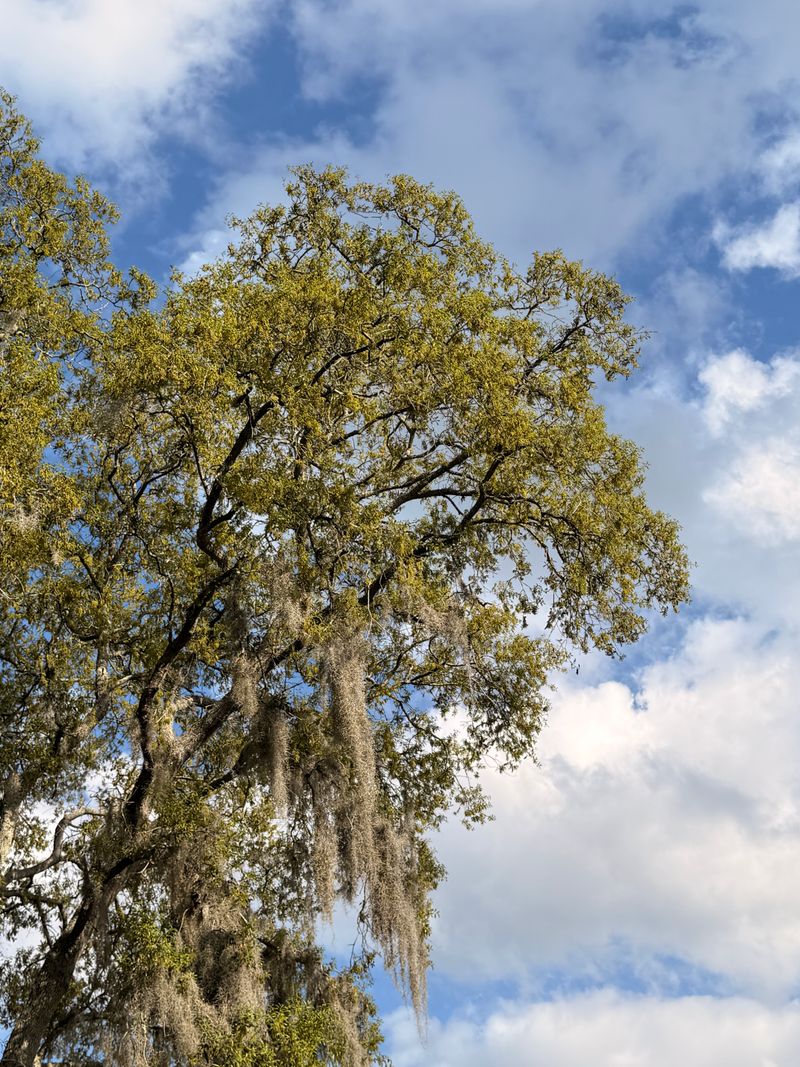
A live oak spreads horizontally in a way most trees do not, often ending up considerably wider than it is tall. Those long lateral limbs are the signature of the species and also its main structural challenge.
Heavy horizontal wood carries load differently from an upright trunk. That is why structural attention on a mature oak focuses on the limbs rather than on height.
It Holds Its Leaves Through Winter
Live oaks stay green through the cool months and then drop and replace their foliage in spring, which surprises owners expecting a bare tree in January. A live oak shedding heavily in March is doing exactly what it should.
Knowing this saves a lot of unnecessary worry. Leaf drop at the wrong time of year is the signal worth paying attention to.
It Is Built for This Coast
Salt exposure and wind are conditions live oaks handle better than most species do, which is a large part of why they dominate the older neighborhoods here. A healthy one is genuinely well suited to the Gulf Coast.
That resilience cuts both ways. Because they tolerate so much, a live oak in real trouble has usually been in trouble for a while.
It Operates on a Much Longer Timeline
These trees measure their lives in centuries rather than decades, which means both damage and recovery move slowly. A stress event shows up in the canopy seasons after the cause.
It also means a mature live oak is effectively irreplaceable on a residential timeline. Nothing you plant catches up.
So What Does Live Oak Tree Care in New Orleans Actually Involve?
Not much, and that is the point. Three things cover most of what a healthy mature oak requires.
Conservative Pruning, Not Shaping
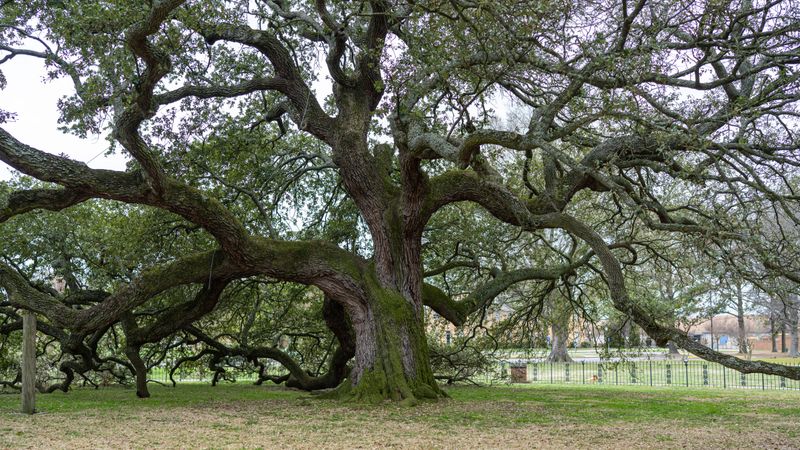
The right pruning on a mature live oak clears deadwood, addresses structural concerns on the heavy limbs, and stops there. University of Florida horticulture guidance puts the useful amount of thinning on a mature tree at roughly 5 to 10 percent of live foliage, and cautions that taking much more costs the tree stored energy reserves.
Resist the urge to open it up for a view or a lawn. Our tree trimming approach on mature oaks is deliberately restrained for exactly this reason.
Attention to the Heavy Horizontal Limbs
The long lateral branches are what make a live oak beautiful and what fail when something goes wrong. Cracks, cavities, and unusual movement in a major limb deserve a look rather than a wait.
Structural problems on these limbs are far more manageable when caught early. Left alone, they tend to resolve themselves during a storm, at the worst possible moment.
Soil It Can Actually Use
Mature oaks in developed yards often sit in compacted ground with turf competing for the top layer. Nutrient support helps where the soil genuinely cannot supply what the tree needs.
That decision should follow an assessment rather than a guess. We handle tree fertilization only where the site shows it will make a difference.
The Root Zone Thing (This Is Where the Damage Actually Happens)
A live oak’s roots spread much farther than most people assume, commonly extending two to three times beyond the edge of the canopy, with a significant portion of the system sitting in the upper twelve inches of soil. That combination makes them unusually easy to damage without noticing.
Almost everything harmful happens here. Parking on the root zone, trenching a utility line through it, paving over it for a patio or a wider driveway, or piling construction material on it during a renovation all compact or sever roots the tree depends on.
The cruelty of it is the delay. Decline traced to soil compaction can take three to seven years to surface, long after anyone connects the thinning canopy to the renovation, and by then the correction is limited.
Protecting that area is mostly a matter of deciding it is off limits. Mark the root zone before any contractor arrives, route equipment and material storage well outside it, and keep a layer of mulch rather than turf over as much of it as the yard allows. Mulch holds moisture and shields the top layer of soil from further compaction, which is where much of the root system sits.
What About Hurricane Season?
Live oaks handle wind better than most species here, which is a real part of why so many old ones are still standing. A structurally sound oak is generally not the tree to worry about.
The exception is a limb that already has a problem. A crack, a cavity, or a poorly attached major branch is where a healthy tree fails, and that is worth identifying before the season rather than after.
A pre-season look is mostly a structural one. We check the major limb attachments, note any deadwood heavy enough to come down on something, and flag cavities or cracks that have changed since the last visit.
Resist any suggestion to thin a live oak heavily for wind. Light, correct thinning does let some wind pass through a canopy rather than push against it, but the amount that actually helps is small. Heavy thinning reverses the benefit, because removing an excessive number of interior laterals weakens branch structure and costs the tree reserves it needs to recover from whatever the season brings.
Bottom Line
A mature live oak in New Orleans mostly needs you to leave its root zone alone and keep the pruning honest. Everything else is monitoring.
At TurnKey Tree Cutting, we assess the structure, watch the limbs that matter, and tell you plainly when an oak needs nothing at all. Call us today to have your live oaks looked at by someone who works on them regularly.